Summary
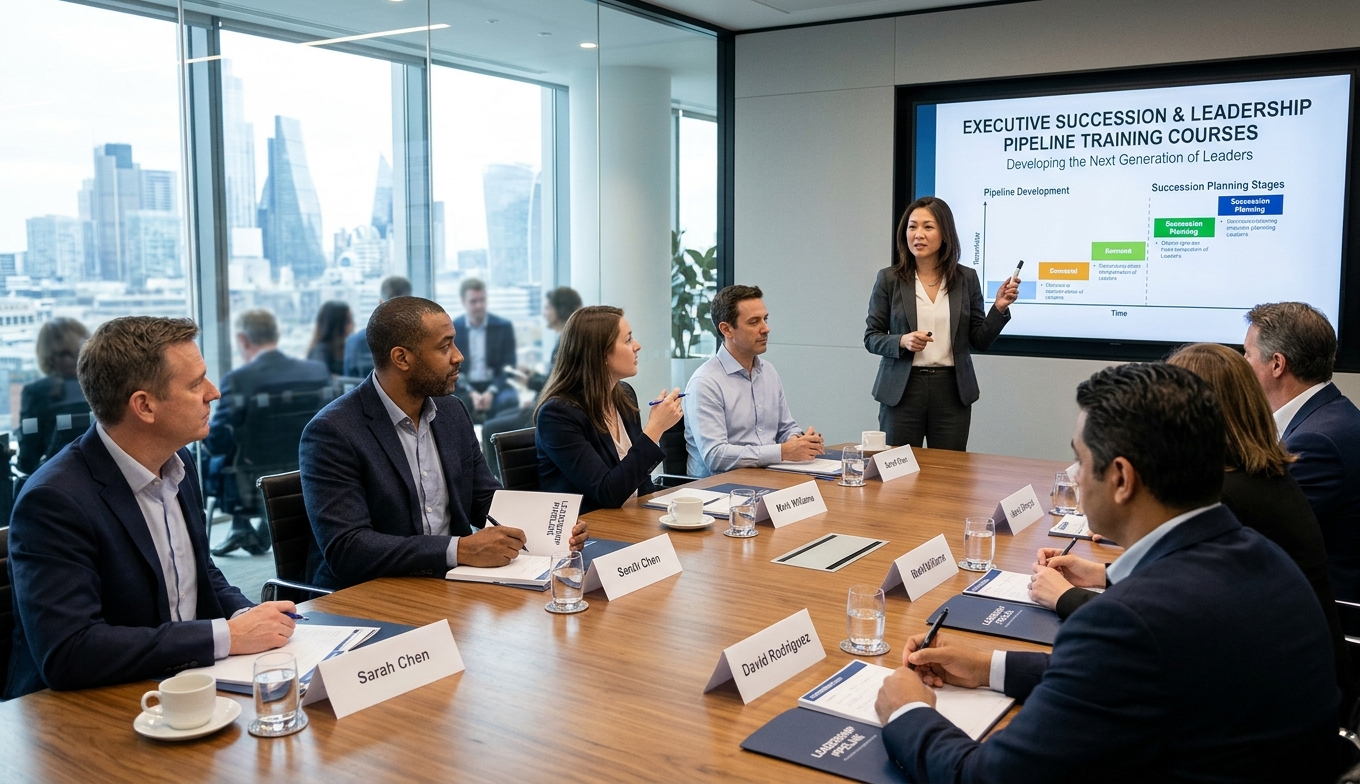
Executive Succession and Leadership Pipeline Training Courses at Geneva Institute of Business Management are designed to strengthen organisational leadership continuity through structured executive succession planning, leadership talent development, and strategic workforce preparation. These programmes focus on building a sustainable leadership pipeline that enables organisations to identify, develop, assess, and prepare capable professionals for senior management and executive positions. By establishing clear succession frameworks, organisations can reduce leadership gaps, protect institutional knowledge, and maintain operational stability during periods of leadership transition.
Executive succession is a critical component of long-term organisational sustainability. Changes in executive leadership can significantly influence strategic direction, corporate performance, stakeholder confidence, and business operations. When organisations lack a structured succession strategy, unexpected departures, retirements, internal restructuring, and business expansion can create leadership shortages that disrupt decision-making and organisational performance. A well-managed executive succession process ensures that qualified internal candidates are identified and prepared to assume critical roles when required.
The Geneva Institute of Business Management delivers Executive Succession and Leadership Pipeline Training Courses within its Leadership and Management Training Courses category. The programmes address the strategic responsibilities associated with leadership replacement, executive talent management, workforce planning, and leadership readiness. They focus on connecting organisational objectives with future leadership requirements while ensuring that succession decisions reflect business priorities, governance expectations, and long-term operational needs.
A strong leadership pipeline requires more than identifying employees with management potential. It involves understanding future organisational requirements, evaluating leadership competencies, monitoring professional performance, and creating development pathways that prepare individuals for increasingly complex responsibilities. Organisations must establish transparent processes for recognising high-potential employees, assessing executive capabilities, and measuring readiness for senior leadership positions.
Executive succession planning also requires collaboration between senior management, human resources departments, board members, and organisational development teams. Each stakeholder contributes to identifying critical roles, evaluating succession risks, and ensuring that leadership transitions support business continuity. A coordinated succession strategy helps organisations maintain accountability while reducing dependency on individual executives.
These programmes examine how organisations can develop internal leadership talent, strengthen executive readiness, and establish reliable succession processes. They address talent pipeline management, leadership assessment, succession governance, executive development, and leadership continuity planning. Participants explore how to connect succession decisions with strategic workforce planning and organisational transformation.
The programmes also address the importance of maintaining a balanced leadership pipeline that supports diversity, organisational resilience, and future business requirements. Organisations benefit from identifying multiple potential successors for essential positions rather than relying on a single candidate. This approach creates greater flexibility when leadership changes occur and strengthens the organisation's ability to respond to unexpected circumstances.
From a corporate management perspective, Geneva Institute of Business Management focuses on establishing succession systems that deliver measurable organisational value. Executive succession becomes an ongoing management responsibility rather than an occasional administrative activity. By integrating leadership development with business strategy, organisations can maintain a consistent supply of capable leaders and protect their long-term competitive position.
Objectives
The Executive Succession and Leadership Pipeline Training Courses aim to strengthen organisational capabilities in identifying, developing, and preparing future executive leaders. The programmes focus on practical succession management approaches that connect leadership readiness with organisational priorities and business continuity requirements.
Key objectives include:
Establishing Effective Executive Succession Strategies
Develop structured approaches to executive succession planning that support long-term organisational stability. The programmes examine how organisations can identify leadership requirements, evaluate succession risks, and establish clear processes for preparing successors for senior management positions.
Strengthening the Leadership Pipeline
Improve the organisation's ability to identify and develop employees with the potential to assume greater leadership responsibilities. Participants explore methods for creating a sustainable leadership pipeline that connects talent identification, professional development, performance assessment, and executive readiness.
Identifying and Managing Critical Roles
Examine techniques for identifying positions that have a significant influence on organisational performance, strategic decisions, and operational continuity. The programmes address how organisations can prioritise critical roles and establish appropriate succession arrangements for each position.
Improving Leadership Readiness Assessment
Strengthen the ability to evaluate whether potential successors possess the competencies, experience, judgement, and strategic capabilities required for executive responsibilities. The programmes explore leadership assessment frameworks, competency evaluation, performance indicators, and readiness criteria.
Supporting Leadership Continuity
Develop succession approaches that minimise disruption during executive transitions. The programmes focus on maintaining management stability, preserving institutional knowledge, supporting stakeholder confidence, and ensuring continuity in strategic decision-making.
Developing a Sustainable Talent Pipeline
Improve talent pipeline management by connecting workforce planning with future leadership requirements. Participants examine how organisations can recognise high-potential professionals, monitor leadership development, and maintain a consistent pool of qualified candidates.
Strengthening Executive Talent Management
Explore methods for aligning executive development initiatives with organisational priorities. The programmes address talent reviews, leadership competency frameworks, career progression, executive mentoring, and professional development planning.
Improving Succession Governance and Accountability
Establish transparent succession responsibilities involving senior executives, board members, human resources teams, and other relevant stakeholders. The programmes examine governance practices that support consistent succession decisions and organisational accountability.
Reducing Leadership Transition Risks
Identify potential risks associated with unexpected executive departures, retirement, organisational restructuring, and changes in business direction. Participants examine succession risk assessment and contingency planning methods that support organisational resilience.
Aligning Succession Planning with Business Strategy
Connect executive succession decisions with long-term business objectives, organisational growth, transformation priorities, and future workforce requirements. The programmes emphasise the importance of treating succession strategy as an integral part of corporate management.
Target Audience
The Executive Succession and Leadership Pipeline Training Courses are designed for professionals responsible for executive leadership development, organisational continuity, succession planning, and strategic talent management. The programmes are particularly relevant to organisations seeking to strengthen their leadership structures and prepare qualified professionals for future executive responsibilities.
The target audience includes:
Chief Executive Officers and Managing Directors
Senior executives responsible for organisational direction, leadership stability, and long-term business performance. The programmes provide insights into establishing executive succession frameworks, preparing future leaders, and maintaining leadership continuity during significant organisational changes.
Board Members and Non-Executive Directors
Board members involved in executive appointments, governance oversight, leadership evaluation, and organisational succession decisions. The programmes address board-level responsibilities in executive succession, leadership accountability, and strategic continuity.
Chief Human Resources Officers
HR executives responsible for strategic workforce planning, executive talent management, leadership development, and succession governance. The programmes strengthen their ability to coordinate succession initiatives and maintain a reliable talent pipeline.
Human Resources Directors and Managers
HR professionals responsible for identifying high-potential employees, managing talent reviews, developing succession frameworks, and coordinating leadership development activities. The programmes provide practical approaches to evaluating leadership readiness and managing succession requirements.
Leadership and Organisational Development Directors
Professionals responsible for designing leadership development strategies and preparing employees for senior management positions. The programmes address leadership competency frameworks, executive readiness, talent assessment, and leadership pipeline development.
Senior Management Teams
Department heads, divisional directors, and senior managers preparing to assume broader organisational responsibilities. The programmes strengthen their understanding of executive succession processes and the capabilities required for future leadership positions.
Talent Management and Workforce Planning Professionals
Specialists responsible for identifying organisational talent requirements, evaluating employee potential, and developing internal talent pipelines. The programmes explore how workforce planning can support succession priorities and future leadership requirements.
Executive Search and Recruitment Leaders
Recruitment professionals involved in senior-level appointments, leadership assessment, and executive talent acquisition. The programmes examine how internal succession planning can complement external recruitment strategies.
Corporate Governance Professionals
Professionals responsible for governance frameworks, leadership accountability, organisational risk management, and board-level oversight. The programmes address the governance considerations associated with executive succession and leadership continuity.
Business Owners and Entrepreneurs
Business owners preparing organisations for expansion, ownership transitions, professional management structures, or future leadership changes. The programmes provide insights into developing successors and reducing organisational dependency on individual decision-makers.
High-Potential Senior Professionals
Experienced professionals identified as potential candidates for executive and senior management positions. The programmes strengthen their understanding of executive responsibilities, leadership expectations, strategic decision-making, and organisational accountability.
Modules
Module 1: Foundations of Executive Succession Planning
-
Understanding executive succession and its organisational importance
-
The relationship between succession planning and corporate strategy
-
Key principles of structured executive succession
-
Identifying current and future leadership requirements
-
Internal succession versus external executive recruitment
-
Establishing succession planning priorities
-
Integrating succession management into organisational planning
-
Understanding leadership transition challenges
-
Building a long-term succession management framework
Module 2: Leadership Pipeline Development and Management
-
Understanding the concept of a leadership pipeline
-
Developing structured leadership progression pathways
-
Identifying leadership potential across organisational levels
-
Establishing management and executive talent pools
-
Connecting employee development with future leadership requirements
-
Monitoring leadership pipeline effectiveness
-
Identifying gaps in leadership capability
-
Developing internal leadership mobility strategies
-
Strengthening organisational readiness through talent development
Module 3: Identification and Prioritisation of Critical Roles
-
Defining critical roles within organisational structures
-
Evaluating the strategic importance of executive positions
-
Identifying positions with significant operational influence
-
Assessing leadership dependency and organisational vulnerability
-
Prioritising succession requirements across departments
-
Evaluating the consequences of unexpected leadership departures
-
Mapping critical positions and potential successors
-
Developing succession coverage frameworks
-
Connecting critical role identification with business continuity
Module 4: Executive Talent Identification and Assessment
-
Identifying high-potential employees
-
Understanding leadership performance indicators
-
Evaluating executive competencies and behavioural capabilities
-
Assessing strategic thinking and decision-making abilities
-
Reviewing leadership experience and professional achievements
-
Applying competency-based assessment frameworks
-
Evaluating readiness for increased responsibilities
-
Conducting executive talent reviews
-
Establishing objective succession assessment criteria
Module 5: Building and Managing a Sustainable Talent Pipeline
-
Understanding strategic talent pipeline management
-
Creating internal pools of potential executive successors
-
Identifying emerging leadership capabilities
-
Establishing talent development priorities
-
Connecting performance management with succession planning
-
Managing talent pipeline gaps
-
Developing career progression pathways
-
Retaining high-potential employees
-
Monitoring the availability of qualified future leaders
Module 6: Executive Leadership Development and Readiness
-
Defining executive leadership competencies
-
Developing strategic leadership capabilities
-
Strengthening financial and commercial decision-making
-
Improving organisational judgement and accountability
-
Developing change management capabilities
-
Strengthening stakeholder management and communication
-
Building executive confidence and leadership presence
-
Preparing managers for enterprise-level responsibilities
-
Evaluating executive development progress
Module 7: Succession Strategy and Organisational Alignment
-
Designing an effective succession strategy
-
Connecting succession priorities with organisational objectives
-
Establishing short-term and long-term succession plans
-
Aligning succession planning with workforce requirements
-
Integrating leadership development with corporate strategy
-
Establishing succession planning responsibilities
-
Coordinating HR and senior management involvement
-
Managing succession priorities during organisational transformation
-
Reviewing succession strategy effectiveness
Module 8: Leadership Continuity and Transition Management
-
Understanding leadership continuity requirements
-
Managing planned and unexpected executive transitions
-
Preparing successors for leadership appointments
-
Transferring institutional knowledge and organisational expertise
-
Maintaining operational stability during leadership changes
-
Managing stakeholder communication during transitions
-
Supporting incoming executives during transition periods
-
Establishing executive handover procedures
-
Monitoring organisational performance following leadership changes
Module 9: Succession Risk Management and Contingency Planning
-
Identifying executive succession risks
-
Assessing leadership gaps across critical roles
-
Evaluating the impact of unexpected executive departures
-
Developing contingency succession arrangements
-
Establishing emergency leadership replacement procedures
-
Managing succession dependency risks
-
Protecting institutional knowledge
-
Evaluating succession coverage and readiness
-
Strengthening organisational resilience through succession planning
Module 10: Succession Governance and Board Responsibilities
-
Understanding governance requirements in executive succession
-
Defining board responsibilities in leadership appointments
-
Establishing succession oversight procedures
-
Strengthening collaboration between boards and executive management
-
Developing transparent succession policies
-
Managing confidentiality in succession decisions
-
Establishing accountability for leadership development
-
Reviewing executive succession arrangements
-
Integrating succession governance with corporate risk management
Module 11: Executive Mentoring, Coaching and Development
-
Establishing executive mentoring frameworks
-
Using coaching to prepare potential successors
-
Developing leadership capabilities through practical assignments
-
Supporting cross-functional management experience
-
Strengthening strategic problem-solving skills
-
Preparing successors for complex organisational decisions
-
Encouraging knowledge transfer between senior leaders and emerging executives
-
Evaluating mentoring and coaching outcomes
-
Building confidence among future executive leaders
Module 12: Diversity, Inclusion and Leadership Pipeline Sustainability
-
Building inclusive leadership pipelines
-
Identifying barriers to executive progression
-
Strengthening equal access to leadership development opportunities
-
Evaluating diversity across succession candidate pools
-
Supporting leadership representation across organisational levels
-
Reducing bias in executive talent assessment
-
Developing transparent succession criteria
-
Encouraging diverse leadership perspectives
-
Strengthening long-term talent pipeline sustainability
Module 13: Measuring Succession Effectiveness and Leadership Readiness
-
Establishing executive succession performance indicators
-
Measuring leadership pipeline strength
-
Evaluating succession coverage for critical roles
-
Monitoring successor readiness levels
-
Assessing internal leadership appointment rates
-
Measuring leadership development outcomes
-
Evaluating retention among high-potential employees
-
Reviewing succession planning effectiveness
-
Using organisational data to improve succession decisions
Module 14: Technology and Data-Driven Succession Management
-
Understanding digital tools for succession planning
-
Using talent management systems to monitor leadership pipelines
-
Maintaining executive competency and talent records
-
Applying workforce analytics to succession decisions
-
Monitoring leadership readiness through performance data
-
Identifying succession gaps through organisational reporting
-
Improving succession planning visibility
-
Supporting evidence-based executive talent decisions
-
Strengthening data management and confidentiality
Module 15: Integrating Executive Succession with Long-Term Organisational Performance
-
Connecting executive succession with organisational sustainability
-
Aligning leadership continuity with business expansion
-
Preparing leadership pipelines for future organisational changes
-
Strengthening executive capability across business functions
-
Maintaining strategic consistency during leadership transitions
-
Developing long-term leadership investment priorities
-
Evaluating the organisational value of succession planning
-
Establishing continuous succession review processes
-
Building an adaptable and sustainable executive leadership structure
FAQs
1. What are Executive Succession and Leadership Pipeline Training Courses?
Executive Succession and Leadership Pipeline Training Courses focus on developing organisational strategies for identifying, assessing, and preparing future executive leaders. They address succession planning, critical role identification, leadership readiness, talent pipeline development, and leadership continuity to support long-term organisational stability.
2. Why is executive succession planning important for organisations?
Executive succession planning helps organisations prepare for leadership changes caused by retirement, resignation, restructuring, or business expansion. It reduces leadership gaps, protects institutional knowledge, supports consistent decision-making, and ensures that qualified professionals are available to assume critical roles when required.
3. What is the difference between a leadership pipeline and executive succession planning?
A leadership pipeline is the ongoing process of identifying and developing employees for future leadership responsibilities across organisational levels. Executive succession planning focuses specifically on preparing suitable candidates to replace senior executives and maintain leadership continuity in strategically important positions.
4. Who should participate in executive succession planning?
CEOs, board members, HR directors, senior management teams, talent management professionals, and organisational development leaders should participate in executive succession planning. Their involvement ensures that succession decisions reflect organisational priorities, leadership requirements, governance responsibilities, and future business needs.
5. How can organisations measure the effectiveness of a succession strategy?
Organisations can measure succession strategy effectiveness through successor readiness, succession coverage for critical roles, internal executive appointment rates, leadership retention, and leadership development outcomes. Regular talent reviews and succession assessments also help identify gaps and maintain a sustainable leadership pipeline.
Venues and dates
This programme runs every month in the following cities. Select a venue to register.
 Geneva
Switzerland
 Zurich
Switzerland
Basel
Switzerland
 London
UK
 Manchester
UK
 Oxford
UK
 Madrid
Spain
 Barcelona
Spain
 Paris
France
 Rome
Italy
 Vienna
Austria
Oslo
Norway
 Athens
Greece
 Copenhagen
Denmark
 Berlin
Germany
 Munich
Germany
 New York
USA
 Washington
USA
 Dubai
UAE
 Istanbul
Turkey
 Amsterdam
Netherlands
 Brussels
Belgium
 Lisbon
Portugal
 Malaga
Spain
 Milan
Italy
 Dusseldorf
Germany
 Prague
Czech Republic
 Budapest
Hungary
 Stockholm
Sweden
 Sheffield
UK
 Bangor
UK
 Ankara
Turkey
 Abu Dhabi
UAE
 Doha
Qatar
 Riyadh
Saudi Arabia
 Jeddah
Saudi Arabia
 Dammam
Saudi Arabia
 Muscat
Oman
 Amman
Jordan
 Cairo
Egypt
 Sharm El Sheikh
Egypt
 Casablanca
Morocco
 Marrakesh
Morocco
 Agadir
Morocco
 Tangier
Morocco
 Tunis
Tunisia
 Kuala Lumpur
Malaysia
 Singapore
 Jakarta
Indonesia
 Phuket
Thailand
 Tokyo
Japan
 Beijing
China
 Los Angeles
USA
 California
USA
 Toronto
Canada