Summary
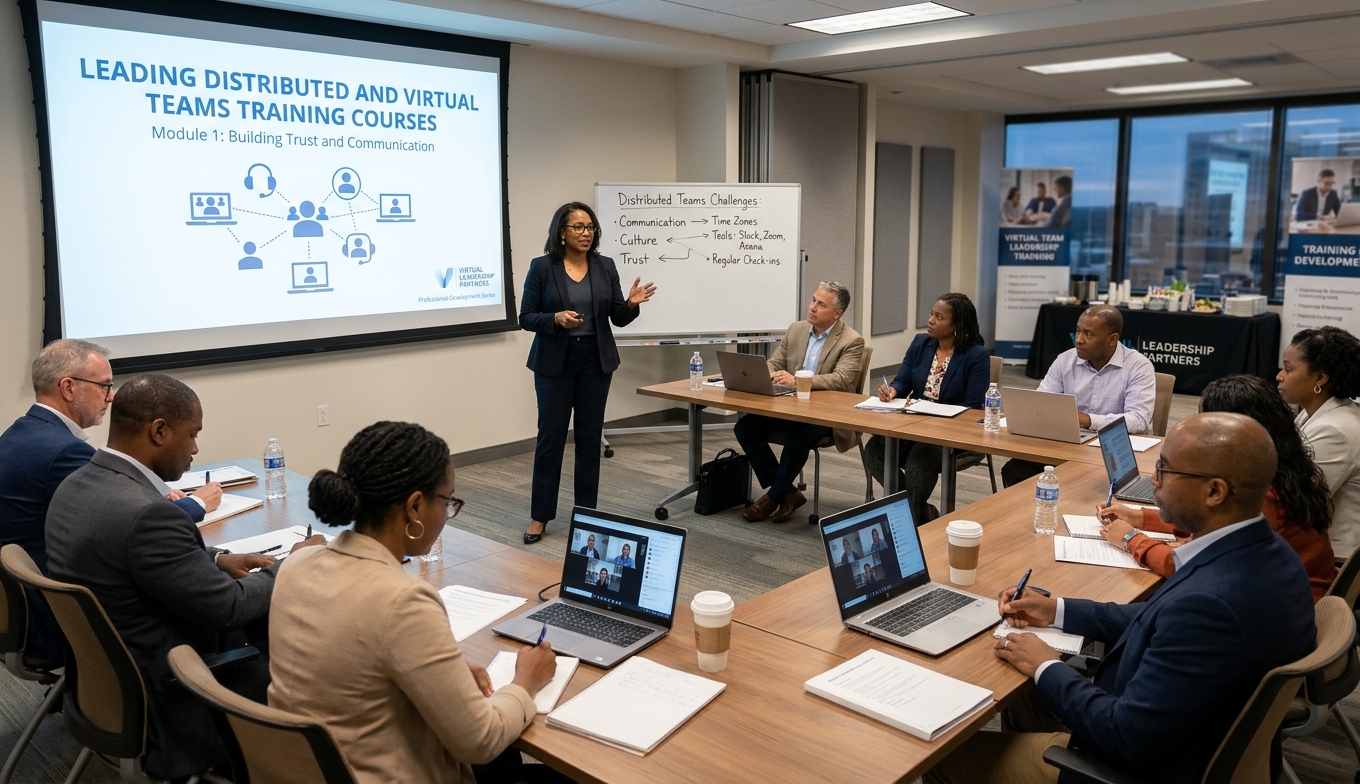
The Leading Distributed and Virtual Teams Training Courses offered by Geneva Institute of Business Management are designed to strengthen leadership capabilities in organisations operating across remote, geographically dispersed, and digitally connected working environments. As organisations increasingly adopt flexible working arrangements, international operating models, and technology-enabled business structures, effective Virtual Team Leadership has become essential for maintaining productivity, accountability, collaboration, and organisational performance.
Managing virtual teams requires a different leadership approach from managing employees who work together in a traditional office. Leaders must coordinate distributed teams across different locations, time zones, professional backgrounds, and communication preferences while maintaining shared objectives and consistent performance standards. Without effective remote leadership, organisations face challenges involving communication gaps, reduced employee engagement, unclear responsibilities, inconsistent workflows, and difficulties maintaining team cohesion.
These Leadership and Management Training Courses focus on the practical management requirements of modern distributed workforces. They address how executives, department heads, project managers, and team leaders establish effective digital collaboration systems, maintain transparent team communication, manage remote performance, and build productive working relationships across geographical boundaries.
The programme examines the relationship between leadership behaviour, digital communication, organisational culture, employee accountability, and technology-supported collaboration. Participants develop management approaches that help virtual teams remain aligned with organisational priorities while responding to changing operational demands. Particular attention is given to establishing communication standards, coordinating cross-functional responsibilities, resolving misunderstandings, and maintaining employee motivation without relying on continuous physical supervision.
Remote management also requires leaders to balance operational control with employee autonomy. Distributed employees need clear expectations, accessible leadership support, and reliable systems for reporting progress. This course explores how managers establish measurable performance indicators, delegate responsibilities effectively, monitor project delivery, and maintain accountability through structured digital workflows.
The programme also addresses the challenges associated with international distributed teams, including cultural differences, time-zone coordination, virtual conflict management, and inconsistent communication practices. Leaders examine how inclusive management approaches strengthen professional relationships and create an environment where employees contribute effectively regardless of their physical location.
Through the Leading Distributed and Virtual Teams Training Courses, Geneva Institute of Business Management supports organisations in developing leadership practices that improve remote workforce coordination, strengthen digital collaboration, and maintain operational consistency. The programme connects leadership strategy with practical management requirements to help organisations build resilient, accountable, and high-performing virtual teams.
Objectives
The Leading Distributed and Virtual Teams Training Courses aim to strengthen the strategic and operational capabilities required to lead employees working across different geographical locations and digital environments. The programme establishes a practical framework for managing remote teams while maintaining organisational alignment, employee engagement, and measurable business performance.
Develop Effective Virtual Team Leadership Capabilities
The programme develops leadership approaches suited to organisations managing employees through virtual and hybrid working structures. Participants examine how leadership responsibilities change when direct physical supervision is replaced by digital communication, performance monitoring, and outcome-based management.
Key objectives include:
-
Establishing effective leadership approaches for geographically dispersed teams.
-
Strengthening decision-making in virtual working environments.
-
Developing trust-based relationships with remote employees.
-
Aligning individual responsibilities with organisational objectives.
-
Improving leadership visibility and accessibility across distributed teams.
-
Maintaining consistent management standards across remote departments.
Strengthen Remote Leadership and Management Practices
Effective remote leadership requires clear direction, consistent communication, and the ability to manage performance without unnecessary supervision. This objective focuses on developing management practices that balance employee independence with organisational accountability.
Participants develop the ability to establish clear expectations, allocate responsibilities, monitor operational progress, and address performance challenges through structured management processes. They also examine how leaders maintain professional standards while accommodating the flexibility associated with remote working arrangements.
Improve Digital Collaboration and Team Communication
Digital collaboration provides the operational foundation for modern virtual teams. Leaders must ensure that employees have access to reliable communication channels, shared information, and coordinated working processes.
The programme focuses on:
-
Establishing structured digital communication practices.
-
Improving coordination through virtual collaboration platforms.
-
Strengthening information-sharing across remote departments.
-
Reducing communication delays and misunderstandings.
-
Improving virtual meetings and collaborative decision-making.
-
Establishing consistent communication protocols for distributed teams.
Enhancing Distributed Team Performance and Accountability
The programme develops management capabilities for maintaining productivity across employees who operate independently in different locations. Participants examine how measurable performance expectations, structured reporting, and transparent workflows support organisational accountability.
The objective is to establish performance management systems that focus on results, service quality, project completion, and employee contribution rather than physical presence or unnecessary monitoring.
Build Trust and Employee Engagement in Virtual Teams
Trust is essential to maintaining effective relationships in remote working environments. The programme examines how managers create supportive professional relationships, encourage employee participation, and maintain team motivation despite limited face-to-face interaction.
Participants explore leadership communication, recognition practices, employee feedback, and inclusive management approaches that strengthen belonging and commitment across distributed teams.
Manage Cultural Diversity and Geographical Differences
International distributed teams frequently operate across different cultural backgrounds, languages, business practices, and time zones. The programme develops leadership approaches for managing these differences while maintaining shared organisational standards.
Participants examine culturally responsive communication, inclusive decision-making, cross-border collaboration, and practical methods for coordinating employees across international working arrangements.
Strengthen Virtual Conflict Resolution
Remote communication can create misunderstandings when employees lack immediate access to clarification or informal workplace discussions. This objective focuses on identifying communication problems, addressing professional disagreements, and resolving conflicts through structured virtual management processes.
Leaders develop approaches for maintaining constructive discussions, managing difficult conversations, and preventing communication breakdowns from affecting organisational performance.
Establish Sustainable Remote Management Systems
The programme encourages organisations to develop sustainable approaches to virtual workforce management. Participants examine how technology, leadership processes, communication policies, and performance frameworks work together to support long-term operational effectiveness.
The objective is to create management structures that improve organisational adaptability while maintaining employee wellbeing, productivity, and consistent service delivery.
Target Audience
The Leading Distributed and Virtual Teams Training Courses are designed for professionals responsible for managing remote employees, geographically dispersed departments, international teams, and digitally connected business operations. The programme is particularly relevant to organisations adopting remote-first, hybrid, and internationally distributed workforce structures.
Senior Executives and Organisational Leaders
Chief executives, managing directors, executive leaders, and senior decision-makers responsible for organisational strategy benefit from developing a stronger understanding of distributed workforce leadership.
The programme supports their ability to establish remote operating models, maintain organisational alignment, and ensure that virtual teams contribute effectively to wider business objectives.
Department Heads and Functional Managers
Department heads and functional managers overseeing employees across different locations require structured approaches to communication, delegation, performance monitoring, and operational coordination.
The course addresses their responsibilities for maintaining consistent departmental performance while managing employees through digital systems and remote working arrangements.
Remote Team Leaders and Supervisors
Team leaders and supervisors responsible for daily remote operations benefit from practical management approaches for coordinating assignments, monitoring progress, supporting employees, and resolving operational challenges.
The programme strengthens their ability to maintain team accountability without relying on constant supervision.
Project Managers and Programme Directors
Project managers coordinating geographically dispersed project teams require effective communication structures, responsibility allocation, and progress monitoring systems.
The course addresses virtual project coordination, digital collaboration, stakeholder communication, deadline management, and cross-functional accountability.
Human Resources Directors and HR Managers
HR professionals responsible for workforce policies, employee engagement, remote working arrangements, and organisational development benefit from understanding the leadership requirements of distributed teams.
The programme examines how HR functions support remote leadership through performance frameworks, communication policies, employee development, and workforce engagement strategies.
International Business and Regional Managers
Professionals managing operations across multiple countries and geographical regions require leadership approaches that accommodate different time zones, business cultures, and communication practices.
The course supports their ability to maintain consistent operational standards while respecting regional differences and local working requirements.
Digital Transformation and Technology Managers
Technology and digital transformation managers responsible for implementing collaborative working systems benefit from understanding the relationship between digital infrastructure and leadership effectiveness.
The programme addresses how technology supports communication, workflow coordination, information accessibility, and remote workforce performance.
Business Owners and Entrepreneurs
Business owners and entrepreneurs managing remote employees, outsourced professionals, and international contractors require practical remote management capabilities.
The programme helps them establish clear responsibilities, maintain service quality, improve employee coordination, and create scalable workforce management systems.
Consultants and Organisational Development Professionals
Management consultants and organisational development specialists involved in remote workforce transformation benefit from examining effective virtual leadership structures and distributed team management practices.
The programme provides relevant management perspectives for supporting organisations through changes in workforce arrangements, leadership structures, and digital collaboration processes.
Modules
Module 1: Foundations of Virtual Team Leadership
This module examines the principles and organisational requirements of Virtual Team Leadership. It explores how remote and hybrid working arrangements influence management responsibilities, leadership visibility, employee relationships, and operational coordination.
Key areas include:
-
Fundamentals of virtual team management.
-
Differences between traditional and distributed leadership.
-
Characteristics of effective remote leaders.
-
Leadership responsibilities in geographically dispersed environments.
-
Establishing shared objectives and management expectations.
-
Aligning virtual teams with organisational strategy.
-
Building a consistent leadership approach across remote departments.
Module 2: Strategic Management of Distributed Teams
This module focuses on developing management structures that support geographically dispersed employees. It examines how organisations allocate responsibilities, coordinate departments, establish reporting relationships, and maintain operational consistency across multiple locations.
Key areas include:
-
Distributed workforce management structures.
-
Strategic planning for remote operations.
-
Delegation and responsibility allocation.
-
Cross-functional coordination.
-
Managing international and regional teams.
-
Establishing operational standards.
-
Aligning distributed activities with business priorities.
Module 3: Remote Leadership Styles and Management Approaches
This module examines leadership behaviours that support effective remote workforce management. It considers how leaders adapt their communication, decision-making, delegation, and employee support practices to digital working environments.
Key areas include:
-
Leadership styles for virtual working environments.
-
Adaptive and situational remote leadership.
-
Trust-based management approaches.
-
Outcome-oriented leadership.
-
Employee autonomy and managerial accountability.
-
Leadership visibility in digital environments.
-
Managing leadership challenges across remote departments.
Module 4: Digital Collaboration and Communication Management
This module explores the technologies and communication processes that enable virtual teams to coordinate activities and exchange information. It examines how organisations establish consistent digital collaboration practices while reducing communication barriers.
Key areas include:
-
Digital collaboration strategies.
-
Communication platforms and virtual working tools.
-
Structured communication protocols.
-
Information-sharing and document management.
-
Collaborative decision-making.
-
Asynchronous and synchronous communication.
-
Managing communication across multiple channels.
-
Reducing digital communication overload.
Module 5: Effective Team Communication Across Time Zones
This module focuses on communication management for distributed teams operating across different geographical regions and working schedules. It examines how leaders maintain consistent communication without creating unnecessary delays or disrupting employee productivity.
Key areas include:
-
International communication planning.
-
Time-zone coordination strategies.
-
Scheduling virtual meetings.
-
Asynchronous communication practices.
-
Managing communication expectations.
-
Establishing response-time standards.
-
Improving communication accessibility.
-
Coordinating global project activities.
Module 6: Building Trust and Accountability in Virtual Teams
This module examines how leaders establish professional trust and maintain accountability when employees work independently across different locations. It focuses on developing transparent management systems that encourage ownership and responsible performance.
Key areas include:
-
Establishing trust in remote working relationships.
-
Developing transparent management practices.
-
Defining responsibilities and performance expectations.
-
Encouraging employee ownership.
-
Building professional relationships through digital communication.
-
Establishing accountability frameworks.
-
Managing employee independence.
-
Maintaining leadership credibility.
Module 7: Performance Management and Productivity in Remote Environments
This module addresses the management systems required to monitor employee performance and maintain productivity across distributed teams. It examines how managers use measurable objectives, progress reporting, and performance indicators to evaluate operational results.
Key areas include:
-
Remote performance management frameworks.
-
Key performance indicators for distributed teams.
-
Objective setting and progress tracking.
-
Productivity measurement and reporting.
-
Managing underperformance remotely.
-
Performance feedback and review processes.
-
Results-based management.
-
Continuous improvement in remote operations.
Module 8: Employee Engagement and Motivation in Distributed Teams
This module focuses on maintaining employee commitment, motivation, and professional involvement in virtual working environments. It examines how leadership practices influence employee participation and organisational belonging when face-to-face interaction is limited.
Key areas include:
-
Employee engagement strategies for remote teams.
-
Maintaining motivation across geographical boundaries.
-
Virtual recognition and appreciation practices.
-
Employee feedback and participation.
-
Building a shared team identity.
-
Supporting professional development remotely.
-
Identifying disengagement and isolation.
-
Strengthening organisational commitment.
Module 9: Managing Cultural Diversity and Inclusive Virtual Teams
This module examines the challenges and opportunities associated with managing culturally diverse distributed teams. It focuses on creating inclusive working environments where employees from different professional and cultural backgrounds contribute effectively.
Key areas include:
-
Cultural awareness in international teams.
-
Inclusive virtual leadership.
-
Cross-cultural communication.
-
Managing different working practices.
-
Addressing cultural misunderstandings.
-
Inclusive decision-making processes.
-
Supporting international employee collaboration.
-
Establishing shared organisational values.
Module 10: Virtual Conflict Management and Problem Resolution
This module examines how leaders identify, address, and resolve disagreements within remote working environments. It focuses on communication-related conflicts, professional misunderstandings, performance disagreements, and coordination problems.
Key areas include:
-
Identifying conflict in virtual teams.
-
Common causes of remote workplace disagreements.
-
Managing difficult conversations online.
-
Conflict resolution communication techniques.
-
Facilitating constructive virtual discussions.
-
Addressing interpersonal tensions.
-
Managing disagreements across cultural boundaries.
-
Preventing recurring communication problems.
Module 11: Virtual Meetings and Collaborative Decision-Making
This module focuses on improving the effectiveness of online meetings and digital decision-making processes. It examines how leaders structure discussions, encourage participation, manage meeting outcomes, and ensure that decisions translate into practical action.
Key areas include:
-
Planning and managing virtual meetings.
-
Establishing meeting objectives and agendas.
-
Facilitating productive online discussions.
-
Encouraging participation from distributed employees.
-
Managing meeting interruptions and communication barriers.
-
Recording decisions and assigning responsibilities.
-
Collaborative problem-solving.
-
Following up on agreed actions.
Module 12: Remote Workforce Coordination and Workflow Management
This module examines how managers coordinate daily operations and maintain consistent workflows across distributed departments. It focuses on managing dependencies, allocating resources, monitoring deliverables, and reducing operational inefficiencies.
Key areas include:
-
Remote workflow planning.
-
Digital task allocation and coordination.
-
Managing project dependencies.
-
Establishing workflow responsibilities.
-
Monitoring operational progress.
-
Improving cross-department collaboration.
-
Managing remote service delivery.
-
Maintaining continuity across distributed operations.
Module 13: Technology, Digital Tools, and Remote Management Systems
This module examines the role of technology in supporting effective remote management. It focuses on how digital platforms improve visibility, information exchange, project coordination, and organisational decision-making.
Key areas include:
-
Digital tools for remote workforce management.
-
Virtual project management platforms.
-
Collaboration and communication technologies.
-
Digital reporting and performance dashboards.
-
Document-sharing and information management.
-
Workflow automation opportunities.
-
Data accessibility and operational visibility.
-
Responsible technology adoption.
Module 14: Managing Remote Challenges and Organisational Resilience
This module addresses the operational and leadership challenges that arise when organisations depend on geographically dispersed workforces. It examines how leaders respond to communication disruptions, technology limitations, changing employee requirements, and unexpected operational pressures.
Key areas include:
-
Identifying remote workforce management challenges.
-
Maintaining business continuity.
-
Managing digital communication disruptions.
-
Addressing remote employee isolation.
-
Strengthening operational resilience.
-
Managing changing workforce requirements.
-
Supporting organisational adaptability.
-
Developing sustainable remote management practices.
Module 15: Leadership Strategy for High-Performing Virtual Teams
The final module integrates the leadership and management principles covered throughout the programme. It focuses on establishing a long-term strategy for building high-performing virtual teams that contribute to organisational productivity, innovation, and business objectives.
Key areas include:
-
Developing a virtual team leadership strategy.
-
Establishing long-term distributed workforce objectives.
-
Integrating communication and performance frameworks.
-
Strengthening cross-functional collaboration.
-
Evaluating virtual team effectiveness.
-
Establishing continuous improvement processes.
-
Aligning remote leadership with organisational transformation.
-
Building sustainable and scalable virtual management systems.
FAQs
1. What is Virtual Team Leadership?
Virtual Team Leadership is the process of directing, coordinating, and supporting employees who work from different geographical locations through digital communication and collaboration systems. It involves establishing clear objectives, maintaining accountability, strengthening employee engagement, and ensuring that distributed teams achieve organisational goals.
2. Why is remote leadership important for distributed teams?
Remote leadership is important because distributed teams operate without the continuous face-to-face interaction available in traditional workplaces. Effective leadership maintains communication, establishes performance expectations, builds trust, and ensures employees remain aligned with organisational priorities regardless of their location.
3. What skills are required to manage virtual teams effectively?
Managing virtual teams requires digital communication, delegation, performance management, conflict resolution, cultural awareness, time-zone coordination, and employee engagement skills. Leaders also need the ability to establish accountability systems and use digital collaboration tools to maintain operational efficiency.
4. How does digital collaboration improve distributed team performance?
Digital collaboration improves distributed team performance by providing employees with shared communication channels, accessible information, coordinated workflows, and structured project management systems. These capabilities reduce communication barriers, improve coordination, and support faster decision-making across geographically dispersed teams.
5. Who should attend the Leading Distributed and Virtual Teams Training Courses?
These courses are suitable for senior executives, department heads, remote team leaders, project managers, HR professionals, international business managers, and entrepreneurs responsible for managing geographically distributed employees. They are particularly relevant to organisations adopting remote and hybrid working models.
Venues and dates
This programme runs every month in the following cities. Select a venue to register.
 Geneva
Switzerland
 Zurich
Switzerland
Basel
Switzerland
 London
UK
 Manchester
UK
 Oxford
UK
 Madrid
Spain
 Barcelona
Spain
 Paris
France
 Rome
Italy
 Vienna
Austria
Oslo
Norway
 Athens
Greece
 Copenhagen
Denmark
 Berlin
Germany
 Munich
Germany
 New York
USA
 Washington
USA
 Dubai
UAE
 Istanbul
Turkey
 Amsterdam
Netherlands
 Brussels
Belgium
 Lisbon
Portugal
 Malaga
Spain
 Milan
Italy
 Dusseldorf
Germany
 Prague
Czech Republic
 Budapest
Hungary
 Stockholm
Sweden
 Sheffield
UK
 Bangor
UK
 Ankara
Turkey
 Abu Dhabi
UAE
 Doha
Qatar
 Riyadh
Saudi Arabia
 Jeddah
Saudi Arabia
 Dammam
Saudi Arabia
 Muscat
Oman
 Amman
Jordan
 Cairo
Egypt
 Sharm El Sheikh
Egypt
 Casablanca
Morocco
 Marrakesh
Morocco
 Agadir
Morocco
 Tangier
Morocco
 Tunis
Tunisia
 Kuala Lumpur
Malaysia
 Singapore
 Jakarta
Indonesia
 Phuket
Thailand
 Tokyo
Japan
 Beijing
China
 Los Angeles
USA
 California
USA
 Toronto
Canada