Summary
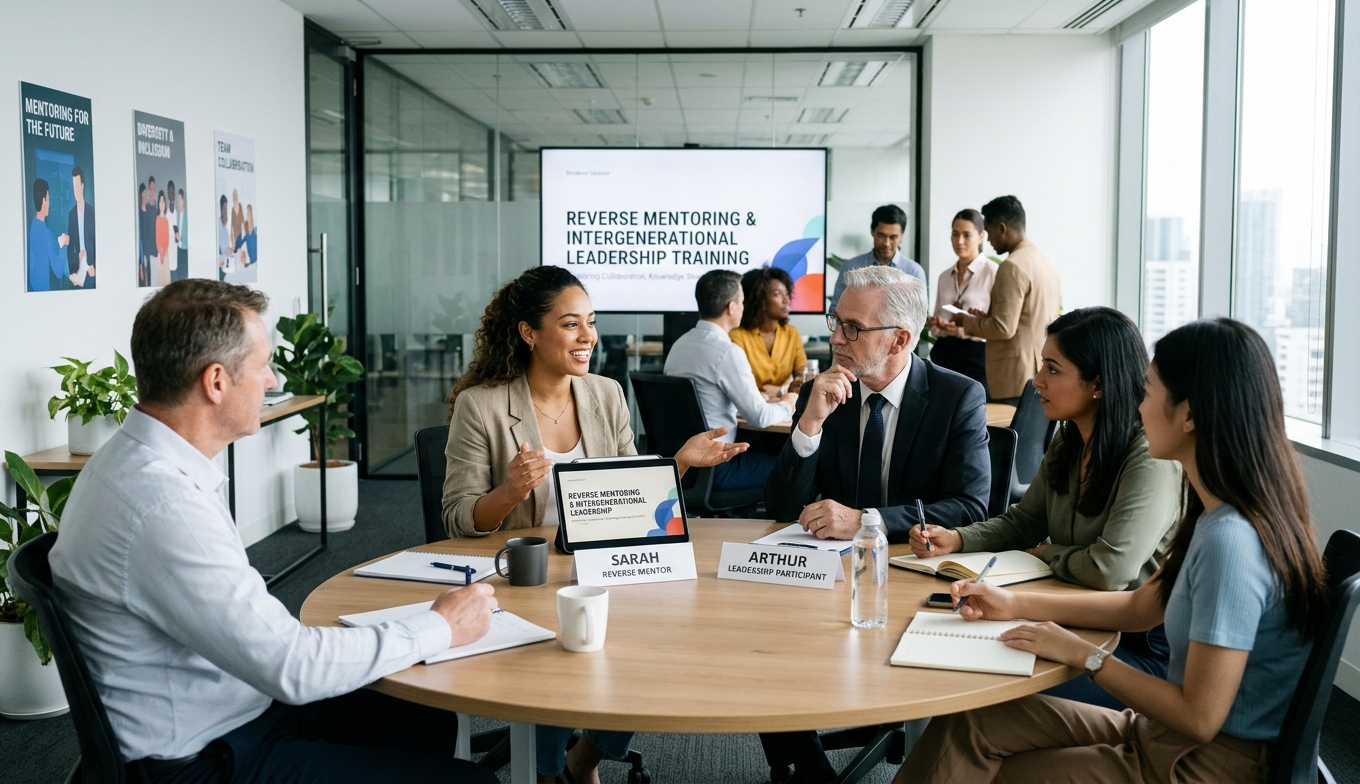
Reverse Mentoring and Intergenerational Leadership Training Courses offered by Geneva Institute of Business Management are designed to strengthen leadership effectiveness through structured knowledge exchange, generational learning, and collaboration between employees from different age groups. As organisations bring together professionals with diverse career experiences, technological capabilities, communication preferences, and leadership perspectives, reverse mentoring has become an important organisational approach for developing adaptable leadership and building an inclusive workplace culture.
Traditional mentoring generally involves experienced professionals sharing their knowledge with younger colleagues. Reverse mentoring introduces a complementary approach in which younger employees share their expertise, contemporary perspectives, digital capabilities, and emerging workplace insights with senior leaders. This exchange creates opportunities for mutual learning, strengthens professional relationships, and helps organisations understand changing workforce expectations. It also enables senior executives to gain practical insights into digital transformation, emerging technologies, generational differences, employee engagement, and evolving business practices.
The Reverse Mentoring and Intergenerational Leadership Training Courses focus on establishing effective mentoring relationships that generate measurable organisational value. The programmes address the practical challenges associated with connecting different generations, managing differences in professional experience, overcoming communication barriers, and creating an environment where knowledge exchange becomes an integral part of leadership development. Participants examine how organisations can introduce reverse mentoring programmes that support business priorities while encouraging meaningful interaction between senior leaders and younger employees.
Intergenerational leadership requires more than recognising age-related differences. It involves understanding the capabilities, expectations, experiences, and contributions of individuals across the workforce. Professionals from different generations bring valuable knowledge to organisational decision-making. Experienced executives contribute strategic judgement, institutional knowledge, industry relationships, and organisational experience, while younger professionals often provide fresh perspectives on digital platforms, emerging market behaviour, contemporary communication channels, and changing employee expectations. Reverse mentoring creates a structured environment where these capabilities complement one another.
The Geneva Institute of Business Management integrates reverse mentoring principles with practical leadership management approaches to help organisations improve collaboration, strengthen inclusion, and develop future-ready leadership capabilities. The programmes explore how mentoring relationships can support organisational transformation, succession planning, employee development, and cultural improvement. They also address the responsibilities of mentors and mentees, the importance of confidentiality, the development of mutual trust, and the establishment of clear professional boundaries.
A central focus is building sustainable generational learning practices rather than treating reverse mentoring as an occasional workplace initiative. Organisations benefit when knowledge exchange becomes part of their leadership culture, and employees feel confident contributing ideas regardless of their age, position, or professional seniority. This approach supports psychological safety, improves communication across organisational levels, and encourages senior leaders to remain connected with the experiences of their wider workforce.
The Reverse Mentoring and Intergenerational Leadership Training Courses form part of the Leadership and Management Training Courses category at Geneva Institute of Business Management. They provide organisations with practical approaches to developing inclusive leadership, improving cross-generational collaboration, strengthening internal knowledge networks, and preparing leaders to manage increasingly diverse workforces.
Through a business-focused approach, the programmes help participants understand how reverse mentoring can contribute to leadership effectiveness, organisational resilience, innovation, and long-term workforce development. The emphasis remains on practical application, measurable outcomes, and the development of professional relationships that support organisational performance.
Objectives
The Reverse Mentoring and Intergenerational Leadership Training Courses are designed to strengthen participants' ability to establish, manage, and evaluate mentoring relationships across different generations. The objectives focus on improving leadership awareness, supporting knowledge exchange, and creating organisational environments where professional contributions are recognised and valued.
Develop an Understanding of Reverse Mentoring
-
Establish a clear understanding of reverse mentoring and its role in contemporary leadership management.
-
Examine the differences between traditional mentoring, reverse mentoring, peer mentoring, and intergenerational mentoring.
-
Identify how younger employees can contribute valuable insights to senior leaders through structured professional relationships.
-
Understand how reverse mentoring supports leadership development, organisational learning, and business transformation.
-
Recognise the strategic importance of reciprocal learning in organisations with multigenerational workforces.
Strengthen Intergenerational Leadership Capabilities
-
Develop leadership approaches that support collaboration between employees from different generations.
-
Improve awareness of generational expectations, professional behaviours, communication preferences, and workplace experiences.
-
Enable senior leaders to engage effectively with younger professionals and understand their perspectives.
-
Strengthen the ability to manage generational differences without creating workplace divisions or stereotypes.
-
Encourage leadership practices that recognise individual capabilities rather than making assumptions based on age.
Improve Knowledge Exchange and Organisational Learning
-
Establish effective knowledge exchange practices between senior executives and younger employees.
-
Identify opportunities to transfer digital knowledge, organisational experience, industry insights, and emerging business perspectives.
-
Strengthen communication channels across hierarchical and generational boundaries.
-
Encourage employees to share expertise, professional experiences, and innovative ideas.
-
Develop structured approaches for capturing and applying knowledge gained through mentoring relationships.
Promote Inclusion and Workplace Collaboration
-
Strengthen inclusion by ensuring employees across different age groups have opportunities to contribute to organisational development.
-
Build mutual respect and professional trust between senior leaders and younger employees.
-
Address unconscious assumptions and generational biases that affect workplace relationships.
-
Encourage open communication and psychological safety within mentoring partnerships.
-
Develop inclusive leadership practices that recognise diverse professional experiences and capabilities.
Support Digital Awareness and Leadership Adaptability
-
Enable senior leaders to understand emerging technologies and contemporary digital workplace practices.
-
Explore how younger employees can support digital awareness and technology adoption.
-
Improve leadership responsiveness to changing workforce expectations and business environments.
-
Encourage continuous learning and adaptability across organisational levels.
-
Strengthen the relationship between generational learning and digital transformation initiatives.
Establish Effective Reverse Mentoring Programmes
-
Identify organisational requirements and business priorities before introducing mentoring initiatives.
-
Develop appropriate mentor and mentee selection criteria.
-
Establish clear expectations, responsibilities, communication arrangements, and programme objectives.
-
Introduce practical methods for monitoring mentoring relationships and evaluating their effectiveness.
-
Align reverse mentoring initiatives with leadership development, succession planning, and workforce transformation strategies.
Improve Leadership Performance and Organisational Outcomes
-
Strengthen decision-making through exposure to diverse perspectives and professional experiences.
-
Improve employee engagement by creating opportunities for meaningful cross-generational interaction.
-
Encourage innovation through collaboration between experienced leaders and emerging professionals.
-
Support organisational continuity through effective knowledge sharing.
-
Develop measurable approaches for assessing the contribution of reverse mentoring to business performance.
Target Audience
The Reverse Mentoring and Intergenerational Leadership Training Courses are designed for professionals responsible for leadership development, organisational performance, employee engagement, workforce transformation, and the management of multigenerational teams. The programmes are relevant to organisations seeking to improve knowledge exchange and establish stronger professional relationships between employees at different career stages.
Senior Leaders and Executives
Senior leaders, executive directors, chief executives, and departmental heads benefit from understanding how reverse mentoring can provide access to new perspectives and emerging workplace knowledge. The programmes help senior professionals strengthen their engagement with younger employees, understand changing workforce expectations, and incorporate contemporary insights into strategic decision-making.
Human Resources Directors and Managers
HR professionals responsible for employee development, organisational culture, talent management, and workforce planning can use reverse mentoring to support inclusive workplace practices. The programmes provide approaches for designing mentoring initiatives, identifying suitable participants, managing professional relationships, and measuring programme effectiveness.
Learning and Development Professionals
Learning and development managers, organisational development specialists, and talent development professionals can strengthen their understanding of generational learning and knowledge exchange. The programmes support the integration of reverse mentoring into leadership development strategies, internal learning systems, and employee capability-building initiatives.
Emerging Leaders and Younger Employees
Younger professionals, high-potential employees, and emerging leaders can develop the confidence and professional capabilities required to contribute to reverse mentoring relationships. The programmes help them communicate their expertise, share contemporary perspectives, engage with senior decision-makers, and develop stronger organisational awareness.
Department Heads and Functional Managers
Department managers and team leaders responsible for multigenerational teams can benefit from practical approaches to managing differences in communication, professional experience, and workplace expectations. The programmes help managers create collaborative environments where employees exchange knowledge and contribute to shared objectives.
Diversity, Equity, and Inclusion Professionals
Professionals responsible for workplace inclusion and organisational culture can explore how reverse mentoring supports cross-generational understanding and reduces barriers between hierarchical levels. The programmes provide practical perspectives on creating inclusive mentoring arrangements and recognising contributions from employees across different career stages.
Organisational Development Consultants
Consultants, business advisers, and organisational transformation specialists can strengthen their ability to recommend and implement mentoring initiatives. The programmes provide insights into programme design, stakeholder engagement, leadership alignment, and the integration of generational learning into broader organisational development strategies.
Business Owners and Entrepreneurs
Business owners, founders, and entrepreneurs managing teams with different professional backgrounds can use reverse mentoring to improve leadership awareness and encourage innovation. The programmes help business decision-makers understand how knowledge exchange strengthens organisational adaptability and supports sustainable growth.
Corporate Training and Talent Management Professionals
Corporate training specialists and talent management teams can apply reverse mentoring principles to succession planning, leadership pipelines, employee engagement, and internal capability development. The programmes are particularly relevant to organisations seeking practical methods for retaining institutional knowledge while introducing fresh perspectives into leadership processes.
Modules
Module 1: Fundamentals of Reverse Mentoring and Intergenerational Leadership
-
Definition and strategic importance of reverse mentoring.
-
Evolution of mentoring practices in modern organisations.
-
Differences between traditional mentoring and reverse mentoring.
-
The relationship between generational learning and leadership development.
-
Contributions of senior leaders and younger employees to organisational learning.
-
Reverse mentoring as a mechanism for organisational transformation.
-
Business applications of reciprocal mentoring relationships.
Module 2: Understanding Generational Differences in the Workplace
-
Characteristics of multigenerational workforces.
-
Understanding different professional experiences and career expectations.
-
Generational perspectives on leadership, communication, and collaboration.
-
Workplace attitudes towards technology, flexibility, and organisational change.
-
Managing generational assumptions and age-related stereotypes.
-
Recognising individual differences within generational groups.
-
Building mutual understanding across professional generations.
Module 3: Designing Effective Reverse Mentoring Relationships
-
Identifying organisational needs and mentoring priorities.
-
Establishing objectives for reverse mentoring partnerships.
-
Selecting suitable mentors and mentees.
-
Matching participants according to expertise, interests, and business requirements.
-
Defining responsibilities and professional expectations.
-
Developing mentoring agreements and communication arrangements.
-
Establishing confidentiality and professional boundaries.
-
Creating mutually beneficial mentoring relationships.
Module 4: Knowledge Exchange Between Senior Leaders and Younger Employees
-
Understanding knowledge exchange as a strategic organisational capability.
-
Sharing digital expertise and emerging technology insights.
-
Transferring institutional knowledge and leadership experience.
-
Encouraging the exchange of industry knowledge and market perspectives.
-
Identifying opportunities for collaborative problem-solving.
-
Overcoming barriers to knowledge sharing across hierarchical levels.
-
Converting mentoring discussions into practical business improvements.
-
Developing sustainable organisational knowledge-sharing practices.
Module 5: Communication and Relationship Management Across Generations
-
Understanding generational communication preferences.
-
Developing effective listening and questioning techniques.
-
Managing differences in communication styles and professional expectations.
-
Building trust and credibility within mentoring partnerships.
-
Encouraging constructive feedback and open discussions.
-
Addressing misunderstandings and interpersonal challenges.
-
Managing difficult conversations between different organisational levels.
-
Strengthening professional relationships through consistent communication.
Module 6: Inclusive Leadership and Psychological Safety
-
Understanding the relationship between reverse mentoring and inclusion.
-
Building an organisational culture that values different perspectives.
-
Recognising and addressing unconscious generational bias.
-
Encouraging participation from employees across organisational hierarchies.
-
Establishing psychological safety within mentoring relationships.
-
Promoting mutual respect between senior and junior professionals.
-
Preventing age-related exclusion and workplace discrimination.
-
Integrating inclusive leadership into organisational management practices.
Module 7: Digital Transformation and Contemporary Workplace Insights
-
Understanding the role of younger employees in digital knowledge exchange.
-
Exploring emerging technologies and changing digital workplace practices.
-
Improving senior leadership awareness of contemporary digital platforms.
-
Understanding changing customer expectations and digital communication trends.
-
Connecting reverse mentoring with organisational technology adoption.
-
Encouraging digital confidence among senior decision-makers.
-
Identifying opportunities for innovation through generational collaboration.
-
Supporting technology-driven organisational transformation.
Module 8: Leadership Development Through Reciprocal Learning
-
Developing leadership capabilities through cross-generational relationships.
-
Strengthening adaptability and continuous learning.
-
Improving strategic awareness through diverse professional perspectives.
-
Building confidence in receiving and applying feedback.
-
Encouraging self-reflection and leadership improvement.
-
Developing emotional intelligence in intergenerational relationships.
-
Supporting emerging leadership talent through mentoring opportunities.
-
Connecting reverse mentoring with succession planning.
Module 9: Managing Challenges in Reverse Mentoring Programmes
-
Addressing resistance from senior leaders and experienced professionals.
-
Managing uncertainty about roles and professional authority.
-
Overcoming communication and generational barriers.
-
Preventing power imbalances within mentoring partnerships.
-
Maintaining confidentiality and professional trust.
-
Managing disengagement and inconsistent participation.
-
Resolving misunderstandings and conflicting expectations.
-
Establishing organisational support for successful programme implementation.
Module 10: Reverse Mentoring Programme Implementation and Governance
-
Developing an organisational reverse mentoring strategy.
-
Aligning programme objectives with business priorities.
-
Establishing programme governance and management responsibilities.
-
Designing participation frameworks and mentoring guidelines.
-
Allocating resources and securing leadership commitment.
-
Creating communication and engagement plans.
-
Establishing appropriate monitoring and reporting procedures.
-
Integrating reverse mentoring into wider talent management strategies.
Module 11: Measuring Mentoring Performance and Organisational Impact
-
Identifying key performance indicators for reverse mentoring.
-
Measuring knowledge exchange and participant engagement.
-
Evaluating improvements in leadership awareness and collaboration.
-
Assessing employee perceptions of inclusion and organisational culture.
-
Monitoring mentoring participation and relationship effectiveness.
-
Gathering feedback from senior leaders and younger employees.
-
Identifying opportunities for programme improvement.
-
Connecting mentoring outcomes with organisational performance objectives.
Module 12: Building a Sustainable Intergenerational Learning Culture
-
Establishing continuous knowledge exchange across organisational levels.
-
Embedding reverse mentoring into leadership development frameworks.
-
Encouraging cross-generational collaboration in daily business operations.
-
Developing internal mentoring networks and communities.
-
Supporting long-term employee engagement and professional development.
-
Preserving organisational knowledge through reciprocal learning.
-
Strengthening organisational adaptability and innovation.
-
Creating sustainable approaches to intergenerational leadership.
FAQs
1. What is reverse mentoring in leadership management?
Reverse mentoring is a professional development approach in which younger or less senior employees share their knowledge, expertise, and perspectives with senior leaders. It supports knowledge exchange, improves leadership awareness, and strengthens collaboration across different generations within an organisation.
2. How does reverse mentoring benefit senior leaders?
Reverse mentoring helps senior leaders understand emerging technologies, contemporary workplace expectations, digital communication practices, and younger employees' perspectives. It also strengthens leadership adaptability, supports informed decision-making, and improves connections between executives and the wider workforce.
3. Why is intergenerational leadership important for modern organisations?
Intergenerational leadership enables organisations to benefit from the combined knowledge, experience, and capabilities of employees from different age groups. It improves collaboration, encourages innovation, supports inclusion, and creates opportunities for knowledge exchange across organisational levels.
4. How can organisations implement an effective reverse mentoring programme?
Organisations can implement reverse mentoring by identifying business objectives, selecting suitable participants, matching mentors and mentees, establishing clear responsibilities, and providing appropriate programme support. Regular communication, confidentiality, feedback, and performance measurement help maintain effective mentoring relationships.
5. Who should attend Reverse Mentoring and Intergenerational Leadership Training Courses?
These programmes are suitable for senior executives, HR managers, organisational development specialists, learning and development professionals, department heads, emerging leaders, and younger employees. They are particularly relevant to professionals responsible for leadership development, employee engagement, inclusion, and managing multigenerational workforces.
Venues and dates
This programme runs every month in the following cities. Select a venue to register.
 Geneva
Switzerland
 Zurich
Switzerland
Basel
Switzerland
 London
UK
 Manchester
UK
 Oxford
UK
 Madrid
Spain
 Barcelona
Spain
 Paris
France
 Rome
Italy
 Vienna
Austria
Oslo
Norway
 Athens
Greece
 Copenhagen
Denmark
 Berlin
Germany
 Munich
Germany
 New York
USA
 Washington
USA
 Dubai
UAE
 Istanbul
Turkey
 Amsterdam
Netherlands
 Brussels
Belgium
 Lisbon
Portugal
 Malaga
Spain
 Milan
Italy
 Dusseldorf
Germany
 Prague
Czech Republic
 Budapest
Hungary
 Stockholm
Sweden
 Sheffield
UK
 Bangor
UK
 Ankara
Turkey
 Abu Dhabi
UAE
 Doha
Qatar
 Riyadh
Saudi Arabia
 Jeddah
Saudi Arabia
 Dammam
Saudi Arabia
 Muscat
Oman
 Amman
Jordan
 Cairo
Egypt
 Sharm El Sheikh
Egypt
 Casablanca
Morocco
 Marrakesh
Morocco
 Agadir
Morocco
 Tangier
Morocco
 Tunis
Tunisia
 Kuala Lumpur
Malaysia
 Singapore
 Jakarta
Indonesia
 Phuket
Thailand
 Tokyo
Japan
 Beijing
China
 Los Angeles
USA
 California
USA
 Toronto
Canada