Summary
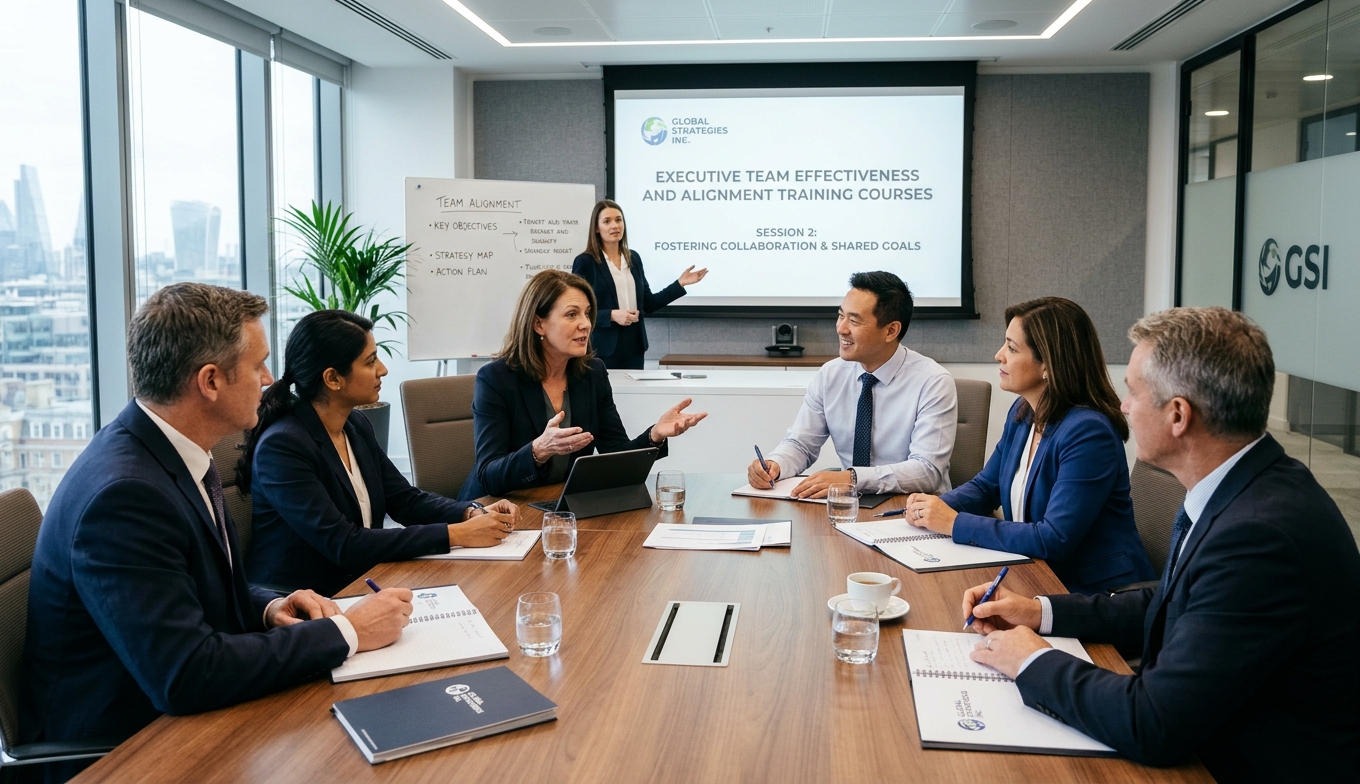
Executive Team Effectiveness and Alignment Training Courses offered by Geneva Institute of Business Management are designed to strengthen the collective performance, strategic contribution, and leadership capabilities of senior management teams. In organisations operating within increasingly complex business environments, executive teams play a central role in establishing strategic direction, managing organisational priorities, allocating resources, and delivering sustainable business results. Their effectiveness depends not only on individual leadership capabilities but also on the quality of collaboration, shared accountability, communication, and decision-making across the leadership group.
Executive Team Effectiveness focuses on developing a unified leadership approach in which senior executives operate with a clear understanding of organisational objectives, strategic priorities, individual responsibilities, and collective expectations. When executive teams work towards shared goals, they improve organisational coordination, reduce leadership conflicts, accelerate decision-making, and create stronger connections between corporate strategy and operational execution. Effective leadership alignment also ensures that different departments and business functions contribute towards a consistent organisational direction.
These training courses address the organisational and behavioural factors that influence executive team performance. They examine team dynamics, leadership relationships, strategic alignment, executive collaboration, communication practices, and collective decision-making. The focus is on strengthening the executive team's ability to manage competing priorities, resolve disagreements constructively, address organisational challenges, and maintain consistent leadership across different business functions.
Executive teams frequently consist of individuals with different professional backgrounds, leadership styles, functional responsibilities, and strategic perspectives. Although this diversity provides valuable insight, it can also create differences in priorities, communication approaches, and decision-making preferences. Without effective coordination, these differences can weaken leadership unity and delay important organisational decisions. Strong executive team effectiveness establishes the conditions for productive disagreement, constructive challenge, mutual trust, and coordinated action.
The programme places particular emphasis on leadership alignment as a foundation for organisational performance. It examines how executive leaders establish common strategic objectives, translate corporate priorities into measurable responsibilities, and maintain consistency between leadership decisions and organisational activities. Participants develop a stronger understanding of how strategic alignment influences departmental cooperation, resource allocation, organisational culture, and business performance.
Another important focus is executive collaboration. Senior leaders must work beyond departmental boundaries and consider the wider organisational impact of their decisions. Effective collaboration enables executives to exchange information, challenge assumptions, coordinate resources, and address interconnected business challenges. It also reduces functional silos and encourages shared ownership of organisational outcomes.
The courses explore practical approaches to improving executive team dynamics, strengthening leadership relationships, managing disagreements, and creating a culture of accountability. They also address the importance of clear communication, structured leadership meetings, performance monitoring, and collective responsibility. These capabilities support faster decision-making and help executive teams maintain focus during periods of organisational change, business expansion, restructuring, and strategic transformation.
Through the Leadership and Management Training Courses category, Geneva Institute of Business Management provides a corporate-focused development programme that supports stronger executive leadership and organisational coordination. The emphasis remains on practical management outcomes, improved leadership effectiveness, strategic consistency, and measurable organisational value.
By strengthening Executive Team Effectiveness, organisations establish a more cohesive leadership structure capable of translating strategic objectives into coordinated business action. The programme supports executive teams in building trust, improving collaboration, managing complex decisions, and maintaining alignment between leadership priorities and long-term organisational goals.
Objectives
The primary objective of Executive Team Effectiveness and Alignment Training Courses is to strengthen the collective capabilities of senior leadership teams and improve their contribution to organisational performance. The programme focuses on developing a unified executive leadership approach that connects strategic priorities, leadership behaviours, decision-making processes, and organisational accountability.
Key objectives include:
-
Strengthening executive team effectiveness through improved leadership coordination, collective responsibility, and shared organisational objectives.
-
Developing leadership alignment to ensure that senior executives maintain a consistent understanding of corporate strategy, business priorities, and organisational expectations.
-
Improving executive collaboration by encouraging cross-functional communication, knowledge sharing, and coordinated problem-solving.
-
Understanding team dynamics and their influence on leadership relationships, executive performance, organisational culture, and business outcomes.
-
Enhancing strategic alignment between executive decisions, departmental objectives, operational activities, and long-term corporate priorities.
-
Strengthening collective decision-making capabilities to support timely, informed, and commercially sound leadership decisions.
-
Establishing clear executive responsibilities and accountability structures that improve ownership of organisational results.
-
Improving communication between senior leaders to minimise misunderstandings, conflicting messages, and unnecessary delays in organisational execution.
-
Developing effective approaches to managing executive disagreements, competing priorities, and differences in leadership perspectives.
-
Building trust and professional relationships among executive team members to encourage transparency, constructive feedback, and mutual respect.
-
Improving the effectiveness of executive meetings through structured discussions, clear agendas, decision ownership, and measurable follow-up actions.
-
Strengthening cross-functional cooperation to reduce departmental silos and encourage organisation-wide thinking.
-
Aligning leadership behaviours with organisational values, strategic commitments, and performance expectations.
-
Developing approaches for managing uncertainty, organisational transformation, and complex business challenges through collective leadership.
-
Improving executive performance monitoring through shared indicators, regular reviews, and measurable strategic outcomes.
-
Strengthening the connection between executive leadership decisions and their implementation across organisational levels.
-
Encouraging a culture of shared leadership responsibility in which executives consider collective organisational success alongside individual functional performance.
-
Supporting sustainable organisational growth through consistent leadership direction, effective governance, and coordinated strategic execution.
Target Audience
Executive Team Effectiveness and Alignment Training Courses are designed for senior professionals and organisational leaders responsible for strategic direction, executive coordination, corporate governance, and overall business performance. The programme is particularly relevant to organisations seeking stronger leadership relationships, improved strategic alignment, and more effective executive collaboration.
The target audience includes:
Chief Executive Officers and Managing Directors
CEOs and managing directors responsible for organisational direction and overall business performance benefit from stronger executive team effectiveness. The programme supports their ability to establish shared priorities, coordinate senior leadership responsibilities, and ensure that executive decisions contribute towards organisational objectives. It also strengthens their approach to building leadership unity and maintaining accountability across the executive group.
Chief Operating Officers
COOs responsible for coordinating organisational operations require effective collaboration between senior management functions. The programme strengthens their ability to connect strategic priorities with operational execution, resolve cross-functional challenges, and improve cooperation between departments. It also supports more consistent leadership communication and organisational performance management.
Chief Financial Officers and Finance Executives
CFOs and senior finance professionals participate in executive decisions involving investment priorities, resource allocation, financial performance, and business sustainability. The programme supports their contribution to collective decision-making and strengthens alignment between financial objectives and wider organisational strategy.
Chief Human Resources Officers and HR Directors
HR executives responsible for leadership development, workforce strategy, organisational culture, and talent management benefit from improved executive team dynamics. The programme supports their ability to strengthen leadership relationships, establish accountability, and connect people management priorities with organisational objectives.
Executive Committee Members
Members of executive committees require consistent communication, shared strategic understanding, and coordinated decision-making. The programme helps executive committee members improve their collective contribution, manage differences in professional perspectives, and establish stronger working relationships across the leadership group.
Senior Vice Presidents and Vice Presidents
Senior vice presidents and vice presidents responsible for major organisational functions benefit from improved strategic alignment and executive collaboration. The programme strengthens their ability to coordinate departmental priorities with corporate objectives and contribute effectively to organisation-wide decisions.
Directors and Departmental Heads
Directors and departmental heads responsible for translating executive strategy into functional performance require a clear understanding of leadership expectations and shared organisational priorities. The programme supports their ability to improve cross-departmental cooperation, manage competing demands, and maintain consistency between functional plans and corporate strategy.
Senior Management Teams
Senior management teams responsible for organisational planning, performance management, and operational coordination benefit from stronger team dynamics and collective accountability. The programme provides management-focused approaches for improving communication, resolving disagreements, and maintaining alignment across leadership responsibilities.
Business Owners and Entrepreneurs
Business owners and entrepreneurs managing growing organisations require effective leadership structures that support expansion and organisational stability. The programme helps them strengthen executive relationships, improve management coordination, and establish consistent decision-making processes as their businesses become more complex.
Corporate Strategy and Transformation Leaders
Professionals responsible for corporate strategy, business transformation, organisational restructuring, and change management benefit from stronger executive collaboration. The programme supports their ability to coordinate leadership decisions, manage strategic dependencies, and maintain organisational alignment throughout transformation initiatives.
Governance and Board-Level Professionals
Board-level professionals and senior governance executives benefit from understanding how executive team effectiveness influences organisational oversight, strategic accountability, and leadership performance. The programme supports stronger cooperation between executive leadership and governance structures while reinforcing the importance of transparent decision-making and collective responsibility.
Modules
Module 1: Foundations of Executive Team Effectiveness
-
Understanding the purpose and responsibilities of executive teams.
-
Key characteristics of high-performing executive leadership groups.
-
The relationship between individual leadership performance and collective effectiveness.
-
Executive team structures, responsibilities, and organisational expectations.
-
Identifying factors that influence executive team performance.
-
Establishing shared leadership standards and collective commitments.
-
Connecting executive effectiveness with organisational performance.
Module 2: Leadership Alignment and Shared Strategic Direction
-
Understanding leadership alignment within complex organisations.
-
Establishing a common understanding of organisational vision and strategic priorities.
-
Aligning executive leadership objectives with corporate strategy.
-
Connecting departmental strategies with organisation-wide goals.
-
Managing differences in executive priorities and professional perspectives.
-
Establishing shared commitments for strategic implementation.
-
Maintaining leadership consistency during organisational change.
Module 3: Executive Team Dynamics and Leadership Relationships
-
Understanding the behavioural factors influencing executive team dynamics.
-
Identifying individual leadership styles and their impact on team performance.
-
Building trust and professional respect among senior executives.
-
Managing interpersonal differences within executive leadership groups.
-
Recognising unproductive behaviours and communication patterns.
-
Encouraging constructive challenge and professional disagreement.
-
Developing stronger executive relationships through mutual accountability.
Module 4: Strategic Alignment and Organisational Priorities
-
Translating corporate strategy into executive leadership priorities.
-
Aligning organisational objectives across business functions.
-
Establishing clear strategic responsibilities and performance expectations.
-
Managing competing organisational priorities.
-
Improving coordination between strategic planning and operational execution.
-
Identifying gaps between executive decisions and organisational implementation.
-
Maintaining strategic consistency across leadership levels.
Module 5: Executive Collaboration and Cross-Functional Cooperation
-
Developing effective executive collaboration practices.
-
Breaking down departmental silos and functional barriers.
-
Encouraging information sharing between executive leaders.
-
Improving cooperation across finance, operations, human resources, marketing, and technology.
-
Managing interdepartmental dependencies and shared responsibilities.
-
Coordinating resources to support organisation-wide priorities.
-
Establishing collaborative approaches to complex business challenges.
Module 6: Collective Decision-Making and Executive Judgement
-
Understanding the principles of effective executive decision-making.
-
Establishing structured approaches to collective leadership decisions.
-
Evaluating business information, organisational risks, and strategic alternatives.
-
Managing uncertainty and incomplete information.
-
Balancing individual expertise with collective executive judgement.
-
Addressing disagreements during high-impact decisions.
-
Improving decision ownership, implementation, and follow-up.
-
Maintaining consistency between executive decisions and organisational objectives.
Module 7: Executive Communication and Leadership Transparency
-
Strengthening communication between senior executives.
-
Establishing clear communication expectations within leadership teams.
-
Improving information exchange across organisational functions.
-
Communicating strategic priorities and organisational changes.
-
Encouraging transparency in executive discussions and decisions.
-
Managing sensitive leadership conversations.
-
Providing constructive feedback and addressing communication barriers.
-
Maintaining consistent leadership messages throughout the organisation.
Module 8: Managing Executive Conflict and Competing Priorities
-
Understanding the causes of conflict within executive teams.
-
Identifying differences in leadership perspectives and organisational interests.
-
Distinguishing constructive disagreement from destructive conflict.
-
Managing competing departmental objectives.
-
Applying conflict resolution approaches to executive relationships.
-
Facilitating difficult conversations between senior leaders.
-
Building agreement around shared organisational priorities.
-
Preventing unresolved executive disagreements from affecting business performance.
Module 9: Building Trust, Accountability, and Shared Ownership
-
Establishing trust as a foundation of executive team effectiveness.
-
Defining collective and individual leadership accountability.
-
Developing shared ownership of organisational outcomes.
-
Encouraging transparency and responsible executive behaviour.
-
Addressing accountability gaps within leadership teams.
-
Establishing clear commitments and measurable responsibilities.
-
Strengthening consistency between executive decisions and leadership actions.
Module 10: High-Performance Executive Meetings and Governance
-
Designing effective executive meeting structures.
-
Establishing clear meeting objectives, agendas, and decision requirements.
-
Improving participation and constructive executive discussions.
-
Managing time and competing priorities during leadership meetings.
-
Recording decisions, responsibilities, and follow-up actions.
-
Strengthening executive reporting and performance reviews.
-
Connecting meeting outcomes with corporate governance and strategic execution.
Module 11: Executive Leadership During Organisational Change
-
Understanding the role of executive teams in organisational transformation.
-
Maintaining leadership alignment during restructuring and business expansion.
-
Coordinating executive responsibilities throughout change initiatives.
-
Managing uncertainty and organisational resistance.
-
Communicating transformation priorities across leadership levels.
-
Strengthening executive collaboration during periods of disruption.
-
Maintaining organisational confidence through consistent leadership direction.
Module 12: Executive Performance Measurement and Continuous Improvement
-
Establishing indicators for measuring executive team effectiveness.
-
Evaluating collective leadership performance against strategic objectives.
-
Monitoring executive accountability and organisational outcomes.
-
Identifying weaknesses in leadership coordination and team dynamics.
-
Conducting executive performance reviews.
-
Improving decision-making and collaboration through performance insights.
-
Establishing continuous improvement priorities for executive teams.
-
Connecting leadership effectiveness with sustainable business performance.
Module 13: Developing a Sustainable Executive Alignment Framework
-
Establishing a structured framework for long-term leadership alignment.
-
Defining shared executive objectives and leadership commitments.
-
Integrating collaboration into executive management practices.
-
Strengthening coordination between strategic planning and implementation.
-
Establishing regular alignment reviews and accountability mechanisms.
-
Maintaining executive team effectiveness during organisational growth.
-
Developing an integrated approach to leadership performance and organisational success.
FAQs
1. What is Executive Team Effectiveness?
Executive Team Effectiveness refers to the ability of senior leaders to work collectively towards shared organisational objectives. It involves leadership alignment, executive collaboration, effective communication, collective decision-making, and shared accountability. Effective executive teams coordinate business priorities and ensure consistent strategic direction across the organisation.
2. Why is leadership alignment important for executive teams?
Leadership alignment ensures that senior executives share a common understanding of organisational strategy, priorities, and performance expectations. It reduces conflicting decisions, improves cross-functional cooperation, and strengthens the connection between corporate objectives and operational execution. Consistent leadership alignment also supports organisational stability and long-term business performance.
3. How can organisations improve executive team dynamics?
Organisations can improve executive team dynamics by establishing clear responsibilities, encouraging transparent communication, building professional trust, and addressing disagreements constructively. Structured executive meetings, shared performance objectives, and collective accountability also help strengthen relationships and improve collaboration between senior leaders.
4. What role does decision-making play in executive team effectiveness?
Decision-making is central to executive team effectiveness because senior leaders make decisions that influence organisational strategy, resources, operations, and long-term performance. Effective collective decision-making combines different areas of executive expertise, evaluates business risks, establishes shared ownership, and ensures that decisions are implemented consistently.
5. Who should attend Executive Team Effectiveness and Alignment Training Courses?
These courses are suitable for CEOs, managing directors, COOs, CFOs, HR directors, executive committee members, vice presidents, departmental heads, and senior management professionals. They are particularly relevant to leaders responsible for strategic alignment, executive collaboration, organisational transformation, and collective business performance.
Venues and dates
This programme runs every month in the following cities. Select a venue to register.
 Geneva
Switzerland
 Zurich
Switzerland
Basel
Switzerland
 London
UK
 Manchester
UK
 Oxford
UK
 Madrid
Spain
 Barcelona
Spain
 Paris
France
 Rome
Italy
 Vienna
Austria
Oslo
Norway
 Athens
Greece
 Copenhagen
Denmark
 Berlin
Germany
 Munich
Germany
 New York
USA
 Washington
USA
 Dubai
UAE
 Istanbul
Turkey
 Amsterdam
Netherlands
 Brussels
Belgium
 Lisbon
Portugal
 Malaga
Spain
 Milan
Italy
 Dusseldorf
Germany
 Prague
Czech Republic
 Budapest
Hungary
 Stockholm
Sweden
 Sheffield
UK
 Bangor
UK
 Ankara
Turkey
 Abu Dhabi
UAE
 Doha
Qatar
 Riyadh
Saudi Arabia
 Jeddah
Saudi Arabia
 Dammam
Saudi Arabia
 Muscat
Oman
 Amman
Jordan
 Cairo
Egypt
 Sharm El Sheikh
Egypt
 Casablanca
Morocco
 Marrakesh
Morocco
 Agadir
Morocco
 Tangier
Morocco
 Tunis
Tunisia
 Kuala Lumpur
Malaysia
 Singapore
 Jakarta
Indonesia
 Phuket
Thailand
 Tokyo
Japan
 Beijing
China
 Los Angeles
USA
 California
USA
 Toronto
Canada