Summary
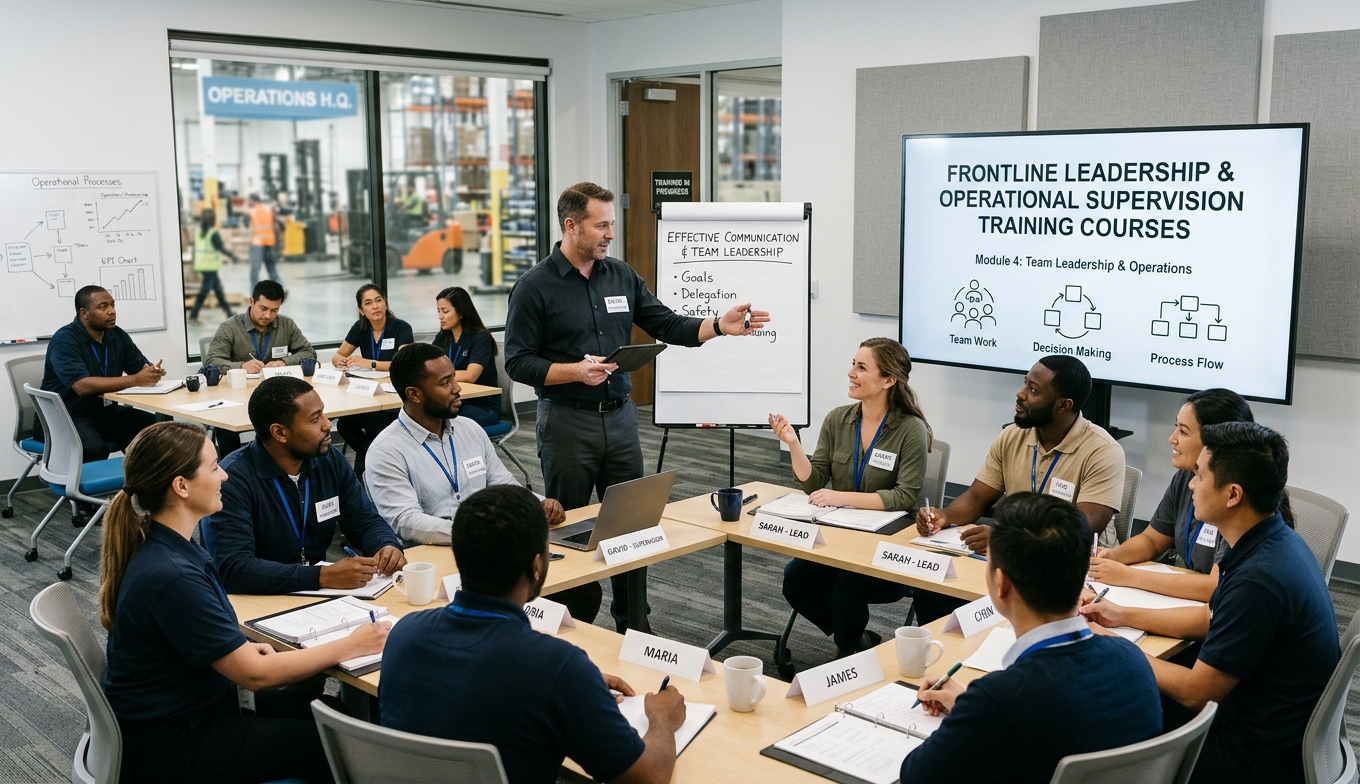
Frontline Leadership and Operational Supervision Training Courses offered by the Geneva Institute of Business Management are designed to strengthen the leadership capabilities, supervisory effectiveness, and operational management performance of professionals responsible for managing daily business activities and frontline teams. Effective frontline leadership plays a critical role in translating organisational strategies into practical results. Frontline managers are responsible for coordinating employees, maintaining productivity, managing operational challenges, and ensuring that departmental objectives are achieved consistently.
In modern business environments, organisations depend on capable supervisors who can manage people, resources, workflows, and performance expectations simultaneously. Operational supervision requires more than assigning tasks and monitoring attendance. It involves setting clear priorities, communicating operational requirements, resolving workplace issues, supporting employee performance, and maintaining accountability across different shifts and departments. Strong supervisory leadership ensures that daily activities remain aligned with organisational standards, customer expectations, and business priorities.
These training courses focus on developing practical leadership competencies that enable supervisors to manage operational responsibilities with confidence and professional judgement. The programme addresses essential aspects of frontline management, including workforce management, shift leadership, team coordination, performance monitoring, productivity improvement, and operational decision-making. It provides a structured approach to managing employees, allocating responsibilities, addressing performance gaps, and maintaining effective working relationships across operational teams.
Frontline managers frequently operate between senior management and employees responsible for delivering products and services. Their ability to interpret management expectations and communicate them effectively to operational staff directly influences organisational performance. Inconsistent supervision can result in communication failures, unclear responsibilities, reduced employee engagement, workflow disruptions, and productivity challenges. Effective frontline leadership establishes the management discipline required to prevent these problems and maintain operational consistency.
The Geneva Institute of Business Management addresses these challenges through a corporate-focused approach to leadership development and operational supervision. The programme examines how supervisors can establish clear performance expectations, manage employee responsibilities, coordinate daily activities, and respond to changing operational demands. Participants develop a stronger understanding of how leadership behaviour influences team performance, workplace accountability, and operational efficiency.
A central focus of the programme is the relationship between leadership effectiveness and operational results. Supervisors must understand how to balance employee needs with production targets, service standards, deadlines, and resource limitations. This requires effective communication, practical problem-solving, structured delegation, and consistent performance management. By strengthening these capabilities, organisations can improve the reliability of frontline operations and develop a more accountable workforce.
Shift leadership is another important area addressed within the programme. Organisations operating across multiple shifts require supervisors who can maintain continuity, communicate operational updates, coordinate handovers, and ensure that employees follow established procedures. Effective shift leadership reduces misunderstandings, improves resource utilisation, and supports consistent service and production standards.
The programme also emphasises team coordination as a foundation of successful operational supervision. Frontline supervisors must ensure that employees understand their responsibilities, cooperate across functional boundaries, and contribute towards shared objectives. Strong coordination helps minimise operational delays, improve workflow management, and create a more structured working environment.
Delivered within the broader framework of Leadership and Management Training Courses, this programme supports organisations seeking to strengthen supervisory capabilities and improve operational performance. The Geneva Institute of Business Management provides a management-oriented approach that connects frontline leadership practices with productivity, workforce effectiveness, and organisational objectives.
Objectives
The Frontline Leadership and Operational Supervision Training Courses aim to develop the management capabilities required to lead operational teams, coordinate daily activities, and maintain consistent workplace performance. The programme focuses on practical supervisory responsibilities and the leadership behaviours that contribute to operational effectiveness.
Key objectives include:
-
Strengthening frontline leadership capabilities to manage employees, coordinate responsibilities, and achieve operational objectives.
-
Developing a clear understanding of the responsibilities and expectations associated with frontline managers and operational supervisors.
-
Improving operational supervision practices through structured planning, task allocation, performance monitoring, and accountability.
-
Enhancing shift leadership capabilities to maintain operational continuity across different working schedules and departmental activities.
-
Developing effective team coordination strategies that improve communication, cooperation, and workflow consistency.
-
Strengthening workforce management practices, including employee scheduling, workload distribution, resource allocation, and attendance management.
-
Improving productivity through effective supervision, operational planning, performance evaluation, and process monitoring.
-
Developing professional communication skills for delivering instructions, providing feedback, managing expectations, and resolving workplace misunderstandings.
-
Strengthening delegation techniques to ensure that employees understand assigned responsibilities, performance standards, and expected outcomes.
-
Improving supervisory decision-making when responding to operational disruptions, employee concerns, and unexpected workplace challenges.
-
Developing practical approaches to employee motivation, engagement, and performance improvement.
-
Establishing consistent methods for monitoring operational standards, identifying performance gaps, and implementing corrective actions.
-
Enhancing conflict management capabilities to address disagreements, workplace tensions, and team coordination difficulties.
-
Improving accountability by establishing clear performance indicators, reporting procedures, and supervisory responsibilities.
-
Strengthening the ability to translate organisational policies and management priorities into effective frontline operational practices.
-
Supporting continuous improvement through employee involvement, operational feedback, and structured performance reviews.
-
Improving coordination between frontline teams, departmental managers, and senior leadership.
-
Developing leadership approaches that support operational resilience, adaptability, and consistent service delivery.
Through these objectives, organisations can strengthen the connection between supervisory performance and operational outcomes. Effective frontline managers become better equipped to manage employees, maintain performance standards, and respond to changing business requirements without compromising operational quality.
Target Audience
The Frontline Leadership and Operational Supervision Training Courses are designed for professionals responsible for managing employees, coordinating operational activities, and maintaining workplace performance. The programme is suitable for organisations seeking to develop supervisory capabilities among employees who directly influence daily operations and workforce productivity.
The target audience includes:
Frontline Managers
Managers responsible for supervising employees and coordinating daily operational activities will benefit from developing stronger leadership and performance management capabilities. The programme supports their ability to communicate management expectations, delegate responsibilities, resolve workplace challenges, and maintain team productivity.
Team Leaders and Supervisors
Team leaders and supervisors responsible for managing small or large operational teams can strengthen their approach to employee coordination, task management, performance monitoring, and workplace accountability. The programme addresses the practical responsibilities involved in maintaining consistent team performance.
Shift Supervisors and Shift Managers
Professionals responsible for supervising rotating shifts, production schedules, customer service operations, and continuous business activities can improve their shift leadership capabilities. The programme focuses on shift coordination, operational handovers, workload distribution, and maintaining consistent standards across working schedules.
Operations Supervisors
Operations supervisors responsible for overseeing daily workflows, operational resources, and departmental activities can strengthen their ability to monitor performance and manage operational requirements. The programme supports improved planning, coordination, reporting, and corrective action management.
Production and Manufacturing Supervisors
Supervisors working in manufacturing and production environments can develop practical approaches to workforce coordination, production monitoring, resource allocation, and operational efficiency. The programme supports their responsibility for maintaining production targets and workplace standards.
Customer Service and Service Delivery Supervisors
Professionals managing customer-facing teams can strengthen their supervisory approach to service quality, employee performance, workload management, and customer satisfaction. Effective operational supervision helps maintain consistent service delivery and improve team responsiveness.
Departmental Coordinators and Assistant Managers
Employees responsible for coordinating departmental activities and supporting management operations can improve their leadership, communication, and organisational capabilities. The programme prepares them to handle broader supervisory responsibilities and coordinate employees more effectively.
Human Resources and Workforce Management Professionals
HR professionals and workforce management specialists involved in employee performance, workforce planning, supervisory development, and organisational effectiveness can gain a stronger understanding of frontline management requirements. The programme supports better alignment between workforce policies and operational realities.
Newly Appointed Supervisors
Employees transitioning from technical or operational positions into supervisory roles can develop the leadership competencies required to manage colleagues, delegate tasks, provide feedback, and maintain professional authority. The programme helps establish a structured approach to their new management responsibilities.
Senior Operations and Departmental Managers
Senior managers responsible for improving frontline performance can benefit from understanding the factors influencing supervisory effectiveness. The programme provides relevant management perspectives for developing consistent leadership standards, improving operational accountability, and strengthening coordination between management levels.
Modules
Module 1: Foundations of Frontline Leadership
This module examines the role of frontline leadership in achieving organisational objectives and maintaining operational effectiveness. It establishes the connection between supervisory behaviour, employee performance, and daily business results.
Key areas include:
-
Principles and responsibilities of frontline leadership.
-
The changing role of frontline managers in modern organisations.
-
Differences between operational supervision and strategic management.
-
Leadership expectations within operational environments.
-
Translating organisational objectives into frontline activities.
-
Establishing professional credibility and supervisory authority.
-
Creating a performance-focused workplace culture.
-
Aligning team responsibilities with departmental priorities.
Module 2: Operational Supervision and Management Responsibilities
This module focuses on the practical responsibilities involved in supervising daily business activities. It examines how supervisors can maintain workflow consistency, monitor operational standards, and ensure that employees follow established procedures.
Key areas include:
-
Principles of effective operational supervision.
-
Daily operational planning and supervisory routines.
-
Assigning responsibilities and monitoring task completion.
-
Establishing operational priorities and performance expectations.
-
Monitoring compliance with workplace procedures.
-
Identifying workflow inefficiencies and operational gaps.
-
Managing operational interruptions and unexpected challenges.
-
Maintaining consistency across departmental activities.
Module 3: Leadership Styles and Supervisory Effectiveness
This module explores leadership approaches that influence employee behaviour, team performance, and operational outcomes. It focuses on selecting appropriate leadership methods according to employee capabilities, workplace conditions, and business requirements.
Key areas include:
-
Different leadership styles in frontline environments.
-
Situational leadership and supervisory adaptability.
-
Directive and participative leadership approaches.
-
Building trust and professional relationships.
-
Balancing authority with employee involvement.
-
Leading teams through operational change.
-
Developing leadership confidence and decision-making.
-
Maintaining consistency in supervisory behaviour.
Module 4: Shift Leadership and Operational Continuity
This module addresses the management challenges associated with shift-based operations. It examines how supervisors can coordinate employees across different schedules while maintaining service quality, production standards, and operational continuity.
Key areas include:
-
Principles of effective shift leadership.
-
Planning and organising shift responsibilities.
-
Managing shift schedules and workforce availability.
-
Conducting structured shift handovers.
-
Communicating operational updates between shifts.
-
Monitoring attendance and shift performance.
-
Managing unexpected staff shortages.
-
Maintaining consistent operational standards across shifts.
Module 5: Team Coordination and Workplace Communication
This module focuses on improving team coordination through structured communication, clear responsibilities, and effective information sharing. It examines how frontline managers can reduce misunderstandings and strengthen cooperation between employees and departments.
Key areas include:
-
Principles of effective team coordination.
-
Communicating instructions and operational expectations.
-
Establishing clear roles and responsibilities.
-
Coordinating individual and collective activities.
-
Managing communication between departments.
-
Conducting effective team briefings.
-
Addressing communication breakdowns.
-
Encouraging collaboration and shared accountability.
Module 6: Workforce Management and Resource Allocation
This module examines workforce management practices that support operational efficiency and employee performance. It focuses on ensuring that staffing levels, employee capabilities, and operational resources are aligned with business requirements.
Key areas include:
-
Workforce planning and operational staffing.
-
Employee scheduling and workload distribution.
-
Managing attendance, availability, and absenteeism.
-
Allocating employees according to operational priorities.
-
Balancing workload and workforce capacity.
-
Managing overtime and resource limitations.
-
Identifying workforce performance challenges.
-
Coordinating employee responsibilities with production and service requirements.
Module 7: Productivity Management and Performance Monitoring
This module focuses on the relationship between effective supervision and operational productivity. It examines how managers can establish measurable performance expectations, identify inefficiencies, and maintain consistent output.
Key areas include:
-
Understanding productivity in operational environments.
-
Establishing individual and team performance indicators.
-
Monitoring operational targets and service standards.
-
Identifying productivity gaps and performance barriers.
-
Improving task completion and workflow efficiency.
-
Managing time and operational priorities.
-
Conducting performance reviews and progress assessments.
-
Implementing corrective actions and improvement measures.
Module 8: Delegation and Employee Accountability
This module explores how effective delegation improves supervisory efficiency and employee responsibility. It focuses on assigning tasks according to employee capabilities while maintaining appropriate oversight and accountability.
Key areas include:
-
Principles of effective delegation.
-
Identifying tasks suitable for delegation.
-
Matching responsibilities with employee capabilities.
-
Communicating expected outcomes and deadlines.
-
Monitoring delegated responsibilities.
-
Establishing accountability and ownership.
-
Providing constructive feedback.
-
Addressing incomplete tasks and performance failures.
Module 9: Employee Motivation and Engagement
This module examines how frontline managers can create a productive working environment through effective employee engagement and professional leadership. It considers the influence of recognition, communication, fairness, and management behaviour on workforce performance.
Key areas include:
-
Understanding employee motivation in operational environments.
-
Identifying factors influencing workplace engagement.
-
Recognising employee contributions and achievements.
-
Building trust and positive working relationships.
-
Encouraging employee participation and responsibility.
-
Managing performance-related concerns.
-
Supporting employee development and improvement.
-
Maintaining workforce morale during demanding operational periods.
Module 10: Conflict Resolution and Workplace Discipline
This module addresses the challenges supervisors face when managing disagreements, behavioural concerns, and workplace conflicts. It develops practical approaches to resolving issues while maintaining professional standards and operational stability.
Key areas include:
-
Identifying common workplace conflicts.
-
Understanding the causes of employee disagreements.
-
Applying structured conflict resolution techniques.
-
Managing difficult conversations professionally.
-
Addressing inappropriate workplace behaviour.
-
Maintaining fairness and consistency in supervision.
-
Applying organisational disciplinary procedures.
-
Preventing recurring workplace conflicts.
Module 11: Frontline Decision-Making and Problem-Solving
This module develops the decision-making capabilities required to respond effectively to operational challenges. It focuses on analysing problems, evaluating available resources, and selecting appropriate corrective actions.
Key areas include:
-
Principles of operational decision-making.
-
Identifying and analysing frontline problems.
-
Prioritising urgent operational issues.
-
Evaluating alternative solutions.
-
Managing unexpected workflow disruptions.
-
Applying root cause analysis.
-
Escalating complex issues through appropriate channels.
-
Evaluating the effectiveness of corrective decisions.
Module 12: Quality Control and Operational Standards
This module focuses on maintaining quality standards through effective supervision and consistent performance monitoring. It examines how supervisors can identify deviations, reinforce workplace procedures, and support reliable operational outcomes.
Key areas include:
-
Understanding operational quality requirements.
-
Monitoring employee compliance with established standards.
-
Conducting routine operational checks.
-
Identifying quality gaps and process deviations.
-
Reporting operational problems accurately.
-
Implementing corrective and preventive actions.
-
Coordinating quality improvement activities.
-
Maintaining consistency in service and production delivery.
Module 13: Supervisory Reporting and Management Communication
This module examines the importance of accurate reporting and effective communication between frontline supervisors and senior management. It focuses on communicating operational performance, workforce concerns, and resource requirements in a structured manner.
Key areas include:
-
Preparing operational performance reports.
-
Communicating workforce and productivity updates.
-
Monitoring key performance indicators.
-
Reporting operational risks and incidents.
-
Providing management with accurate frontline information.
-
Conducting supervisory meetings and briefings.
-
Maintaining clear operational records.
-
Supporting management decisions through reliable reporting.
Module 14: Continuous Improvement and Operational Excellence
This module explores how frontline managers can contribute to continuous improvement by identifying operational weaknesses and encouraging employee participation in performance enhancement initiatives.
Key areas include:
-
Principles of continuous operational improvement.
-
Identifying opportunities to improve productivity.
-
Reviewing existing workflows and procedures.
-
Reducing operational delays and inefficiencies.
-
Encouraging employee suggestions and feedback.
-
Implementing practical improvement initiatives.
-
Monitoring improvement outcomes.
-
Strengthening operational accountability and performance consistency.
Module 15: Integrated Frontline Leadership and Supervision
This final module brings together the principal concepts of frontline leadership, workforce management, and operational supervision. It focuses on applying an integrated management approach to improve team performance and achieve organisational objectives.
Key areas include:
-
Integrating leadership with operational management.
-
Coordinating employees across different responsibilities.
-
Managing productivity and performance expectations.
-
Maintaining effective shift leadership practices.
-
Strengthening communication between management levels.
-
Balancing operational demands with workforce capabilities.
-
Evaluating supervisory effectiveness.
-
Establishing sustainable frontline management practices.
FAQs
1. What are Frontline Leadership and Operational Supervision Training Courses?
Frontline Leadership and Operational Supervision Training Courses focus on developing the leadership and management capabilities required to supervise employees, coordinate daily operations, and maintain workplace productivity. They cover frontline management, shift leadership, workforce management, performance monitoring, and operational decision-making.
2. Why is frontline leadership important for operational performance?
Frontline leadership connects organisational objectives with daily employee activities. Effective frontline managers improve team coordination, clarify responsibilities, monitor productivity, resolve operational problems, and maintain consistent workplace standards.
3. What skills are essential for effective operational supervision?
Effective operational supervision requires leadership, communication, delegation, workforce management, conflict resolution, decision-making, and performance monitoring skills. Supervisors also need the ability to manage shift operations, coordinate employees, allocate resources, and maintain operational accountability.
4. Who should attend Frontline Leadership and Operational Supervision Training Courses?
These courses suit frontline managers, team leaders, shift supervisors, operations supervisors, production managers, departmental coordinators, and professionals preparing for supervisory responsibilities. They also suit senior managers seeking to improve frontline workforce performance and operational consistency.
5. How can operational supervision improve workforce productivity?
Effective operational supervision improves productivity by establishing clear performance expectations, allocating responsibilities appropriately, monitoring workflows, and addressing operational inefficiencies. It also strengthens employee accountability, communication, and coordination, helping organisations achieve consistent operational results.
Venues and dates
This programme runs every month in the following cities. Select a venue to register.
 Geneva
Switzerland
 Zurich
Switzerland
Basel
Switzerland
 London
UK
 Manchester
UK
 Oxford
UK
 Madrid
Spain
 Barcelona
Spain
 Paris
France
 Rome
Italy
 Vienna
Austria
Oslo
Norway
 Athens
Greece
 Copenhagen
Denmark
 Berlin
Germany
 Munich
Germany
 New York
USA
 Washington
USA
 Dubai
UAE
 Istanbul
Turkey
 Amsterdam
Netherlands
 Brussels
Belgium
 Lisbon
Portugal
 Malaga
Spain
 Milan
Italy
 Dusseldorf
Germany
 Prague
Czech Republic
 Budapest
Hungary
 Stockholm
Sweden
 Sheffield
UK
 Bangor
UK
 Ankara
Turkey
 Abu Dhabi
UAE
 Doha
Qatar
 Riyadh
Saudi Arabia
 Jeddah
Saudi Arabia
 Dammam
Saudi Arabia
 Muscat
Oman
 Amman
Jordan
 Cairo
Egypt
 Sharm El Sheikh
Egypt
 Casablanca
Morocco
 Marrakesh
Morocco
 Agadir
Morocco
 Tangier
Morocco
 Tunis
Tunisia
 Kuala Lumpur
Malaysia
 Singapore
 Jakarta
Indonesia
 Phuket
Thailand
 Tokyo
Japan
 Beijing
China
 Los Angeles
USA
 California
USA
 Toronto
Canada