Summary
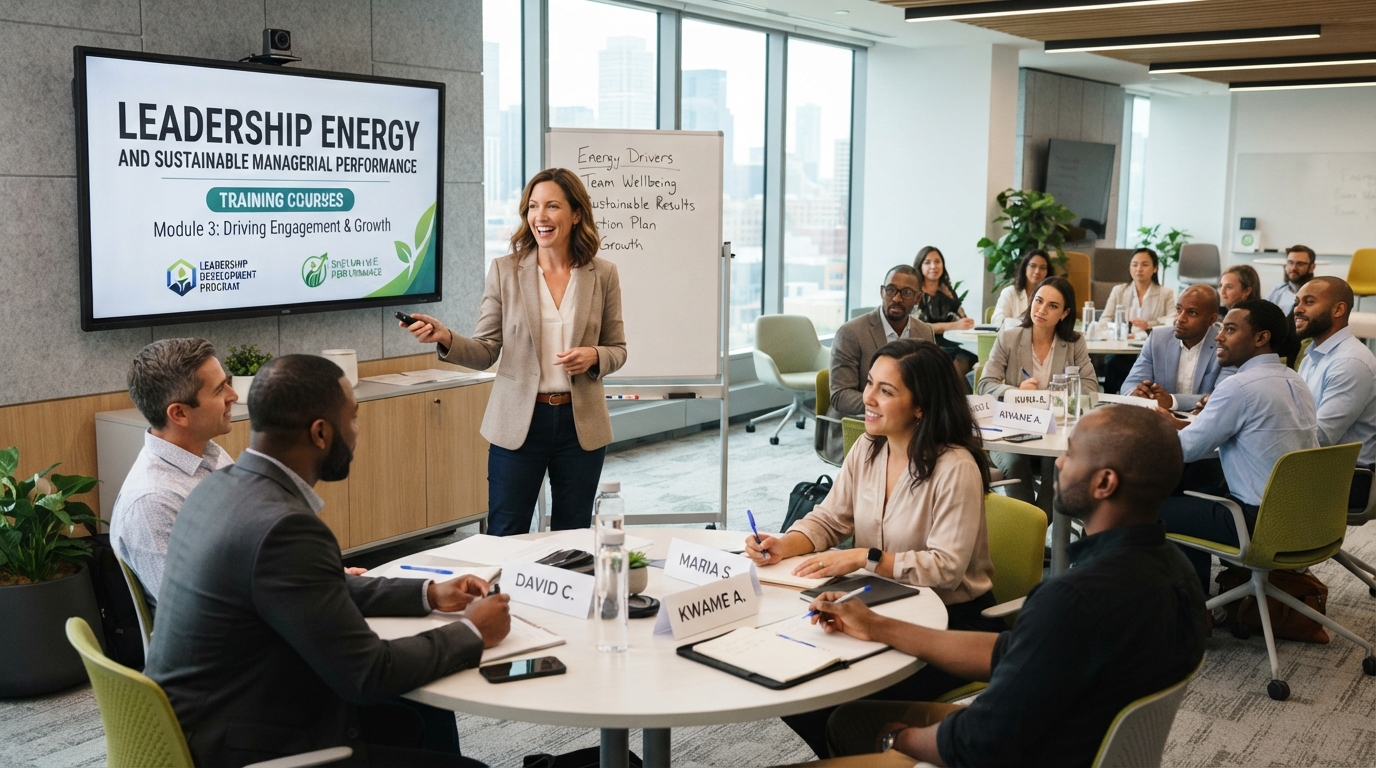
Leadership Energy and Sustainable Managerial Performance Training Courses offered by the Geneva Institute of Business Management are designed to strengthen leadership effectiveness, improve managerial wellbeing, and establish sustainable performance practices across organisations. In demanding corporate environments, managerial success depends on more than professional expertise, strategic decision-making, and operational control. Leaders must also maintain the physical, mental, and emotional energy required to guide teams, manage complex responsibilities, respond to organisational challenges, and deliver consistent business results.
Leadership energy is a critical organisational resource that influences managerial judgement, communication, employee engagement, workplace relationships, and overall business performance. Managers who maintain healthy energy levels demonstrate greater focus, resilience, adaptability, and consistency when handling competing priorities. However, continuous pressure, excessive workloads, organisational uncertainty, and prolonged decision-making responsibilities can gradually reduce leader energy and affect the quality of managerial performance.
These Leadership Energy and Sustainable Managerial Performance Training Courses address the relationship between leadership capacity, energy management, workplace demands, and long-term managerial effectiveness. The programme focuses on helping organisational leaders understand how their personal energy influences professional behaviour, leadership decisions, and team performance. It also examines how organisations can establish management practices that support consistent productivity without creating unsustainable working conditions.
Sustainable performance requires managers to balance business expectations with the resources available to achieve organisational objectives. Leaders who operate under continuous pressure without appropriate recovery practices often experience declining concentration, reduced motivation, emotional exhaustion, and weaker decision-making. These challenges can affect employee relationships, operational efficiency, and the organisation's ability to maintain performance over time.
The programme places particular emphasis on practical energy management strategies that enable managers to maintain professional effectiveness while responding to demanding business environments. It explores the connection between leadership behaviour, workload distribution, psychological resilience, managerial wellbeing, and organisational performance. Participants examine how everyday management decisions influence energy levels and how leadership routines can be improved to support consistent professional contribution.
Burnout prevention is another important component of sustainable managerial performance. Managers frequently face responsibilities that extend beyond their formal duties, including employee development, operational supervision, stakeholder communication, performance monitoring, and strategic planning. Without effective boundaries and workload management, these responsibilities can create prolonged pressure and reduce leadership capacity. The programme addresses organisational and individual approaches to recognising performance risks, managing pressure, and establishing healthier management practices.
The Geneva Institute of Business Management integrates leadership development with practical approaches to organisational sustainability. The programme considers how managers can improve personal effectiveness, create supportive team environments, and maintain performance standards during periods of change and uncertainty.
As part of the Leadership and Management Training Courses category, this programme supports organisations seeking to strengthen management capability while promoting sustainable workplace practices. It connects individual leadership energy with wider organisational objectives, ensuring that managerial performance contributes to long-term productivity, workforce stability, and business continuity.
Through structured management frameworks, practical leadership approaches, and performance-focused strategies, participants develop a stronger understanding of how to manage their energy, improve leadership effectiveness, and sustain professional performance. The programme positions managerial wellbeing as an important element of organisational success rather than an individual concern separate from business objectives.
Objectives
The Leadership Energy and Sustainable Managerial Performance Training Courses aim to strengthen the relationship between leadership capability, personal energy, and organisational performance. The programme provides managers with practical approaches to maintaining professional effectiveness while managing the demands of modern leadership responsibilities.
The key objectives include:
-
Develop a clear understanding of leadership energy and its influence on managerial performance, decision-making, communication, and organisational outcomes.
-
Strengthen awareness of the relationship between personal energy levels, leadership behaviour, and employee engagement.
-
Improve energy management practices to support consistent productivity and effective management of professional responsibilities.
-
Establish practical strategies for maintaining sustainable performance during periods of organisational pressure, uncertainty, and change.
-
Strengthen managerial wellbeing through effective workload management, professional boundaries, and structured recovery practices.
-
Identify organisational and individual factors that contribute to prolonged workplace pressure and declining managerial effectiveness.
-
Improve burnout prevention practices through early recognition of exhaustion, excessive workload, and declining professional motivation.
-
Enhance leadership effectiveness by improving concentration, emotional regulation, prioritisation, and decision-making.
-
Develop management approaches that balance operational expectations with available human and organisational resources.
-
Strengthen resilience and adaptability when responding to complex managerial responsibilities and unexpected business challenges.
-
Improve delegation and responsibility distribution to prevent unnecessary pressure on managers and their teams.
-
Establish sustainable leadership routines that support long-term professional performance and organisational continuity.
-
Improve communication practices that promote trust, cooperation, and constructive workplace relationships.
-
Strengthen the ability to recognise performance risks before they affect leadership decisions and organisational productivity.
-
Integrate employee wellbeing considerations into management strategies without compromising accountability or business standards.
-
Develop practical methods for maintaining motivation, professional focus, and leadership consistency.
-
Encourage a management culture that recognises energy as an important resource for achieving sustainable organisational results.
-
Improve the alignment between individual managerial capacity, departmental priorities, and strategic business objectives.
The programme also aims to help organisations develop leadership practices that reduce unnecessary performance pressures while maintaining high standards of accountability. Managers gain a broader understanding of how personal effectiveness and organisational working conditions influence each other.
By focusing on sustainable performance, the programme supports a management approach that values consistent results, responsible leadership, and long-term organisational capability.
Target Audience
The Leadership Energy and Sustainable Managerial Performance Training Courses are intended for professionals who hold managerial, supervisory, executive, and leadership responsibilities within organisations. The programme is particularly relevant to individuals who manage demanding workloads, lead teams, make strategic decisions, and maintain operational performance under changing business conditions.
Senior Executives and Business Leaders
Senior executives and business leaders responsible for organisational direction, strategic priorities, and business performance can benefit from understanding how leadership energy influences decision quality and executive effectiveness. The programme supports their ability to maintain professional focus while managing complex responsibilities and organisational expectations.
Department Heads and Functional Managers
Department heads and functional managers frequently coordinate multiple operational activities, supervise employees, manage resources, and report on departmental results. The programme helps them improve energy management, workload distribution, and leadership routines while maintaining departmental productivity.
Middle Managers and Team Leaders
Middle managers and team leaders operate between senior management and operational employees. Their responsibilities often involve translating organisational objectives into practical activities while addressing employee concerns and performance requirements. The programme strengthens their ability to manage competing priorities and sustain effective leadership.
Human Resources Directors and HR Managers
HR professionals responsible for workforce development, employee engagement, organisational wellbeing, and management support can use the programme to understand the relationship between leadership behaviour and sustainable workplace performance. It also supports the development of organisational approaches to burnout prevention and managerial wellbeing.
Organisational Development Professionals
Professionals responsible for organisational development, workplace transformation, and management improvement can benefit from exploring how leadership energy affects organisational culture and productivity. The programme provides relevant management perspectives for integrating sustainable performance principles into organisational development initiatives.
Project Managers and Programme Directors
Project managers and programme directors frequently work with deadlines, changing priorities, resource limitations, and stakeholder expectations. The programme supports their ability to maintain leadership effectiveness while managing pressure and ensuring consistent project delivery.
Operations Managers
Operations managers responsible for productivity, service delivery, workforce coordination, and operational standards can strengthen their understanding of sustainable management practices. They can apply energy management principles to improve personal effectiveness and create more balanced operational responsibilities.
Leadership Development and Learning Professionals
Professionals responsible for leadership development and management capability can benefit from understanding how energy management contributes to effective leadership. The programme provides useful perspectives for incorporating sustainable performance practices into leadership development strategies.
Entrepreneurs and Business Owners
Entrepreneurs and business owners often manage strategic planning, financial decisions, employee relationships, business development, and daily operations simultaneously. The programme helps them understand how to maintain leadership capacity while balancing business growth with sustainable professional performance.
Consultants and Management Advisors
Management consultants and organisational advisors working with leadership teams can benefit from examining the connection between managerial wellbeing, leadership behaviour, and organisational performance. The programme strengthens their ability to incorporate sustainable leadership principles into management improvement initiatives.
Modules
Module 1: Foundations of Leadership Energy and Sustainable Performance
-
Understanding the concept of leadership energy in modern organisations.
-
The relationship between personal energy and managerial effectiveness.
-
Physical, mental, emotional, and cognitive dimensions of leadership energy.
-
The influence of leadership capacity on organisational performance.
-
Understanding sustainable performance as a long-term management priority.
-
Identifying the characteristics of effective and sustainable leadership.
-
The role of energy awareness in professional management responsibilities.
-
Connecting individual leadership capacity with organisational objectives.
Module 2: Understanding Leader Energy and Its Organisational Impact
-
Defining leader energy and its importance in managerial responsibilities.
-
Understanding how energy levels influence leadership behaviour.
-
The relationship between leader energy and decision-making quality.
-
Identifying factors that increase or reduce managerial energy.
-
The influence of workplace demands on leadership concentration.
-
Understanding the connection between motivation and professional effectiveness.
-
Recognising changes in leadership behaviour associated with prolonged pressure.
-
Evaluating how leadership energy influences team morale and engagement.
-
Developing awareness of personal energy patterns and performance requirements.
Module 3: Strategic Energy Management for Managers
-
Principles of effective energy management in professional environments.
-
Identifying personal and organisational energy demands.
-
Managing cognitive demands and decision-making responsibilities.
-
Prioritising management activities according to strategic importance.
-
Improving time allocation and workload distribution.
-
Establishing productive management routines.
-
Reducing unnecessary interruptions and operational distractions.
-
Balancing high-priority responsibilities with routine management activities.
-
Using delegation to improve managerial capacity.
-
Developing sustainable approaches to daily productivity.
Module 4: Managerial Wellbeing and Professional Effectiveness
-
Understanding managerial wellbeing as a business performance factor.
-
The relationship between professional wellbeing and leadership effectiveness.
-
Identifying workplace conditions that influence managerial wellbeing.
-
Managing competing professional and organisational expectations.
-
Establishing appropriate boundaries around managerial responsibilities.
-
Maintaining professional motivation during demanding periods.
-
Understanding the impact of prolonged workplace pressure.
-
Developing supportive management routines.
-
Integrating wellbeing considerations into leadership decisions.
-
Creating conditions that support consistent professional contribution.
Module 5: Sustainable Performance in Complex Business Environments
-
Understanding the principles of sustainable managerial performance.
-
Balancing immediate operational demands with long-term objectives.
-
Maintaining productivity during periods of organisational change.
-
Managing multiple priorities without compromising management quality.
-
Strengthening professional consistency and accountability.
-
Aligning individual performance with departmental requirements.
-
Maintaining leadership standards during resource constraints.
-
Developing realistic performance expectations.
-
Improving organisational efficiency through sustainable management practices.
-
Evaluating the long-term impact of managerial decisions.
Module 6: Burnout Prevention and Leadership Resilience
-
Understanding the organisational factors associated with managerial burnout.
-
Recognising early indicators of prolonged workplace pressure.
-
Identifying excessive workloads and unrealistic performance expectations.
-
Understanding the relationship between emotional exhaustion and leadership effectiveness.
-
Developing practical burnout prevention strategies.
-
Managing responsibilities during periods of organisational uncertainty.
-
Strengthening professional resilience and adaptability.
-
Establishing appropriate recovery practices.
-
Improving workload management and responsibility distribution.
-
Creating management environments that reduce unnecessary pressure.
Module 7: Emotional Intelligence and Energy-Aware Leadership
-
Understanding emotional intelligence in managerial performance.
-
Recognising the relationship between emotional regulation and leadership energy.
-
Managing emotional responses during difficult workplace situations.
-
Maintaining constructive communication under pressure.
-
Developing empathy without compromising managerial accountability.
-
Understanding how leadership behaviour influences team energy.
-
Managing conflict through balanced leadership approaches.
-
Strengthening interpersonal relationships and professional trust.
-
Maintaining composure during complex decision-making situations.
-
Applying emotional intelligence to sustainable leadership practices.
Module 8: Decision-Making, Concentration, and Cognitive Performance
-
Understanding cognitive energy in management responsibilities.
-
Identifying factors that influence managerial concentration.
-
Managing decision-making demands across different organisational priorities.
-
Reducing unnecessary decision-making complexity.
-
Improving analytical thinking and professional judgement.
-
Establishing structured approaches to complex decisions.
-
Maintaining focus during high-pressure situations.
-
Managing information overload and competing demands.
-
Improving the quality of strategic and operational decisions.
-
Connecting cognitive performance with sustainable leadership effectiveness.
Module 9: Delegation, Workload Distribution, and Management Efficiency
-
Understanding delegation as an essential leadership capability.
-
Identifying responsibilities that can be effectively delegated.
-
Matching tasks with employee capabilities and organisational priorities.
-
Improving accountability through clear responsibility allocation.
-
Reducing unnecessary managerial involvement in routine activities.
-
Strengthening employee ownership and independent decision-making.
-
Managing workloads across teams and departments.
-
Improving communication around delegated responsibilities.
-
Preventing management bottlenecks through effective delegation.
-
Creating balanced management structures that support sustainable performance.
Module 10: Building an Energy-Supportive Organisational Culture
-
Understanding the organisational influence on leadership energy.
-
Creating workplace practices that support managerial wellbeing.
-
Encouraging constructive communication across management levels.
-
Establishing realistic performance expectations.
-
Promoting collaboration and shared responsibility.
-
Integrating sustainable performance into organisational culture.
-
Supporting managers during periods of organisational transformation.
-
Improving employee engagement through responsible leadership.
-
Recognising the relationship between organisational culture and burnout prevention.
-
Aligning workplace practices with long-term business objectives.
Module 11: Leadership Effectiveness During Change and Uncertainty
-
Understanding the energy demands of organisational change.
-
Maintaining leadership effectiveness during periods of uncertainty.
-
Managing employee concerns and changing expectations.
-
Communicating strategic priorities clearly and consistently.
-
Strengthening adaptability in complex business environments.
-
Maintaining managerial confidence during operational disruption.
-
Balancing change initiatives with existing responsibilities.
-
Supporting teams through periods of increased workload.
-
Maintaining professional motivation during organisational transformation.
-
Developing sustainable approaches to change management.
Module 12: Measuring and Improving Sustainable Managerial Performance
-
Establishing indicators for evaluating managerial performance.
-
Understanding the relationship between leadership energy and productivity.
-
Evaluating workload balance and management capacity.
-
Monitoring managerial wellbeing and workplace pressure.
-
Identifying performance patterns and areas requiring improvement.
-
Using employee feedback to assess leadership effectiveness.
-
Aligning performance indicators with organisational priorities.
-
Evaluating the effectiveness of energy management practices.
-
Developing continuous improvement approaches for management performance.
-
Integrating sustainable leadership measures into organisational reporting.
Module 13: Developing a Sustainable Leadership Energy Framework
-
Assessing individual leadership energy requirements.
-
Identifying professional responsibilities that create excessive pressure.
-
Establishing practical energy management priorities.
-
Developing sustainable leadership routines and working practices.
-
Integrating workload management with strategic planning.
-
Establishing approaches to burnout prevention.
-
Strengthening managerial wellbeing through responsible leadership.
-
Creating personal performance improvement objectives.
-
Aligning individual leadership practices with organisational expectations.
-
Developing an actionable framework for maintaining long-term leadership effectiveness.
FAQs
1. What Is Leadership Energy and Why Is It Important for Managers?
Leadership energy refers to the physical, mental, emotional, and cognitive capacity that managers use to fulfil their leadership responsibilities. It influences decision-making, communication, motivation, and team management. Effective leadership energy management helps managers maintain professional focus and deliver consistent organisational performance.
2. How Does Energy Management Improve Sustainable Managerial Performance?
Energy management helps managers allocate their attention, effort, and resources more effectively. By improving workload distribution, prioritisation, delegation, and recovery practices, managers can maintain productivity while reducing unnecessary pressure and supporting long-term leadership effectiveness.
3. What Is the Relationship Between Managerial Wellbeing and Leadership Effectiveness?
Managerial wellbeing influences concentration, emotional regulation, professional motivation, and decision-making quality. Managers who maintain appropriate wellbeing practices are better positioned to handle responsibilities, communicate effectively, support employees, and maintain consistent leadership standards.
4. How Does This Training Course Support Burnout Prevention?
The programme addresses the causes and early indicators of prolonged workplace pressure. It examines practical approaches to workload management, delegation, professional boundaries, resilience, and sustainable leadership routines that help managers reduce the risks associated with excessive demands.
5. Who Should Attend Leadership Energy and Sustainable Managerial Performance Training Courses?
These courses are suitable for senior executives, department heads, middle managers, team leaders, HR professionals, project managers, operations managers, entrepreneurs, and organisational development specialists. They are particularly relevant to professionals seeking to improve leadership effectiveness, strengthen managerial wellbeing, and maintain sustainable performance in demanding business environments.
Venues and dates
This programme runs every month in the following cities. Select a venue to register.
 Geneva
Switzerland
 Zurich
Switzerland
Basel
Switzerland
 London
UK
 Manchester
UK
 Oxford
UK
 Madrid
Spain
 Barcelona
Spain
 Paris
France
 Rome
Italy
 Vienna
Austria
Oslo
Norway
 Athens
Greece
 Copenhagen
Denmark
 Berlin
Germany
 Munich
Germany
 New York
USA
 Washington
USA
 Dubai
UAE
 Istanbul
Turkey
 Amsterdam
Netherlands
 Brussels
Belgium
 Lisbon
Portugal
 Malaga
Spain
 Milan
Italy
 Dusseldorf
Germany
 Prague
Czech Republic
 Budapest
Hungary
 Stockholm
Sweden
 Sheffield
UK
 Bangor
UK
 Ankara
Turkey
 Abu Dhabi
UAE
 Doha
Qatar
 Riyadh
Saudi Arabia
 Jeddah
Saudi Arabia
 Dammam
Saudi Arabia
 Muscat
Oman
 Amman
Jordan
 Cairo
Egypt
 Sharm El Sheikh
Egypt
 Casablanca
Morocco
 Marrakesh
Morocco
 Agadir
Morocco
 Tangier
Morocco
 Tunis
Tunisia
 Kuala Lumpur
Malaysia
 Singapore
 Jakarta
Indonesia
 Phuket
Thailand
 Tokyo
Japan
 Beijing
China
 Los Angeles
USA
 California
USA
 Toronto
Canada