Summary
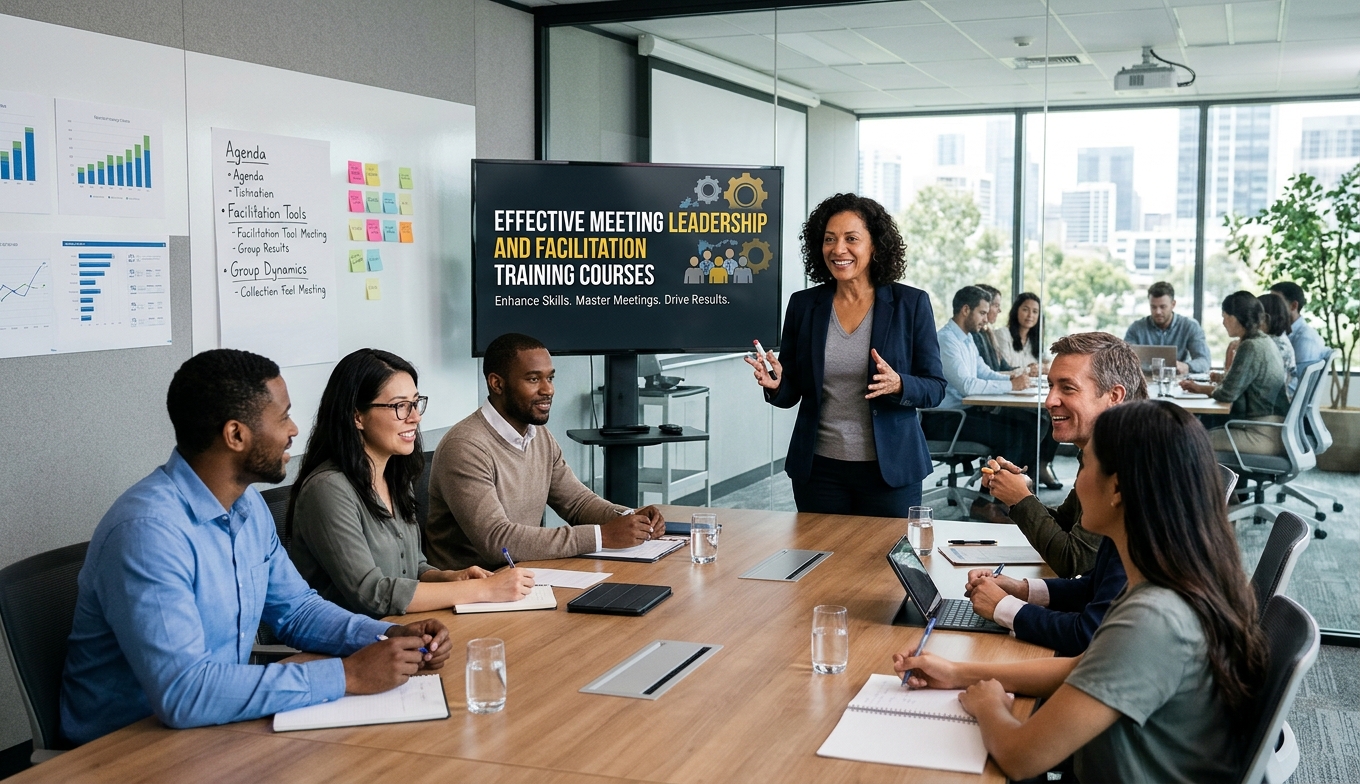
The Geneva Institute of Business Management offers Effective Meeting Leadership and Facilitation Training Courses designed to strengthen professionals' ability to plan, lead, manage, and facilitate productive business meetings. In modern organisations, meetings are essential for strategic planning, operational coordination, decision-making, problem-solving, performance reviews, and cross-functional collaboration. However, poorly managed meetings often waste time, create unclear responsibilities, limit participation, delay decisions, and produce unsatisfactory outcomes. Strong meeting leadership ensures that every discussion has a clear purpose, follows an organised structure, and contributes to measurable organisational objectives.
Meeting Leadership is a critical management capability that enables professionals to bring people together, guide conversations, manage different perspectives, and achieve agreed outcomes. Effective meetings require more than simply preparing agendas and inviting participants. They involve strategic preparation, clear communication, active listening, time management, facilitation techniques, constructive participation, and systematic follow-up. Leaders who understand these elements can transform routine discussions into valuable business activities that support organisational performance.
The Geneva Institute of Business Management delivers this professional development programme to enhance practical capabilities in meeting management and facilitation. The programme focuses on the responsibilities of meeting leaders, the development of structured agendas, stakeholder engagement, discussion management, conflict resolution, and decision-making processes. Participants strengthen their ability to manage formal and informal meetings, lead executive discussions, facilitate collaborative sessions, and maintain productive communication across departments.
The programme also addresses the growing importance of hybrid and virtual meetings. Modern organisations increasingly rely on geographically distributed teams, digital communication platforms, and cross-functional working arrangements. Meeting leaders must therefore understand how to maintain engagement, encourage participation, manage technology-related challenges, and ensure consistent meeting outcomes regardless of the communication format.
Effective meeting leadership contributes directly to organisational efficiency. Well-structured meetings improve accountability, support faster decisions, strengthen professional relationships, and ensure that employees remain aligned with business priorities. Through practical management approaches and professional facilitation methods, this programme enables participants to establish meeting practices that deliver meaningful results.
As part of the Leadership and Management Training Courses category, this programme supports managers, executives, supervisors, team leaders, and business professionals seeking to improve their leadership effectiveness. The Geneva Institute of Business Management focuses on developing workplace capabilities that translate into stronger coordination, better resource utilisation, and improved organisational decision-making.
Objectives
The Effective Meeting Leadership and Facilitation Training Courses aim to develop the professional competencies required to organise, lead, facilitate, and evaluate productive business meetings. The objectives focus on practical leadership performance, effective communication, structured discussions, and measurable organisational outcomes.
Key objectives include:
-
Develop a comprehensive understanding of Meeting Leadership principles and their contribution to organisational performance.
-
Strengthen meeting management capabilities to ensure meetings remain purposeful, structured, and results-oriented.
-
Improve the ability to establish clear meeting objectives, define expected outcomes, and prepare relevant agendas.
-
Develop professional facilitation techniques for guiding discussions and maintaining constructive communication.
-
Enhance the ability to encourage active participation from individuals with different professional backgrounds and responsibilities.
-
Strengthen time management skills to maintain meeting schedules and prioritise important discussion points.
-
Improve decision-making processes through structured conversations, critical thinking, and collaborative problem-solving.
-
Develop techniques for managing challenging participants, disagreements, conflicting priorities, and difficult conversations.
-
Strengthen communication and active listening skills to ensure that participants understand key issues and contribute effectively.
-
Improve the ability to manage executive meetings, departmental discussions, project meetings, and strategic planning sessions.
-
Develop capabilities for facilitating virtual and hybrid meetings across geographically distributed teams.
-
Establish practical approaches for documenting decisions, assigning responsibilities, and monitoring agreed actions.
-
Improve meeting outcomes through performance evaluation, accountability, and systematic follow-up.
-
Strengthen leadership confidence when managing complex discussions and facilitating high-level business decisions.
-
Promote a professional meeting culture that supports collaboration, transparency, responsibility, and organisational alignment.
These objectives enable participants to approach meetings as structured management activities rather than routine administrative commitments. The programme emphasises the importance of connecting meeting preparation, leadership behaviour, participant engagement, and follow-up procedures with wider organisational priorities.
Target Audience
The Effective Meeting Leadership and Facilitation Training Courses are intended for professionals responsible for organising meetings, managing discussions, coordinating teams, facilitating decisions, and ensuring that business conversations produce practical results.
The programme is particularly relevant to the following professional groups.
Senior Managers and Executives
Senior managers and executives regularly lead strategic meetings, executive briefings, performance reviews, and organisational planning discussions. They require advanced Meeting Leadership capabilities to communicate priorities, manage stakeholder expectations, evaluate different perspectives, and reach informed decisions. This programme strengthens their ability to lead high-level meetings that support business direction and organisational performance.
Department Heads and Functional Managers
Department heads coordinate employees, resources, projects, and operational responsibilities across their respective functions. Effective meeting management helps them maintain departmental alignment, address operational challenges, communicate performance expectations, and monitor progress. The programme supports their ability to facilitate productive departmental meetings and establish clear accountability.
Team Leaders and Supervisors
Team leaders and supervisors frequently organise operational meetings, team briefings, progress discussions, and problem-solving sessions. They benefit from professional facilitation techniques that encourage employee participation, improve communication, and maintain focus on team objectives. The programme helps them manage discussions confidently and ensure that team meetings produce actionable results.
Project Managers and Programme Managers
Project managers coordinate stakeholders, technical teams, suppliers, and organisational departments to achieve project objectives. Their responsibilities often involve progress meetings, risk assessments, project reviews, and decision-making sessions. Strong meeting leadership helps them manage competing priorities, resolve communication gaps, and ensure that project participants understand their responsibilities.
Human Resources Professionals
HR professionals organise recruitment meetings, employee consultations, performance reviews, policy discussions, and organisational development sessions. Meeting facilitation skills enable them to manage sensitive conversations, encourage constructive participation, and maintain professional communication between employees and management.
Business Consultants and Corporate Advisors
Business consultants and corporate advisors facilitate client meetings, strategic workshops, organisational assessments, and management discussions. The programme strengthens their ability to guide conversations, identify business requirements, manage stakeholder expectations, and develop clear recommendations through collaborative discussions.
Administrative and Executive Assistants
Administrative professionals and executive assistants frequently coordinate schedules, prepare meeting agendas, distribute documentation, record decisions, and monitor follow-up activities. Understanding professional meeting management enables them to support leadership teams more effectively and improve the organisation of business meetings.
Training Managers and Facilitators
Training managers and professional facilitators lead workshops, development sessions, knowledge-sharing meetings, and organisational learning discussions. The programme provides practical approaches for managing group dynamics, maintaining participant engagement, and achieving defined session objectives.
Professionals Preparing for Leadership Responsibilities
Employees progressing towards supervisory, managerial, or executive positions can benefit from developing meeting leadership capabilities early in their careers. The programme builds confidence in communication, coordination, decision-making, and professional facilitation, supporting their transition into leadership responsibilities.
Modules
Module 1: Fundamentals of Effective Meeting Leadership
-
Understanding the role of meetings in organisational management.
-
Principles and responsibilities of professional Meeting Leadership.
-
Identifying the relationship between meetings and business objectives.
-
Understanding different meeting formats and their operational purposes.
-
Distinguishing between information-sharing, decision-making, and problem-solving meetings.
-
Identifying common causes of ineffective and unproductive meetings.
-
Establishing professional standards for meeting conduct and management.
-
Connecting meeting activities with organisational performance and accountability.
Module 2: Strategic Meeting Planning and Preparation
-
Defining the purpose and expected outcomes of business meetings.
-
Identifying essential participants and relevant stakeholders.
-
Establishing meeting priorities and discussion requirements.
-
Selecting appropriate meeting formats and communication channels.
-
Preparing background information and supporting documentation.
-
Determining realistic meeting durations and scheduling requirements.
-
Developing preparation checklists for managers and meeting organisers.
-
Aligning meeting preparation with organisational objectives.
Module 3: Developing Effective Meeting Agendas
-
Understanding the importance of structured meeting agendas.
-
Establishing clear agenda objectives and discussion priorities.
-
Organising agenda items according to importance and urgency.
-
Allocating appropriate time for individual discussion topics.
-
Identifying decision points and expected contributions.
-
Distributing agendas and supporting documents before meetings.
-
Managing additional agenda items without losing meeting focus.
-
Reviewing agendas to improve efficiency and participant preparation.
Module 4: Professional Meeting Management Techniques
-
Establishing structured procedures for managing business meetings.
-
Opening meetings with clear objectives and expectations.
-
Maintaining discussion flow and controlling meeting progression.
-
Managing time effectively across different agenda items.
-
Keeping conversations relevant to the intended purpose.
-
Identifying unnecessary discussions and addressing deviations.
-
Managing meeting interruptions and competing priorities.
-
Closing meetings with clear decisions and agreed responsibilities.
Module 5: Facilitation Skills for Business Meetings
-
Understanding the responsibilities of a professional meeting facilitator.
-
Applying facilitation techniques to guide group discussions.
-
Creating an environment that encourages constructive communication.
-
Asking effective questions to generate meaningful contributions.
-
Managing discussions involving different opinions and perspectives.
-
Maintaining neutrality when facilitating sensitive business matters.
-
Encouraging collaborative thinking and practical problem-solving.
-
Supporting participants in reaching shared conclusions.
-
Using structured facilitation methods to improve meeting outcomes.
Module 6: Encouraging Participation and Stakeholder Engagement
-
Understanding the relationship between participation and meeting effectiveness.
-
Identifying barriers that prevent employees from contributing.
-
Encouraging participation from different professional levels.
-
Managing dominant participants and engaging quieter individuals.
-
Applying active listening techniques to understand stakeholder concerns.
-
Creating opportunities for constructive feedback and discussion.
-
Managing differences in communication styles and professional perspectives.
-
Building trust and professional relationships during meetings.
-
Ensuring that contributions remain relevant to meeting objectives.
Module 7: Communication Skills for Meeting Leaders
-
Developing clear and confident professional communication.
-
Applying active listening and questioning techniques.
-
Communicating meeting objectives and expectations effectively.
-
Summarising complex discussions and important information.
-
Using appropriate verbal and non-verbal communication.
-
Providing constructive feedback during business discussions.
-
Managing misunderstandings and communication barriers.
-
Communicating decisions and responsibilities accurately.
-
Maintaining professional communication during challenging discussions.
Module 8: Managing Difficult Participants and Workplace Conflict
-
Identifying challenging behaviours during business meetings.
-
Managing disagreements and conflicting professional opinions.
-
Addressing interruptions and unconstructive contributions.
-
Handling resistance to proposed decisions and organisational changes.
-
Applying conflict management and negotiation techniques.
-
Maintaining professional relationships during difficult conversations.
-
Facilitating discussions between stakeholders with competing interests.
-
Redirecting unproductive conversations towards practical solutions.
-
Establishing respectful standards for professional meeting participation.
Module 9: Decision-Making and Problem-Solving in Meetings
-
Understanding structured decision-making approaches.
-
Identifying business problems and defining discussion requirements.
-
Evaluating alternatives through collaborative discussions.
-
Applying critical thinking to complex organisational challenges.
-
Facilitating brainstorming and solution-development sessions.
-
Managing differences when selecting preferred solutions.
-
Establishing decision-making criteria and priorities.
-
Reaching clear conclusions and documenting agreed decisions.
-
Connecting meeting decisions with operational and strategic objectives.
Module 10: Time Management and Meeting Productivity
-
Understanding the organisational cost of ineffective meetings.
-
Establishing realistic meeting schedules and time limits.
-
Prioritising discussion points according to business importance.
-
Managing lengthy discussions and unnecessary repetition.
-
Maintaining participant focus throughout meetings.
-
Applying time management techniques to improve meeting efficiency.
-
Identifying meetings that can be shortened or replaced with alternative communication.
-
Evaluating meeting productivity and resource utilisation.
-
Establishing consistent standards for efficient meeting management.
Module 11: Leading Virtual and Hybrid Meetings
-
Understanding the requirements of virtual and hybrid meeting environments.
-
Selecting suitable digital communication and collaboration platforms.
-
Preparing participants for online meetings.
-
Managing technical arrangements and digital meeting procedures.
-
Maintaining engagement across remote and office-based participants.
-
Encouraging equal participation in virtual discussions.
-
Managing digital interruptions and communication challenges.
-
Using collaborative tools for sharing information and recording decisions.
-
Maintaining meeting structure and accountability across distributed teams.
-
Improving meeting outcomes through effective digital facilitation.
Module 12: Meeting Documentation and Action Management
-
Understanding the importance of accurate meeting documentation.
-
Preparing professional meeting minutes and discussion summaries.
-
Recording decisions, responsibilities, and agreed deadlines.
-
Identifying action owners and expected deliverables.
-
Distributing meeting records to relevant stakeholders.
-
Establishing action-tracking and progress-monitoring procedures.
-
Following up on outstanding responsibilities.
-
Maintaining documentation for management reviews and organisational records.
-
Improving accountability through structured follow-up processes.
Module 13: Leading Executive and Strategic Meetings
-
Understanding the responsibilities of leaders in executive meetings.
-
Preparing discussions around organisational strategy and performance.
-
Managing senior stakeholder expectations and contributions.
-
Facilitating discussions involving complex business priorities.
-
Presenting information to support strategic decision-making.
-
Managing confidential and sensitive business discussions.
-
Maintaining focus on organisational goals and strategic outcomes.
-
Ensuring that executive decisions translate into measurable actions.
-
Strengthening leadership presence during high-level meetings.
Module 14: Evaluating Meeting Effectiveness and Outcomes
-
Establishing performance indicators for meeting effectiveness.
-
Evaluating the achievement of meeting objectives.
-
Assessing participant engagement and contribution levels.
-
Reviewing the quality and timeliness of decisions.
-
Measuring completion of agreed actions.
-
Identifying recurring meeting management problems.
-
Collecting participant feedback to improve meeting practices.
-
Evaluating the value of meetings against organisational resources.
-
Developing continuous improvement strategies for future meetings.
Module 15: Building a Sustainable Meeting Culture
-
Establishing organisational standards for effective meetings.
-
Promoting accountability and professional participation.
-
Developing consistent meeting management procedures.
-
Encouraging transparency and constructive communication.
-
Aligning meeting practices with organisational values and objectives.
-
Reducing unnecessary meetings and improving communication efficiency.
-
Strengthening collaboration across departments and business functions.
-
Establishing leadership expectations for meeting preparation and follow-up.
-
Creating a culture focused on meaningful discussions and measurable meeting outcomes.
FAQs
1. What are Effective Meeting Leadership and Facilitation Training Courses?
Effective Meeting Leadership and Facilitation Training Courses develop the professional capabilities required to plan, organise, lead, and facilitate productive business meetings. The Geneva Institute of Business Management focuses on agendas, communication, participation, decision-making, meeting management, and measurable organisational outcomes.
2. Why is Meeting Leadership important in modern organisations?
Meeting Leadership ensures that business discussions remain structured, productive, and aligned with organisational objectives. Effective leadership improves communication, encourages stakeholder participation, reduces wasted time, strengthens accountability, and supports timely business decisions.
3. What skills are required for effective meeting management?
Effective meeting management requires agenda preparation, time management, communication, active listening, facilitation, conflict resolution, stakeholder engagement, and decision-making skills. These capabilities help meeting leaders maintain productive discussions and achieve clearly defined outcomes.
4. How does facilitation improve meeting outcomes?
Professional facilitation creates an organised environment where participants can share perspectives, discuss challenges, and contribute to decisions. It helps meeting leaders manage group dynamics, address disagreements, maintain focus, and ensure that discussions result in practical actions.
5. Who should attend Effective Meeting Leadership and Facilitation Training Courses?
These courses are suitable for senior managers, executives, department heads, team leaders, supervisors, project managers, HR professionals, business consultants, and administrative professionals. They are particularly valuable for individuals responsible for coordinating teams, facilitating discussions, and managing organisational decisions.
Venues and dates
This programme runs every month in the following cities. Select a venue to register.
 Geneva
Switzerland
 Zurich
Switzerland
Basel
Switzerland
 London
UK
 Manchester
UK
 Oxford
UK
 Madrid
Spain
 Barcelona
Spain
 Paris
France
 Rome
Italy
 Vienna
Austria
Oslo
Norway
 Athens
Greece
 Copenhagen
Denmark
 Berlin
Germany
 Munich
Germany
 New York
USA
 Washington
USA
 Dubai
UAE
 Istanbul
Turkey
 Amsterdam
Netherlands
 Brussels
Belgium
 Lisbon
Portugal
 Malaga
Spain
 Milan
Italy
 Dusseldorf
Germany
 Prague
Czech Republic
 Budapest
Hungary
 Stockholm
Sweden
 Sheffield
UK
 Bangor
UK
 Ankara
Turkey
 Abu Dhabi
UAE
 Doha
Qatar
 Riyadh
Saudi Arabia
 Jeddah
Saudi Arabia
 Dammam
Saudi Arabia
 Muscat
Oman
 Amman
Jordan
 Cairo
Egypt
 Sharm El Sheikh
Egypt
 Casablanca
Morocco
 Marrakesh
Morocco
 Agadir
Morocco
 Tangier
Morocco
 Tunis
Tunisia
 Kuala Lumpur
Malaysia
 Singapore
 Jakarta
Indonesia
 Phuket
Thailand
 Tokyo
Japan
 Beijing
China
 Los Angeles
USA
 California
USA
 Toronto
Canada