Summary
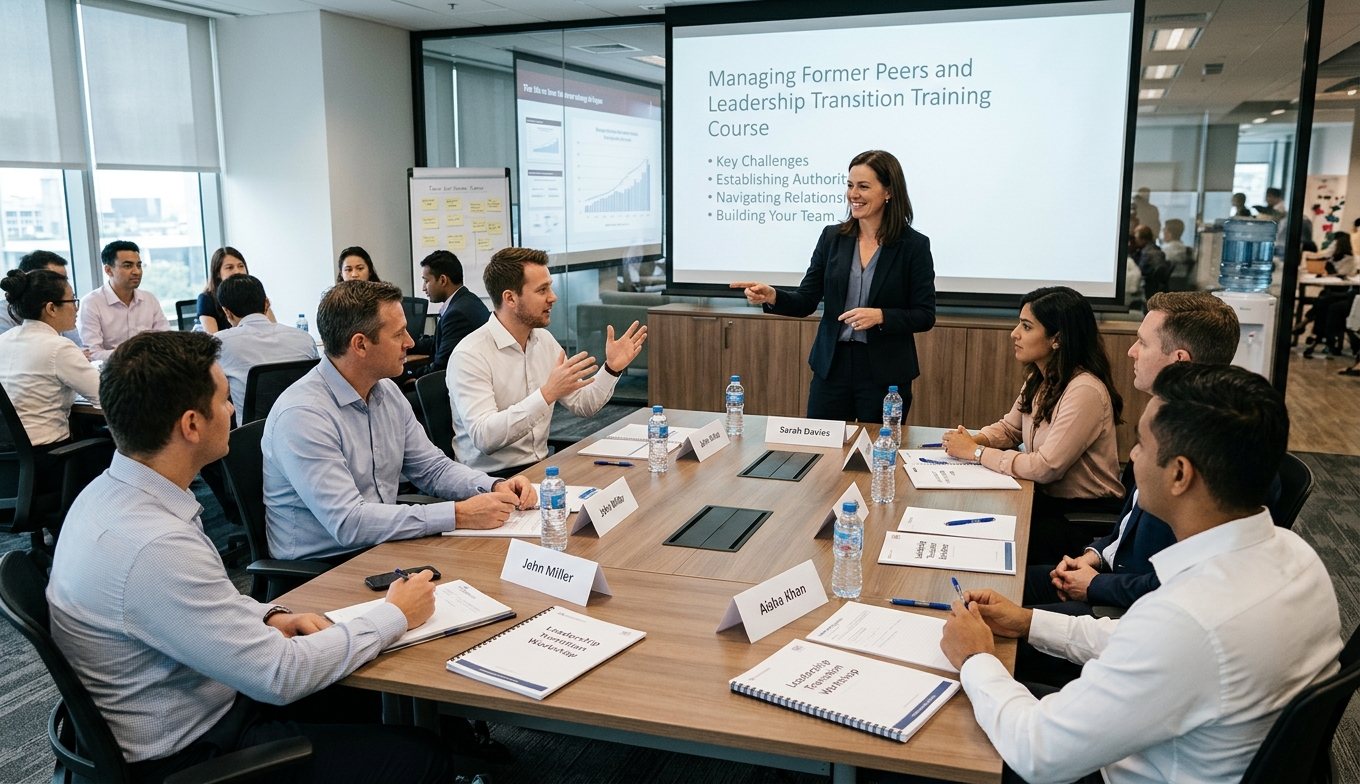
Managing former peers is one of the most significant leadership challenges professionals encounter when moving from an individual contributor role into a managerial position. A leadership transition changes professional responsibilities, reporting relationships, decision-making authority, and workplace expectations. Professionals who previously worked alongside colleagues must establish a new managerial identity while maintaining productive relationships, professional respect, and team collaboration. Managing Former Peers and Leadership Transition Training Courses offered by Geneva Institute of Business Management address these challenges through practical management frameworks that strengthen managerial credibility, establish appropriate relationship boundaries, and support effective peer management.
The transition from colleague to manager requires more than a change in job title. Newly appointed managers must demonstrate authority, communicate expectations, manage performance, make difficult decisions, and maintain accountability without damaging established workplace relationships. Former colleagues may also need time to adjust to the new reporting structure, particularly when responsibilities, decision-making rights, and access to leadership change. Without a structured leadership transition approach, these circumstances can create interpersonal tension, resistance, uncertainty, and reduced team effectiveness.
The Geneva Institute of Business Management provides leadership and management development programmes that address the organisational and behavioural challenges associated with managing former peers. These programmes focus on helping professionals establish leadership authority through consistent decisions, transparent communication, fair treatment, and professional conduct. Participants examine how to manage existing friendships, handle changes in workplace expectations, and develop a leadership approach that balances professional relationships with managerial responsibilities.
A successful transition requires managers to understand the difference between being accepted as a colleague and being respected as a leader. Newly appointed managers must avoid two common mistakes. The first is maintaining previous peer relationships without establishing sufficient professional boundaries. The second is becoming unnecessarily authoritative to prove their managerial position. Both approaches can undermine managerial credibility and create difficulties in team relationships.
Effective peer management depends on establishing clear expectations while preserving mutual respect. Managers must communicate their responsibilities, explain changes in accountability, and demonstrate that decisions are based on organisational priorities rather than personal preferences. They must also recognise how previous relationships influence team dynamics, particularly when managing former friends, experienced colleagues, or individuals who previously competed for the same promotion.
These Leadership and Management Training Courses provide a structured management perspective on leadership transition, authority management, workplace communication, conflict resolution, performance accountability, and team development. The focus remains on practical organisational outcomes, including stronger management relationships, improved team alignment, consistent decision-making, and sustainable leadership performance.
The programme also addresses the long-term responsibilities of managers who inherit teams with established cultures and informal relationships. Participants explore how to gain professional acceptance, manage resistance, delegate responsibilities, address performance concerns, and establish a consistent leadership presence. By strengthening their approach to managing former peers, professionals can move into management positions with greater confidence and create a workplace environment based on accountability, collaboration, and organisational performance.
Objectives
The Managing Former Peers and Leadership Transition Training Courses are designed to strengthen the management capabilities required when professionals assume authority over colleagues who previously operated at the same organisational level. The objectives focus on leadership effectiveness, professional relationships, managerial credibility, and the development of sustainable management practices.
Establish Effective Leadership Authority
Develop the ability to establish legitimate managerial authority without relying excessively on positional power. Managers must demonstrate leadership through consistent decisions, professional behaviour, accountability, and transparent communication. The objective is to establish authority that earns respect and supports organisational objectives.
Strengthen Managerial Credibility
Build managerial credibility by developing consistent leadership practices and demonstrating fairness in workplace decisions. Participants examine how professional competence, reliability, integrity, and accountability influence how former peers perceive their new manager. The objective is to create confidence in managerial decisions and strengthen professional acceptance.
Manage Former Peer Relationships Professionally
Develop practical approaches to managing former colleagues while maintaining constructive workplace relationships. Managers must understand how previous friendships, informal communication patterns, and established team dynamics influence their new responsibilities. The objective is to maintain mutual respect without compromising managerial responsibilities.
Establish Appropriate Relationship Boundaries
Strengthen the ability to distinguish personal relationships from professional responsibilities. Managers must establish boundaries around confidentiality, decision-making, performance discussions, workplace communication, and access to management information. The objective is to prevent favouritism, confusion, and inconsistent treatment.
Improve Leadership Transition Management
Develop a structured approach to moving from an individual contributor position into a management role. Participants examine the responsibilities associated with the transition, including changes in accountability, authority, communication, delegation, and performance management. The objective is to ensure a controlled transition that supports team stability and organisational continuity.
Strengthen Peer Management Capabilities
Improve the ability to manage colleagues who may have different expectations about the new reporting relationship. Managers must address professional disagreements, manage resistance, communicate responsibilities, and maintain productive working relationships. The objective is to create a consistent management environment.
Develop Effective Communication Strategies
Strengthen communication practices for announcing leadership changes, discussing new expectations, providing feedback, and managing sensitive workplace conversations. The objective is to ensure that communication remains clear, respectful, and aligned with organisational priorities.
Manage Resistance and Workplace Conflict
Develop the ability to identify and address resistance from former peers who struggle to accept changes in authority or reporting relationships. Participants examine conflict management approaches, professional negotiation, constructive feedback, and escalation procedures. The objective is to maintain workplace cooperation while protecting managerial accountability.
Improve Delegation and Performance Accountability
Develop effective delegation practices that clarify responsibilities, expected outcomes, decision-making authority, and performance standards. The objective is to ensure that former peers understand their responsibilities under the new management structure and remain accountable for results.
Build High-Performing Management Relationships
Establish professional relationships that encourage trust, collaboration, and individual responsibility. Participants examine how managers can maintain team engagement while managing performance expectations and organisational priorities. The objective is to build stronger teams and achieve sustainable management effectiveness.
Target Audience
The Managing Former Peers and Leadership Transition Training Courses are intended for professionals, managers, supervisors, and organisational leaders who are responsible for navigating changes in workplace authority and professional relationships.
Newly Appointed Managers
Professionals recently promoted into managerial positions who must now supervise colleagues they previously worked alongside. They benefit from developing leadership authority, establishing relationship boundaries, and building managerial credibility.
First-Time Managers
Individuals entering management for the first time who require practical approaches to managing former peers, delegating responsibilities, communicating expectations, and handling performance concerns.
Team Leaders and Supervisors
Team leaders and supervisors who have assumed responsibility for colleagues with whom they previously shared similar operational duties. They require effective peer management strategies to maintain team performance and professional relationships.
Middle Managers
Middle management professionals responsible for managing teams affected by internal promotions, organisational restructuring, or changes in reporting relationships. They benefit from strengthening leadership transition practices and maintaining consistent management standards.
Department Heads
Department heads who must establish authority over experienced employees and manage relationships with former colleagues across departmental functions. They require effective communication, conflict management, and accountability practices.
High-Potential Employees Preparing for Promotion
Experienced employees identified for future management positions who need to understand the behavioural and organisational responsibilities associated with leadership transition. They benefit from preparing for changes in professional identity and workplace relationships.
Project Managers
Project managers who take responsibility for former colleagues within temporary or permanent project structures. They require practical methods for clarifying authority, managing expectations, resolving disagreements, and coordinating performance.
Human Resources Professionals
HR professionals involved in management transitions, internal promotions, leadership development, and organisational restructuring. They benefit from understanding the interpersonal challenges that affect newly appointed managers and the wider workforce.
Senior Executives and Organisational Leaders
Senior professionals responsible for supporting newly promoted managers and maintaining leadership continuity. They require an understanding of how authority changes, professional relationships, and managerial credibility influence organisational performance.
Professionals Managing Internal Promotions
Employees who have moved into positions of authority through internal recruitment or promotion must manage colleagues who previously held equivalent responsibilities. They benefit from developing a balanced leadership approach that protects existing relationships while establishing clear managerial expectations.
Modules
Module 1: Understanding Leadership Transition and the Managerial Role
-
The organisational meaning of leadership transition
-
Moving from individual contributor to manager
-
Changes in professional identity and workplace responsibilities
-
Understanding new managerial authority and accountability
-
Differences between peer relationships and management relationships
-
Common challenges faced by newly promoted managers
-
Establishing priorities during the initial management transition
-
Managing expectations from employees, colleagues, and senior leadership
Module 2: Managing Former Peers and Workplace Relationships
-
Understanding the challenges of managing former peers
-
Transitioning from colleague to supervisor
-
Managing existing friendships within professional environments
-
Addressing changes in workplace behaviour and communication
-
Maintaining professional respect and mutual trust
-
Managing colleagues who previously held equivalent positions
-
Handling informal relationships within formal reporting structures
-
Preventing personal relationships from influencing management decisions
Module 3: Establishing Authority and Managerial Credibility
-
Understanding legitimate managerial authority
-
Developing credibility through professional competence
-
Establishing authority without excessive control
-
Demonstrating consistency in managerial decisions
-
Building trust through accountability and transparency
-
Managing perceptions of authority among former colleagues
-
Addressing challenges to managerial decisions
-
Developing a professional leadership presence
-
Balancing confidence, responsibility, and approachability
Module 4: Setting Professional Relationship Boundaries
-
Understanding the importance of relationship boundaries
-
Separating personal friendships from managerial responsibilities
-
Managing confidentiality and sensitive information
-
Establishing appropriate communication boundaries
-
Avoiding favouritism and preferential treatment
-
Managing access to managerial decisions and information
-
Maintaining professional distance without creating unnecessary barriers
-
Applying consistent workplace standards
-
Managing situations involving close personal relationships
Module 5: Communication Strategies for New Managers
-
Communicating changes in leadership responsibilities
-
Explaining new reporting relationships and expectations
-
Conducting effective leadership transition conversations
-
Communicating authority with clarity and professionalism
-
Managing difficult conversations with former peers
-
Providing constructive feedback and performance guidance
-
Listening to employee concerns and expectations
-
Addressing misunderstandings and workplace assumptions
-
Maintaining transparent and consistent communication
Module 6: Managing Resistance and Workplace Conflict
-
Identifying resistance to leadership changes
-
Understanding the reasons behind peer resistance
-
Managing employees who question new managerial authority
-
Addressing disagreements with former colleagues
-
Applying conflict resolution and negotiation techniques
-
Managing challenging interpersonal behaviour
-
Responding to passive resistance and reduced cooperation
-
Maintaining professional conduct during disagreements
-
Escalating unresolved issues through appropriate management channels
Module 7: Performance Management and Accountability
-
Establishing performance expectations under new management
-
Setting measurable responsibilities and objectives
-
Managing former peers through consistent performance standards
-
Conducting performance reviews and feedback discussions
-
Addressing underperformance professionally
-
Managing accountability without personal bias
-
Recognising individual contributions and achievements
-
Applying fair and transparent performance management practices
-
Aligning team performance with organisational objectives
Module 8: Delegation and Decision-Making Authority
-
Understanding managerial delegation responsibilities
-
Assigning tasks according to employee capabilities
-
Defining roles, responsibilities, and decision-making limits
-
Managing colleagues who resist delegated responsibilities
-
Establishing accountability for delegated activities
-
Balancing managerial control with employee autonomy
-
Making objective decisions in sensitive situations
-
Managing disagreements over responsibilities and authority
-
Monitoring outcomes without unnecessary intervention
Module 9: Building Trust and Maintaining Team Cohesion
-
Developing professional trust after an internal promotion
-
Maintaining team unity during leadership changes
-
Encouraging cooperation among former peers
-
Managing informal influence and workplace relationships
-
Addressing perceptions of favouritism
-
Supporting employee engagement and motivation
-
Encouraging collaboration and shared accountability
-
Maintaining team confidence during organisational changes
-
Establishing a consistent and inclusive management environment
Module 10: Leading Experienced Employees and Managing Established Team Dynamics
-
Managing employees with greater organisational experience
-
Respecting existing expertise while exercising managerial authority
-
Working with former senior colleagues
-
Managing employees who expected the same promotion
-
Addressing professional competition and resentment
-
Recognising informal leadership within established teams
-
Using employee expertise to support organisational performance
-
Managing differences in working styles and expectations
-
Strengthening cooperation across different levels of experience
Module 11: Leadership Transition Planning and Organisational Alignment
-
Developing a structured leadership transition plan
-
Establishing immediate and long-term management priorities
-
Understanding organisational expectations and leadership responsibilities
-
Aligning management decisions with corporate objectives
-
Coordinating with senior managers and HR departments
-
Communicating changes in team responsibilities
-
Monitoring employee adjustment during leadership transitions
-
Maintaining operational continuity and management consistency
-
Evaluating leadership effectiveness after promotion
Module 12: Developing a Sustainable Leadership Approach
-
Establishing a consistent personal management philosophy
-
Balancing authority, accessibility, and accountability
-
Strengthening managerial credibility over time
-
Developing professional resilience in challenging situations
-
Managing pressure associated with new leadership responsibilities
-
Building constructive relationships across organisational levels
-
Reviewing management performance and identifying improvement areas
-
Establishing long-term team development priorities
-
Supporting continuous organisational and leadership improvement
FAQs
1. What are Managing Former Peers and Leadership Transition Training Courses?
Managing Former Peers and Leadership Transition Training Courses focus on helping newly appointed managers establish authority and maintain professional relationships with colleagues they previously worked alongside. The programmes address managerial credibility, peer management, relationship boundaries, workplace communication, and performance accountability.
2. Why is managing former peers challenging for new managers?
Managing former peers is challenging because existing friendships, informal relationships, and previous workplace dynamics change when someone assumes managerial authority. New managers must establish professional boundaries, communicate expectations, and demonstrate fairness while maintaining trust and team cooperation.
3. How can new managers establish authority without damaging workplace relationships?
New managers can establish authority through consistent decision-making, transparent communication, fair performance management, and professional accountability. Maintaining respectful relationships while applying the same workplace standards to everyone strengthens managerial credibility and reduces confusion.
4. Why are relationship boundaries important during a leadership transition?
Relationship boundaries help managers distinguish personal friendships from professional responsibilities. They prevent favouritism, protect confidentiality, clarify expectations, and ensure that management decisions remain objective and consistent across the team.
5. Who should attend Managing Former Peers and Leadership Transition Training Courses?
These courses are suitable for newly appointed managers, first-time supervisors, team leaders, middle managers, department heads, project managers, HR professionals, and experienced employees preparing for promotion. They are particularly relevant to professionals transitioning into positions where they manage former colleagues.
Venues and dates
This programme runs every month in the following cities. Select a venue to register.
 Geneva
Switzerland
 Zurich
Switzerland
Basel
Switzerland
 London
UK
 Manchester
UK
 Oxford
UK
 Madrid
Spain
 Barcelona
Spain
 Paris
France
 Rome
Italy
 Vienna
Austria
Oslo
Norway
 Athens
Greece
 Copenhagen
Denmark
 Berlin
Germany
 Munich
Germany
 New York
USA
 Washington
USA
 Dubai
UAE
 Istanbul
Turkey
 Amsterdam
Netherlands
 Brussels
Belgium
 Lisbon
Portugal
 Malaga
Spain
 Milan
Italy
 Dusseldorf
Germany
 Prague
Czech Republic
 Budapest
Hungary
 Stockholm
Sweden
 Sheffield
UK
 Bangor
UK
 Ankara
Turkey
 Abu Dhabi
UAE
 Doha
Qatar
 Riyadh
Saudi Arabia
 Jeddah
Saudi Arabia
 Dammam
Saudi Arabia
 Muscat
Oman
 Amman
Jordan
 Cairo
Egypt
 Sharm El Sheikh
Egypt
 Casablanca
Morocco
 Marrakesh
Morocco
 Agadir
Morocco
 Tangier
Morocco
 Tunis
Tunisia
 Kuala Lumpur
Malaysia
 Singapore
 Jakarta
Indonesia
 Phuket
Thailand
 Tokyo
Japan
 Beijing
China
 Los Angeles
USA
 California
USA
 Toronto
Canada