Summary
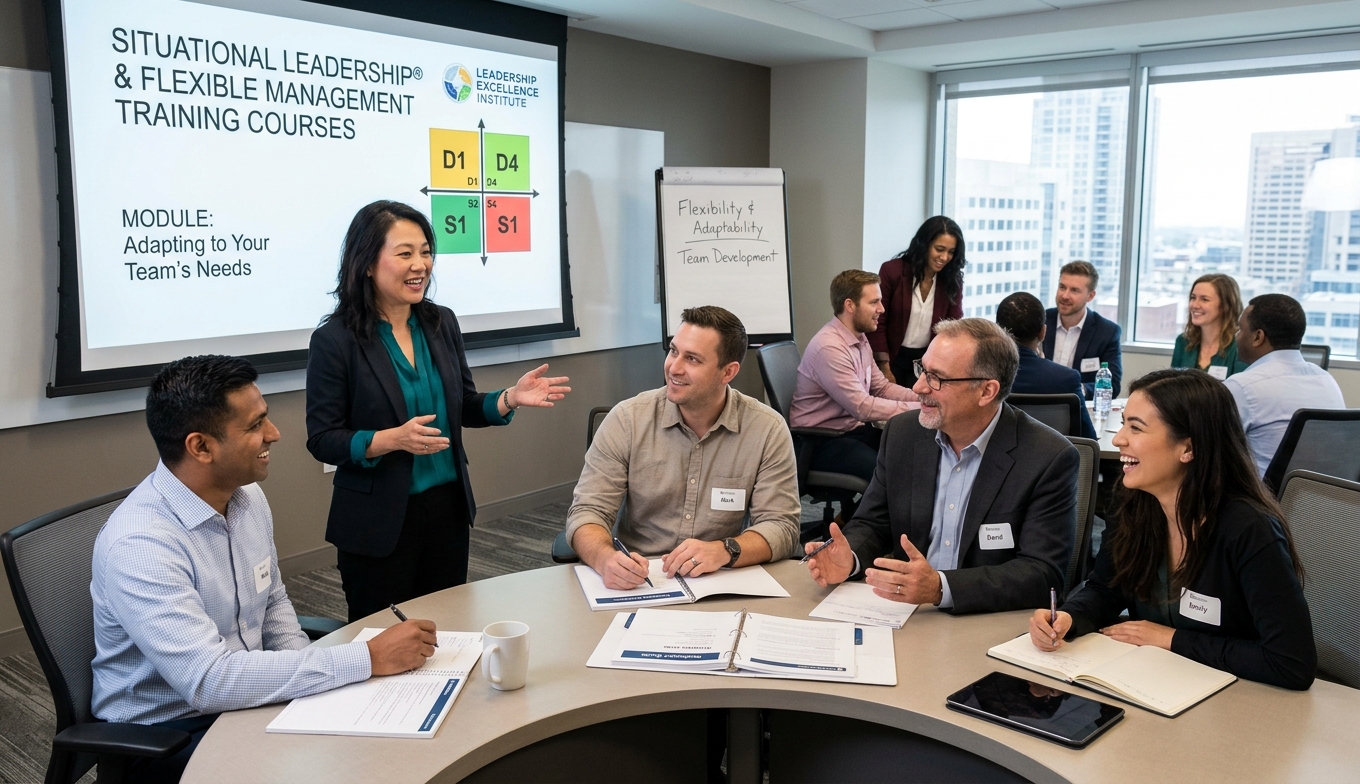
Situational Leadership and Flexible Management Training Courses offered by the Geneva Institute of Business Management are designed to strengthen leadership effectiveness through adaptable management practices, responsive decision-making, and flexible leadership approaches. In modern corporate environments, organisations operate through changing priorities, diverse workforce expectations, evolving business models, and complex operational demands. Leaders must therefore demonstrate the ability to adjust their leadership styles according to employee capabilities, organisational objectives, and the requirements of different business situations.
Situational Leadership provides a practical management framework that enables leaders to assess individual performance, understand follower readiness, and select appropriate leadership behaviours. Rather than relying on a single management approach, effective leaders recognise that employees require different levels of direction, support, coaching, and delegation depending on their experience, competence, motivation, and responsibilities. This approach strengthens management flexibility while maintaining accountability, operational consistency, and organisational performance.
The Geneva Institute of Business Management delivers these training courses to support managers, executives, department heads, supervisors, and organisational leaders responsible for managing diverse teams. The training focuses on developing the ability to identify changing workplace requirements, evaluate employee readiness, and apply suitable leadership styles to achieve business outcomes. It addresses the relationship between leadership behaviour, workforce development, performance management, and organisational adaptability.
Adaptive management is an essential component of effective organisational leadership. Managers frequently encounter situations where established procedures, communication methods, or decision-making approaches no longer produce the expected results. Situational Leadership enables them to recognise these circumstances and adjust their management practices without compromising strategic direction. Leaders develop the ability to determine when employees need clear instructions, structured supervision, collaborative problem-solving, or greater independence.
An important element of this approach is understanding follower readiness. Employees differ in their professional experience, technical knowledge, confidence, commitment, and ability to perform specific responsibilities. A management approach that works effectively with experienced professionals may not produce the same results with newly appointed employees or individuals undertaking unfamiliar responsibilities. Recognising these differences allows managers to provide appropriate support and establish realistic performance expectations.
The training also examines the practical application of delegation, coaching, employee engagement, and performance supervision. Effective delegation requires managers to evaluate employee capabilities, assign responsibilities appropriately, establish measurable expectations, and maintain suitable levels of oversight. By developing these capabilities, leaders can improve workforce accountability, reduce unnecessary management intervention, and create opportunities for professional development.
Management flexibility also supports organisational resilience. Business leaders must respond to changing market conditions, restructuring initiatives, technological developments, workforce transitions, and operational challenges. Flexible leadership allows managers to modify their approach according to immediate circumstances while keeping employees aligned with organisational priorities.
The Situational Leadership and Flexible Management Training Courses form part of the Leadership and Management Training Courses category. The training supports organisations seeking to strengthen managerial capability, improve leadership effectiveness, develop accountable teams, and establish adaptable management practices. Through the Geneva Institute of Business Management, participants develop practical leadership capabilities that contribute to workforce performance, effective supervision, and sustainable organisational growth.
Objectives
The primary objective of Situational Leadership and Flexible Management Training Courses is to strengthen participants' ability to adapt their leadership approaches to different organisational situations, employee requirements, and business priorities. The training focuses on practical management capabilities that improve workforce coordination, operational performance, and leadership effectiveness.
Key objectives include:
-
Develop a comprehensive understanding of Situational Leadership and its application within modern corporate environments.
-
Strengthen the ability to evaluate employee competence, motivation, confidence, and follower readiness before selecting an appropriate management approach.
-
Understand different leadership styles and their influence on employee performance, workplace relationships, and organisational outcomes.
-
Develop adaptive management capabilities that enable leaders to respond effectively to changing business conditions and workforce requirements.
-
Improve management flexibility by recognising when to provide direction, coaching, support, or independent responsibility.
-
Strengthen delegation practices through appropriate task allocation, accountability frameworks, and performance monitoring.
-
Improve decision-making by evaluating workplace situations, employee capabilities, operational priorities, and potential management challenges.
-
Develop the ability to balance managerial authority with employee independence and professional responsibility.
-
Enhance communication techniques to ensure employees understand performance expectations, responsibilities, and organisational objectives.
-
Strengthen coaching and mentoring capabilities to support employee development and improve individual performance.
-
Improve leadership effectiveness through consistent evaluation of management decisions and their impact on workforce productivity.
-
Understand how to manage employees with different experience levels, professional backgrounds, working styles, and performance requirements.
-
Develop strategies for addressing performance gaps through appropriate supervision, feedback, and targeted management intervention.
-
Improve conflict management and workplace coordination through flexible leadership behaviours.
-
Strengthen team performance by matching management approaches with operational responsibilities and employee development requirements.
-
Establish practical methods for reviewing leadership decisions and adjusting management practices when circumstances change.
-
Support organisational resilience through adaptable leadership, effective resource allocation, and responsive management decisions.
-
Create a workplace environment that encourages employee accountability, professional growth, collaboration, and continuous performance improvement.
Target Audience
Situational Leadership and Flexible Management Training Courses are designed for professionals responsible for leading teams, managing employees, supervising operational activities, and making decisions that influence organisational performance. The training is particularly relevant to individuals who need to adjust their leadership behaviours according to workforce capabilities and changing business requirements.
The target audience includes:
Senior Executives and Business Leaders
Senior executives responsible for organisational direction, workforce performance, and strategic management can strengthen their understanding of adaptive leadership. The training supports their ability to establish flexible management practices, improve leadership effectiveness, and ensure that management approaches remain aligned with organisational priorities.
Department Heads and Functional Managers
Department heads managing different functions can develop the ability to assess employee readiness, allocate responsibilities, and adjust leadership styles according to departmental requirements. The training strengthens their capacity to maintain operational efficiency while supporting employee development.
Middle Managers
Middle managers responsible for translating organisational strategies into operational activities can improve their ability to manage diverse teams, coordinate responsibilities, and respond to changing performance requirements. Situational Leadership provides practical approaches for balancing supervision, coaching, support, and delegation.
Team Leaders and Supervisors
Team leaders and supervisors can strengthen their ability to evaluate employee performance, identify capability gaps, and provide appropriate guidance. The training supports effective workforce supervision, improved communication, and consistent performance management.
Human Resource Managers and HR Business Partners
HR professionals responsible for management development, employee engagement, and organisational performance can understand how different leadership styles influence workforce behaviour. The training supports leadership development initiatives, management capability assessments, and employee performance improvement strategies.
Project Managers and Programme Managers
Project and programme managers can develop flexible leadership approaches for coordinating multidisciplinary teams, managing changing project requirements, and distributing responsibilities according to individual capabilities. The training strengthens delegation, accountability, and team coordination.
Operations Managers
Operations managers responsible for service delivery, production activities, and business continuity can improve their ability to adjust supervision according to operational demands. They can apply adaptive management principles to maintain productivity while responding to changing workforce and resource requirements.
Newly Appointed Managers
Professionals transitioning into managerial positions can establish a strong foundation in flexible leadership practices. The training helps them understand how to manage employees with different experience levels, communicate expectations, and develop appropriate supervision and delegation techniques.
Leadership Development Professionals
Professionals responsible for organisational leadership programmes, management capability development, and succession planning can strengthen their understanding of Situational Leadership as a practical management framework.
Business Consultants and Organisational Development Specialists
Consultants supporting management transformation, organisational restructuring, and workforce development can apply flexible leadership principles when advising organisations on management effectiveness and operational improvement.
Professionals Managing Diverse and Remote Teams
Managers responsible for geographically distributed, hybrid, or multidisciplinary teams can develop adaptable communication and supervision practices. The training supports effective delegation, employee accountability, and performance coordination across different working environments.
Modules
Module 1: Foundations of Situational Leadership
-
Definition and fundamental principles of Situational Leadership.
-
The relationship between leadership behaviour and organisational performance.
-
Understanding the importance of adapting management approaches.
-
Differences between traditional leadership and situational management.
-
The role of leadership effectiveness in achieving business objectives.
-
Identifying workplace situations that require changes in leadership behaviour.
-
Aligning management decisions with employee and organisational requirements.
Module 2: Leadership Styles and Management Approaches
-
Understanding different leadership styles in corporate environments.
-
Directive leadership and its application in structured work environments.
-
Coaching leadership for employee development and performance improvement.
-
Supporting leadership approaches for strengthening employee confidence.
-
Delegating leadership and encouraging professional independence.
-
Comparing leadership approaches according to workplace requirements.
-
Identifying the advantages and limitations of different management styles.
-
Selecting suitable leadership behaviours for different workforce situations.
Module 3: Assessing Follower Readiness and Employee Capabilities
-
Understanding follower readiness in organisational management.
-
Evaluating employee competence, experience, and professional knowledge.
-
Assessing employee motivation, confidence, and commitment.
-
Identifying differences between capability and willingness to perform.
-
Recognising employee development requirements and performance gaps.
-
Matching management approaches with individual employee capabilities.
-
Evaluating readiness for additional responsibilities and independent decision-making.
-
Reviewing employee progress and adjusting supervision accordingly.
Module 4: Adaptive Management in Changing Business Environments
-
Principles of adaptive management in modern organisations.
-
Responding to changing operational and strategic priorities.
-
Adjusting leadership behaviours during organisational transformation.
-
Managing workforce transitions and changing employee expectations.
-
Developing responsive decision-making capabilities.
-
Maintaining organisational alignment during periods of uncertainty.
-
Balancing management consistency with situational flexibility.
-
Applying adaptive leadership to complex workplace challenges.
Module 5: Management Flexibility and Leadership Effectiveness
-
Understanding management flexibility and its organisational importance.
-
Identifying situations that require changes in management behaviour.
-
Balancing managerial control with employee independence.
-
Improving leadership effectiveness through situational assessment.
-
Developing flexible communication and supervision techniques.
-
Responding to individual and team performance requirements.
-
Establishing adaptable management practices across departments.
-
Measuring the impact of leadership flexibility on organisational results.
Module 6: Delegation and Employee Empowerment
-
Understanding delegation as a fundamental management responsibility.
-
Identifying tasks and responsibilities suitable for delegation.
-
Evaluating employee capabilities before assigning responsibilities.
-
Establishing clear expectations, authority, and accountability.
-
Balancing delegated responsibilities with management oversight.
-
Avoiding excessive supervision and unnecessary managerial intervention.
-
Encouraging employee ownership and independent problem-solving.
-
Monitoring delegated activities and evaluating performance outcomes.
-
Developing employee capabilities through structured responsibility allocation.
Module 7: Coaching, Support, and Performance Development
-
Applying coaching leadership to improve employee performance.
-
Identifying individual development requirements.
-
Providing constructive feedback and performance guidance.
-
Strengthening employee confidence through appropriate management support.
-
Developing practical employee improvement plans.
-
Encouraging continuous professional development.
-
Supporting employees during challenging assignments and organisational changes.
-
Adjusting coaching methods according to employee readiness.
-
Establishing effective manager-employee development relationships.
Module 8: Communication and Relationship Management
-
Understanding the relationship between leadership and workplace communication.
-
Adjusting communication styles according to employee requirements.
-
Establishing clear performance expectations and responsibilities.
-
Developing active listening and constructive feedback techniques.
-
Managing difficult conversations and performance concerns.
-
Building trust between managers and employees.
-
Improving communication across multidisciplinary teams.
-
Strengthening collaboration through flexible leadership behaviours.
Module 9: Decision-Making and Problem-Solving in Situational Management
-
Evaluating workplace situations before making management decisions.
-
Identifying the underlying causes of employee performance challenges.
-
Selecting appropriate leadership responses to operational problems.
-
Balancing employee input with managerial responsibility.
-
Managing competing priorities and resource constraints.
-
Applying structured problem-solving approaches.
-
Evaluating risks associated with different management decisions.
-
Adjusting decisions according to changing workplace conditions.
-
Maintaining accountability while encouraging collaborative solutions.
Module 10: Managing Different Employee Performance Levels
-
Understanding variations in employee performance and competence.
-
Identifying high-performing employees and their management requirements.
-
Supporting employees experiencing performance difficulties.
-
Managing newly appointed and inexperienced team members.
-
Developing appropriate supervision for experienced professionals.
-
Addressing employee disengagement and reduced motivation.
-
Matching performance expectations with employee capabilities.
-
Implementing suitable improvement and development strategies.
Module 11: Conflict Management and Team Dynamics
-
Understanding workplace conflict within different management situations.
-
Identifying communication and performance-related sources of conflict.
-
Applying flexible leadership to resolve team disagreements.
-
Managing differences in employee expectations and working styles.
-
Encouraging collaboration and constructive workplace relationships.
-
Maintaining fairness and accountability during conflict resolution.
-
Supporting team cohesion through adaptable management practices.
-
Managing disagreements while protecting organisational priorities.
Module 12: Situational Leadership During Organisational Change
-
Understanding leadership responsibilities during organisational transformation.
-
Managing employee uncertainty and resistance to change.
-
Adjusting leadership approaches during restructuring and operational transitions.
-
Communicating organisational changes effectively.
-
Supporting employees through new responsibilities and working processes.
-
Maintaining employee engagement during periods of uncertainty.
-
Developing leadership resilience and organisational adaptability.
-
Aligning flexible management practices with long-term business objectives.
Module 13: Leading Remote, Hybrid, and Multidisciplinary Teams
-
Understanding the management requirements of distributed workforces.
-
Selecting appropriate leadership styles for remote employees.
-
Establishing accountability within geographically distributed teams.
-
Adapting communication and performance monitoring practices.
-
Delegating responsibilities across multidisciplinary teams.
-
Maintaining employee engagement without excessive supervision.
-
Addressing coordination challenges in hybrid working environments.
-
Strengthening team performance through flexible management systems.
Module 14: Measuring Leadership Effectiveness and Management Performance
-
Understanding key indicators of leadership effectiveness.
-
Evaluating the relationship between management behaviour and employee performance.
-
Assessing delegation outcomes and workforce accountability.
-
Measuring improvements in team productivity and engagement.
-
Reviewing employee development and readiness progression.
-
Identifying weaknesses in existing management practices.
-
Using performance feedback to improve leadership decisions.
-
Establishing measurable objectives for management improvement.
-
Maintaining continuous improvement in leadership capabilities.
Module 15: Strategic Application of Situational Leadership
-
Integrating Situational Leadership into organisational management practices.
-
Developing flexible leadership strategies for different business functions.
-
Applying adaptive management to complex organisational challenges.
-
Aligning leadership styles with strategic priorities.
-
Developing management approaches for long-term workforce development.
-
Strengthening leadership succession and managerial capability.
-
Establishing practical frameworks for situational decision-making.
-
Promoting organisational resilience through management flexibility.
-
Creating sustainable practices for improving leadership effectiveness.
FAQs
1. What is Situational Leadership in management?
Situational Leadership is a management approach in which leaders adjust their leadership styles according to employee competence, motivation, confidence, and follower readiness. It enables managers to provide appropriate levels of direction, coaching, support, and delegation to improve workforce performance and organisational effectiveness.
2. Why is management flexibility important for organisational performance?
Management flexibility enables leaders to respond effectively to changing business conditions, employee requirements, and operational challenges. It helps organisations maintain productivity, strengthen employee engagement, improve decision-making, and ensure that leadership practices remain relevant to different workplace situations.
3. How does follower readiness influence leadership styles?
Follower readiness helps managers determine the level of direction and support employees require to complete their responsibilities successfully. Employees with limited experience may need structured guidance, while experienced and capable professionals generally benefit from greater autonomy and delegation.
4. How does Situational Leadership improve delegation?
Situational Leadership improves delegation by helping managers evaluate employee capabilities before assigning responsibilities. It encourages appropriate task allocation, clear performance expectations, accountability, and suitable supervision while allowing employees to develop confidence and professional independence.
5. Who should attend Situational Leadership and Flexible Management Training Courses?
These training courses are suitable for senior executives, department heads, middle managers, supervisors, team leaders, HR professionals, project managers, and operations managers. They are particularly relevant to professionals responsible for managing diverse teams, developing employee capabilities, and improving leadership effectiveness through adaptive management practices.
Venues and dates
This programme runs every month in the following cities. Select a venue to register.
 Geneva
Switzerland
 Zurich
Switzerland
Basel
Switzerland
 London
UK
 Manchester
UK
 Oxford
UK
 Madrid
Spain
 Barcelona
Spain
 Paris
France
 Rome
Italy
 Vienna
Austria
Oslo
Norway
 Athens
Greece
 Copenhagen
Denmark
 Berlin
Germany
 Munich
Germany
 New York
USA
 Washington
USA
 Dubai
UAE
 Istanbul
Turkey
 Amsterdam
Netherlands
 Brussels
Belgium
 Lisbon
Portugal
 Malaga
Spain
 Milan
Italy
 Dusseldorf
Germany
 Prague
Czech Republic
 Budapest
Hungary
 Stockholm
Sweden
 Sheffield
UK
 Bangor
UK
 Ankara
Turkey
 Abu Dhabi
UAE
 Doha
Qatar
 Riyadh
Saudi Arabia
 Jeddah
Saudi Arabia
 Dammam
Saudi Arabia
 Muscat
Oman
 Amman
Jordan
 Cairo
Egypt
 Sharm El Sheikh
Egypt
 Casablanca
Morocco
 Marrakesh
Morocco
 Agadir
Morocco
 Tangier
Morocco
 Tunis
Tunisia
 Kuala Lumpur
Malaysia
 Singapore
 Jakarta
Indonesia
 Phuket
Thailand
 Tokyo
Japan
 Beijing
China
 Los Angeles
USA
 California
USA
 Toronto
Canada