Summary
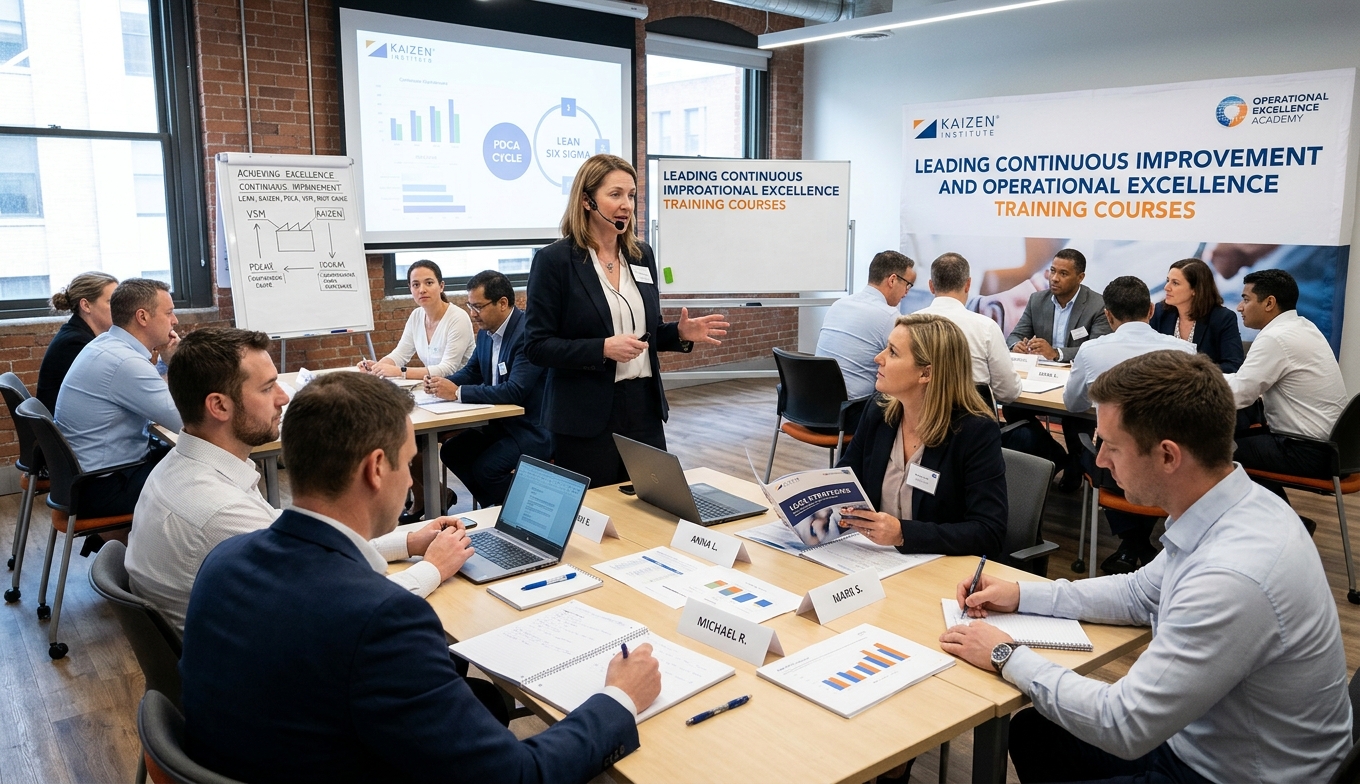
The Geneva Institute of Business Management offers Leading Continuous Improvement and Operational Excellence Training Courses, designed to strengthen organisational leadership, improve operational performance, and establish sustainable systems for continuous improvement. In an increasingly competitive business environment, organisations require leaders who can identify operational inefficiencies, optimise business processes, improve resource utilisation, and establish a culture of performance excellence. Operational excellence is no longer limited to reducing costs or increasing productivity. It involves aligning people, processes, technology, and organisational strategies to achieve consistent, measurable, and long-term business results.
These training courses focus on developing the leadership capabilities required to drive operational excellence across departments, business units, and organisational functions. The programme addresses the practical application of continuous improvement methodologies, process improvement strategies, lean management principles, performance measurement, and operational leadership. It provides a structured approach to identifying performance gaps, eliminating unnecessary activities, improving workflows, and strengthening operational controls.
Modern organisations operate in environments characterised by changing customer expectations, technological developments, increasing competition, and pressure to deliver greater value with available resources. These conditions require a proactive approach to operational management. Leaders must understand how operational systems function, recognise inefficiencies, and implement improvements that support organisational objectives. Effective operational excellence leadership connects strategic priorities with everyday business activities, ensuring that improvements contribute directly to productivity, quality, service delivery, and financial performance.
Continuous improvement is a central element of this approach. It encourages organisations to evaluate existing processes regularly, identify opportunities for improvement, and introduce practical changes that enhance operational outcomes. Rather than treating improvement as an occasional management initiative, continuous improvement establishes an ongoing organisational responsibility. Leaders play an essential role in creating the conditions necessary for this approach by setting clear expectations, supporting employee involvement, monitoring performance, and maintaining accountability.
The programme also explores lean management as a practical framework for improving operational efficiency. Lean principles help organisations identify activities that do not contribute sufficient value, reduce unnecessary process complexity, improve workflow consistency, and make better use of organisational resources. These principles are relevant across manufacturing, financial services, healthcare, logistics, government, technology, and other business environments where operational performance directly influences organisational success.
Process improvement is another important area of focus. Organisations frequently experience performance challenges because of fragmented workflows, unclear responsibilities, inconsistent procedures, communication gaps, and ineffective resource allocation. Addressing these challenges requires leaders to examine processes systematically and understand how individual activities influence overall performance. The programme develops an integrated perspective on process analysis, performance optimisation, operational risk management, and improvement implementation.
Leadership is particularly important when organisations introduce operational changes. Even well-designed improvement strategies require effective leadership to achieve consistent results. Managers must communicate improvement priorities, engage employees, coordinate cross-functional teams, manage resistance, and establish measurable performance expectations. The ability to lead change while maintaining operational stability is therefore a fundamental requirement for sustainable operational excellence.
The Geneva Institute of Business Management positions these training courses within its Leadership and Management Training Courses category, connecting operational performance with strategic leadership and organisational management. The programme supports organisations seeking to develop capable leaders who can translate operational priorities into practical improvements and measurable business outcomes.
By integrating continuous improvement, operational excellence, lean management, process improvement, and leadership practices, the programme provides an organisational framework for strengthening efficiency and performance. Its focus is on practical management application, sustainable operational development, and the creation of systems that support long-term organisational effectiveness.
Objectives
The Leading Continuous Improvement and Operational Excellence Training Courses aim to strengthen the ability of organisational leaders to manage operational performance, implement improvement initiatives, and establish sustainable management practices. The programme focuses on the following objectives:
1. Develop Operational Excellence Leadership Capabilities
-
Strengthen leadership capabilities for managing operational excellence across organisational functions.
-
Connect operational priorities with corporate strategy, business objectives, and organisational performance targets.
-
Improve managerial decision-making in relation to productivity, quality, efficiency, and resource utilisation.
-
Establish leadership practices that support operational accountability and continuous improvement.
-
Develop the ability to influence organisational performance through structured improvement initiatives.
2. Strengthen Continuous Improvement Practices
-
Establish a consistent approach to identifying and implementing improvement opportunities.
-
Develop methods for evaluating existing business processes and recognising performance gaps.
-
Introduce continuous improvement practices into everyday operational management.
-
Strengthen employee participation in identifying inefficiencies and recommending improvements.
-
Establish monitoring mechanisms to evaluate improvement results and maintain progress.
3. Improve Process Efficiency and Performance
-
Examine organisational workflows to identify unnecessary activities, delays, and operational bottlenecks.
-
Strengthen process improvement strategies across departments and business units.
-
Improve coordination between operational functions and management teams.
-
Develop structured approaches to process standardisation and performance optimisation.
-
Improve the utilisation of financial, human, technological, and operational resources.
4. Apply Lean Management Principles
-
Develop an understanding of lean management principles and their organisational applications.
-
Identify different forms of operational waste and their impact on business performance.
-
Improve workflow efficiency by simplifying processes and reducing unnecessary activities.
-
Strengthen value creation through better resource allocation and process coordination.
-
Support the development of lean operational practices across organisational functions.
5. Strengthen Performance Measurement and Management
-
Establish relevant operational performance indicators and measurement frameworks.
-
Improve the interpretation of operational data for management decision-making.
-
Identify performance variations and investigate their underlying causes.
-
Strengthen accountability through measurable operational objectives.
-
Monitor the effectiveness of process improvement and continuous improvement initiatives.
6. Enhance Change Management and Employee Engagement
-
Strengthen leadership approaches for introducing operational improvements.
-
Develop effective communication strategies for improvement initiatives.
-
Address employee resistance and organisational barriers to operational change.
-
Encourage collaboration between departments and cross-functional teams.
-
Build an organisational culture that supports responsibility, innovation, and continuous improvement.
7. Establish Sustainable Operational Excellence Systems
-
Develop improvement strategies that support long-term organisational performance.
-
Integrate operational excellence into organisational policies and management systems.
-
Strengthen operational governance, quality management, and performance controls.
-
Establish methods for reviewing improvement outcomes and maintaining operational standards.
-
Align continuous improvement initiatives with customer expectations and corporate priorities.
Target Audience
The Leading Continuous Improvement and Operational Excellence Training Courses are designed for professionals responsible for organisational leadership, operational management, business performance, process optimisation, and strategic improvement. The programme is relevant to organisations seeking to strengthen management capabilities and establish consistent operational standards across their business functions.
1. Senior Executives and Business Leaders
Chief executive officers, managing directors, executive directors, and senior business leaders responsible for organisational strategy and overall performance will benefit from developing a structured understanding of operational excellence. The programme supports their ability to connect business objectives with operational performance, allocate resources effectively, and establish improvement priorities that contribute to sustainable organisational growth.
2. Operations Directors and Operations Managers
Operations directors, operations managers, and department heads responsible for daily business activities can strengthen their ability to identify inefficiencies, optimise workflows, and improve operational performance. The programme addresses practical management approaches for reducing operational delays, improving coordination, and establishing measurable efficiency targets.
3. Continuous Improvement Managers and Specialists
Professionals responsible for continuous improvement programmes, operational transformation, and performance optimisation can strengthen their understanding of improvement methodologies and leadership practices. The programme supports the development of structured approaches to identifying performance gaps, coordinating improvement projects, and evaluating organisational results.
4. Process Improvement and Business Process Managers
Business process managers, process analysts, and improvement specialists responsible for reviewing organisational workflows will benefit from the programme's focus on process improvement and operational efficiency. It addresses methods for analysing processes, eliminating unnecessary activities, improving process consistency, and aligning operational procedures with business requirements.
5. Lean Management and Operational Excellence Professionals
Professionals responsible for lean management, operational excellence frameworks, productivity improvement, and waste reduction can strengthen their ability to apply improvement principles across organisational functions. The programme supports the integration of lean practices into operational management and long-term performance strategies.
6. Quality Assurance and Quality Management Managers
Quality managers, quality assurance professionals, and compliance managers can benefit from developing a stronger connection between quality management, process improvement, and operational excellence. The programme addresses performance monitoring, process standardisation, corrective action management, and the development of consistent operational practices.
7. Project Managers and Programme Directors
Project managers, programme directors, and transformation leaders responsible for organisational improvement initiatives can strengthen their ability to manage operational change. The programme supports better project coordination, performance monitoring, resource management, and the integration of continuous improvement objectives into business transformation activities.
8. Department Heads and Functional Managers
Managers responsible for finance, human resources, procurement, logistics, customer service, administration, and other organisational functions can apply operational excellence principles to improve departmental performance. The programme helps them identify process inefficiencies, improve team productivity, and establish consistent management practices.
9. Supply Chain and Logistics Managers
Supply chain directors, procurement managers, warehouse managers, and logistics professionals can strengthen their ability to improve operational flow, resource utilisation, and service delivery. The programme addresses lean management principles, process coordination, waste reduction, and performance improvement across interconnected operational activities.
10. Organisational Development and Change Management Professionals
Organisational development specialists, transformation consultants, and change management professionals can develop stronger approaches to embedding continuous improvement into organisational culture. The programme supports their ability to coordinate improvement initiatives, engage stakeholders, and align organisational structures with operational performance objectives.
Modules
Module 1: Foundations of Operational Excellence
-
Understanding the meaning and organisational importance of operational excellence.
-
The relationship between operational excellence, corporate strategy, and business performance.
-
Key principles of effective operational management.
-
Integrating productivity, quality, efficiency, and customer value.
-
Understanding operational maturity and organisational performance capabilities.
-
Identifying the characteristics of high-performing organisations.
-
Establishing operational excellence as a long-term management priority.
Module 2: Leadership for Continuous Improvement
-
The role of leadership in developing a continuous improvement culture.
-
Strategic leadership approaches for improving organisational performance.
-
Establishing clear improvement priorities and management expectations.
-
Building accountability across operational teams and departments.
-
Engaging employees in identifying improvement opportunities.
-
Strengthening communication and collaboration during improvement initiatives.
-
Developing leadership practices that support sustainable operational change.
Module 3: Continuous Improvement Frameworks and Methodologies
-
Understanding the principles and objectives of continuous improvement.
-
Applying the Plan-Do-Check-Act improvement cycle.
-
Exploring Kaizen principles and their organisational applications.
-
Identifying improvement opportunities through systematic process evaluation.
-
Establishing structured approaches to problem identification and resolution.
-
Integrating improvement activities into everyday operational management.
-
Monitoring improvement outcomes and maintaining organisational progress.
Module 4: Lean Management and Operational Efficiency
-
Understanding lean management principles and their relationship with operational excellence.
-
Identifying the seven traditional forms of operational waste.
-
Evaluating activities that do not contribute sufficient customer value.
-
Improving workflow efficiency through process simplification.
-
Reducing unnecessary movement, waiting time, inventory, and rework.
-
Strengthening resource utilisation and operational coordination.
-
Applying lean thinking across different organisational environments.
Module 5: Business Process Improvement and Optimisation
-
Understanding business process management and process improvement.
-
Mapping organisational workflows and identifying process dependencies.
-
Evaluating existing procedures and identifying performance gaps.
-
Identifying operational bottlenecks and unnecessary process complexity.
-
Improving workflow consistency and departmental coordination.
-
Establishing standard operating procedures and process controls.
-
Measuring process improvement outcomes and operational effectiveness.
Module 6: Operational Performance Measurement and KPIs
-
Understanding operational performance measurement frameworks.
-
Establishing relevant key performance indicators for business functions.
-
Measuring productivity, efficiency, quality, and service performance.
-
Developing performance dashboards and management reporting systems.
-
Interpreting operational data to support management decisions.
-
Identifying performance variations and investigating their causes.
-
Using performance information to establish improvement priorities.
Module 7: Problem-Solving and Root Cause Analysis
-
Developing systematic approaches to operational problem-solving.
-
Understanding root cause analysis and its organisational applications.
-
Applying the Five Whys technique to investigate performance problems.
-
Using fishbone diagrams to identify potential causes of operational failures.
-
Distinguishing between symptoms and underlying process weaknesses.
-
Establishing corrective and preventive improvement measures.
-
Monitoring solutions to ensure that operational problems do not recur.
Module 8: Quality Management and Process Standardisation
-
Understanding the relationship between quality management and operational excellence.
-
Establishing consistent operational standards across organisational functions.
-
Integrating quality management principles into process improvement initiatives.
-
Identifying process deviations and quality performance gaps.
-
Strengthening inspection, monitoring, and corrective action procedures.
-
Improving service consistency and customer satisfaction.
-
Developing standardisation practices that support operational reliability.
Module 9: Strategic Resource Management and Productivity Improvement
-
Aligning operational resources with organisational priorities.
-
Improving workforce productivity and operational capacity.
-
Evaluating resource allocation across departments and business units.
-
Reducing unnecessary operational expenditure and resource wastage.
-
Strengthening workforce planning and task coordination.
-
Improving the utilisation of technology and organisational infrastructure.
-
Establishing productivity improvement targets and performance expectations.
Module 10: Change Management in Operational Excellence Initiatives
-
Understanding organisational change in the context of operational improvement.
-
Identifying barriers to implementing new operational practices.
-
Managing employee resistance and stakeholder expectations.
-
Developing communication strategies for operational transformation.
-
Engaging employees in improvement planning and implementation.
-
Coordinating cross-functional teams during operational changes.
-
Maintaining operational stability throughout improvement initiatives.
Module 11: Operational Risk Management and Process Resilience
-
Identifying operational risks and their impact on business continuity.
-
Evaluating process vulnerabilities and operational control weaknesses.
-
Strengthening risk assessment and mitigation practices.
-
Integrating risk management into continuous improvement activities.
-
Establishing operational monitoring and escalation procedures.
-
Improving organisational resilience through process standardisation.
-
Supporting reliable operations during business disruption and change.
Module 12: Digital Transformation and Operational Excellence
-
Understanding the role of digital transformation in operational improvement.
-
Evaluating opportunities for process automation and workflow digitisation.
-
Using operational data to identify efficiency improvement opportunities.
-
Integrating digital technologies into business process management.
-
Exploring the role of artificial intelligence and analytics in operational performance.
-
Strengthening digital process monitoring and reporting capabilities.
-
Aligning technology investments with operational excellence objectives.
Module 13: Cross-Functional Collaboration and Operational Alignment
-
Understanding the importance of cross-functional operational coordination.
-
Improving communication between departments and management teams.
-
Establishing shared operational objectives and performance expectations.
-
Reducing process fragmentation and departmental inefficiencies.
-
Strengthening collaboration between operations, finance, human resources, and technology functions.
-
Improving decision-making through coordinated management practices.
-
Developing organisational systems that support consistent operational performance.
Module 14: Customer Value and Service Excellence
-
Understanding the relationship between operational excellence and customer value.
-
Identifying customer expectations within operational processes.
-
Improving service delivery through process optimisation.
-
Reducing delays, errors, and inconsistencies in customer-facing activities.
-
Integrating customer feedback into continuous improvement initiatives.
-
Measuring service quality and customer experience performance.
-
Aligning operational improvement priorities with customer requirements.
Module 15: Developing and Sustaining an Operational Excellence Strategy
-
Establishing an organisational operational excellence vision.
-
Translating strategic priorities into measurable improvement objectives.
-
Developing structured continuous improvement plans.
-
Integrating lean management and process improvement into corporate operations.
-
Establishing governance structures for improvement initiatives.
-
Monitoring implementation progress and organisational performance.
-
Maintaining improvements through leadership accountability and management reviews.
Module 16: Operational Excellence Governance and Long-Term Performance
-
Establishing management responsibilities for operational excellence.
-
Integrating improvement frameworks into organisational policies.
-
Developing sustainable operational performance management systems.
-
Reviewing improvement results against strategic business objectives.
-
Strengthening organisational accountability and management oversight.
-
Identifying emerging opportunities for operational innovation.
-
Building a long-term culture of efficiency, quality, and continuous improvement.
FAQs
1. What is operational excellence in organisational management?
Operational excellence is a management approach focused on improving organisational efficiency, productivity, quality, and business performance. It involves optimising processes, reducing operational waste, strengthening resource utilisation, and establishing consistent improvement practices that support long-term organisational objectives.
2. Why is continuous improvement important for operational excellence?
Continuous improvement helps organisations identify inefficiencies, address performance gaps, and refine business processes regularly. It supports operational excellence by encouraging ongoing performance evaluation, employee participation, process optimisation, and sustainable improvements across organisational functions.
3. How does lean management contribute to process improvement?
Lean management contributes to process improvement by identifying activities that do not create sufficient value and reducing unnecessary operational waste. It helps organisations simplify workflows, improve resource utilisation, reduce delays, and strengthen overall operational efficiency.
4. Who should attend Leading Continuous Improvement and Operational Excellence Training Courses?
These courses are suitable for senior executives, operations managers, continuous improvement specialists, process improvement professionals, quality managers, lean management specialists, project managers, and department heads responsible for organisational performance and operational efficiency.
5. How can leaders sustain operational excellence within an organisation?
Leaders can sustain operational excellence by establishing measurable performance objectives, encouraging employee involvement, monitoring operational results, implementing continuous improvement practices, and maintaining accountability across departments. Consistent leadership commitment and regular process evaluation help ensure that improvements remain aligned with organisational priorities.
Venues and dates
This programme runs every month in the following cities. Select a venue to register.
 Geneva
Switzerland
 Zurich
Switzerland
Basel
Switzerland
 London
UK
 Manchester
UK
 Oxford
UK
 Madrid
Spain
 Barcelona
Spain
 Paris
France
 Rome
Italy
 Vienna
Austria
Oslo
Norway
 Athens
Greece
 Copenhagen
Denmark
 Berlin
Germany
 Munich
Germany
 New York
USA
 Washington
USA
 Dubai
UAE
 Istanbul
Turkey
 Amsterdam
Netherlands
 Brussels
Belgium
 Lisbon
Portugal
 Malaga
Spain
 Milan
Italy
 Dusseldorf
Germany
 Prague
Czech Republic
 Budapest
Hungary
 Stockholm
Sweden
 Sheffield
UK
 Bangor
UK
 Ankara
Turkey
 Abu Dhabi
UAE
 Doha
Qatar
 Riyadh
Saudi Arabia
 Jeddah
Saudi Arabia
 Dammam
Saudi Arabia
 Muscat
Oman
 Amman
Jordan
 Cairo
Egypt
 Sharm El Sheikh
Egypt
 Casablanca
Morocco
 Marrakesh
Morocco
 Agadir
Morocco
 Tangier
Morocco
 Tunis
Tunisia
 Kuala Lumpur
Malaysia
 Singapore
 Jakarta
Indonesia
 Phuket
Thailand
 Tokyo
Japan
 Beijing
China
 Los Angeles
USA
 California
USA
 Toronto
Canada