Summary
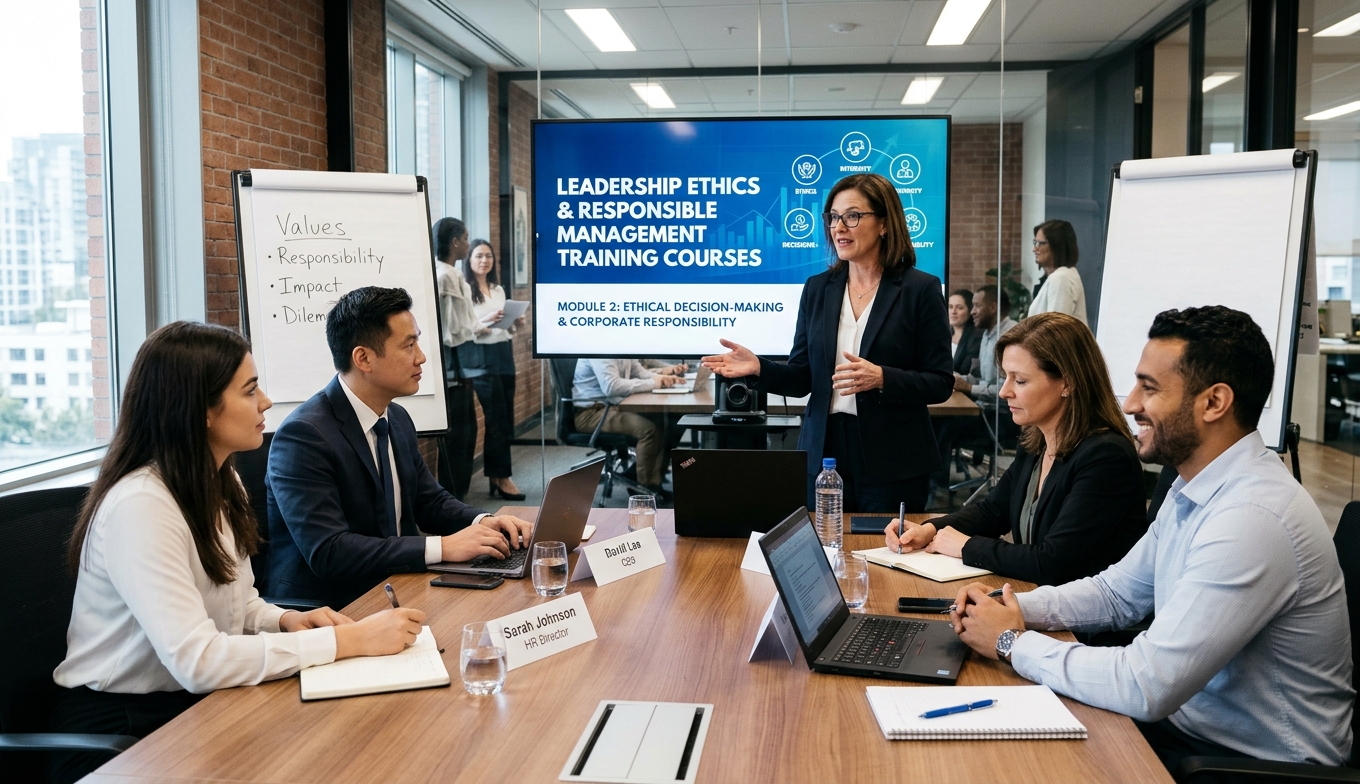
The Geneva Institute of Business Management offers Leadership Ethics and Responsible Management Training Courses designed to strengthen ethical leadership, promote organisational integrity, and establish responsible management practices across modern business environments. As organisations face increasing expectations regarding transparency, accountability, corporate governance, and sustainable business conduct, leaders must demonstrate the ability to make decisions that balance organisational objectives with ethical responsibilities. This training programme focuses on developing leadership capabilities that support ethical decision-making, responsible business practices, and a culture of integrity throughout organisational structures.
Leadership ethics plays a fundamental role in shaping organisational behaviour, management standards, and long-term business performance. Leaders influence how employees communicate, how managers exercise authority, how organisations handle conflicts of interest, and how business decisions affect stakeholders. Ethical leadership establishes clear standards for professional conduct and ensures that organisational decisions reflect fairness, honesty, accountability, and respect. The programme examines how leadership behaviour influences corporate ethics and how management teams can translate ethical principles into practical organisational policies and everyday business decisions.
Responsible management requires leaders to consider the wider consequences of their decisions rather than concentrating exclusively on financial targets and operational performance. Organisations must manage relationships with employees, customers, suppliers, shareholders, regulators, and communities while maintaining compliance with relevant standards and governance requirements. This course explores how responsible management integrates ethical responsibilities into strategic planning, resource allocation, performance management, organisational communication, and corporate decision-making.
The programme addresses the relationship between ethical leadership and organisational governance, focusing on the responsibilities of executives, department heads, senior managers, and supervisory professionals. Participants examine how governance frameworks establish accountability, define decision-making authority, and support transparent management practices. They also explore how organisations identify ethical risks, address misconduct, manage competing interests, and maintain professional standards across different business functions.
Corporate ethics is not limited to written policies or compliance procedures. It requires consistent leadership behaviour, transparent communication, effective accountability systems, and management decisions that reflect organisational values. Leaders must recognise ethical challenges before they develop into operational, reputational, or legal problems. This training examines practical approaches to identifying ethical concerns, evaluating potential consequences, and establishing management controls that support responsible organisational conduct.
A central focus of the course is ethical decision-making in complex corporate environments. Business leaders frequently encounter situations involving competing priorities, confidential information, employee welfare, commercial pressures, supplier relationships, and stakeholder expectations. Making responsible decisions requires more than personal judgement. It involves structured evaluation, reliable information, consideration of stakeholder interests, and clear accountability for outcomes. The programme develops a systematic approach to evaluating difficult situations and selecting actions that align with organisational principles.
Integrity is another essential component of effective leadership. Organisations build trust when leaders communicate honestly, honour commitments, apply policies consistently, and accept responsibility for their decisions. The course explores how managers demonstrate integrity through their daily conduct and how senior leadership behaviour influences organisational culture. It also examines the relationship between integrity, employee confidence, stakeholder trust, corporate reputation, and long-term organisational stability.
The Geneva Institute of Business Management positions this programme within its Leadership and Management Training Courses category. It provides a corporate-focused approach to ethical leadership development, responsible management, corporate ethics, and governance. The programme supports organisations seeking to strengthen leadership accountability, improve management standards, reduce ethical risks, and establish a sustainable culture of professional responsibility.
Objectives
The Leadership Ethics and Responsible Management Training Courses aim to strengthen the ability of organisational leaders to integrate ethical principles into strategic decisions, management processes, and corporate responsibilities. The programme focuses on practical leadership capabilities that support organisational integrity, transparent governance, and responsible business performance.
The key objectives include:
Strengthening Ethical Leadership Capabilities
-
Develop a clear understanding of ethical leadership and its importance in modern organisational management.
-
Strengthen leadership behaviour based on honesty, fairness, accountability, and professional integrity.
-
Establish consistent ethical standards across management levels and organisational departments.
-
Improve the ability to demonstrate ethical responsibility when managing employees, resources, and business relationships.
-
Understand how leadership conduct influences employee behaviour, organisational culture, and stakeholder confidence.
Improving Responsible Management Practices
-
Integrate responsible management principles into operational and strategic decision-making.
-
Strengthen management accountability for organisational activities and business outcomes.
-
Improve the ability to balance financial objectives with employee welfare and stakeholder responsibilities.
-
Promote fair management practices across recruitment, performance evaluation, resource allocation, and organisational development.
-
Establish management approaches that support transparency, sustainability, and long-term organisational stability.
Developing Corporate Ethics and Integrity
-
Strengthen understanding of corporate ethics and its application across business functions.
-
Establish practical approaches to maintaining professional integrity and ethical workplace behaviour.
-
Identify conflicts of interest, unethical conduct, and potential violations of organisational standards.
-
Improve transparency in management communication and corporate reporting.
-
Support organisational cultures that encourage honesty, responsibility, and professional accountability.
Enhancing Ethical Decision Making
-
Apply structured methods to evaluate ethical challenges and management dilemmas.
-
Assess the consequences of business decisions for employees, customers, shareholders, and other stakeholders.
-
Improve judgement when dealing with conflicting organisational priorities and commercial pressures.
-
Develop consistent decision-making standards that reflect corporate values and governance requirements.
-
Strengthen leadership confidence when addressing sensitive ethical matters.
Strengthening Governance and Accountability
-
Understand the relationship between ethical leadership, corporate governance, and organisational performance.
-
Clarify management responsibilities within organisational governance structures.
-
Improve oversight, transparency, and accountability across leadership teams.
-
Identify weaknesses in organisational controls and ethical reporting procedures.
-
Support effective governance practices that reduce misconduct and reputational exposure.
Managing Ethical Risks and Organisational Challenges
-
Recognise ethical risks associated with leadership decisions and corporate operations.
-
Establish approaches for identifying and addressing unethical workplace practices.
-
Improve the management of conflicts of interest and professional misconduct.
-
Strengthen organisational reporting and escalation procedures.
-
Develop preventive management practices that support ethical compliance and responsible conduct.
Building a Culture of Responsible Leadership
-
Encourage ethical behaviour across all levels of the organisation.
-
Strengthen employee confidence through consistent and transparent leadership.
-
Establish organisational expectations for responsible professional conduct.
-
Promote open communication and appropriate reporting of ethical concerns.
-
Align organisational values with management behaviour and business objectives.
Target Audience
The Leadership Ethics and Responsible Management Training Courses are designed for professionals responsible for organisational leadership, management decisions, governance, employee supervision, and corporate accountability. The programme is particularly relevant to organisations seeking to strengthen ethical standards and establish consistent responsible management practices across their operations.
Senior Executives and Business Leaders
Chief executives, managing directors, executive directors, and senior business leaders can strengthen their ability to establish ethical standards at the highest organisational levels. The programme supports executives responsible for strategic direction, corporate governance, stakeholder relationships, and organisational accountability. It helps senior leaders evaluate the ethical implications of major business decisions and promote integrity throughout the organisation.
Department Heads and Functional Managers
Department heads and functional managers responsible for finance, operations, human resources, marketing, administration, and business development can improve their understanding of ethical management responsibilities. The course addresses practical challenges involving employee treatment, departmental accountability, resource allocation, professional conduct, and transparent decision-making.
Corporate Governance and Compliance Professionals
Governance specialists, compliance managers, risk management professionals, and internal control personnel can strengthen their understanding of how ethical leadership supports organisational governance. The programme examines accountability structures, ethical policies, reporting mechanisms, and management oversight practices that contribute to responsible corporate conduct.
Human Resources Directors and Managers
HR directors, HR business partners, recruitment managers, and employee relations professionals can develop approaches to promoting workplace integrity and responsible management. The programme addresses ethical considerations in recruitment, employee development, performance management, workplace investigations, disciplinary procedures, and organisational fairness.
Operations and Project Managers
Operations managers, project directors, programme managers, and team leaders can improve their ability to apply ethical principles when managing resources, employees, suppliers, deadlines, and operational priorities. The course supports responsible decisions that balance performance requirements with professional standards and stakeholder expectations.
Risk Management and Internal Audit Professionals
Risk officers, internal auditors, assurance professionals, and corporate control specialists can explore the relationship between ethical leadership and organisational risk prevention. The programme examines how management decisions, reporting systems, and governance arrangements influence ethical risks and corporate accountability.
Business Consultants and Strategic Advisors
Management consultants, corporate advisors, and strategic planning professionals can strengthen their ability to assess organisational ethics and recommend responsible management practices. The programme provides relevant perspectives on governance, leadership accountability, ethical risk evaluation, and organisational culture.
Emerging Leaders and Future Managers
Supervisors, team leaders, management trainees, and professionals preparing for senior responsibilities can develop a strong foundation in ethical leadership. The course helps emerging managers understand how integrity, fairness, accountability, and responsible judgement influence effective management.
Entrepreneurs and Business Owners
Business owners, founders, entrepreneurs, and directors of growing organisations can establish ethical management practices as their businesses expand. The programme explores how corporate ethics, transparent leadership, and responsible governance contribute to stakeholder confidence and sustainable business development.
Modules
Module 1: Foundations of Leadership Ethics
This module establishes the principles of leadership ethics and examines their importance in contemporary corporate environments. It explores the relationship between leadership responsibilities, professional values, organisational expectations, and business conduct.
Key areas include:
-
Understanding leadership ethics in modern organisations.
-
Fundamental principles of ethical leadership.
-
The relationship between personal values and professional responsibilities.
-
Ethical standards in organisational leadership.
-
The influence of leadership behaviour on workplace culture.
-
Differences between ethical authority and positional authority.
-
Leadership accountability and professional responsibility.
-
Building trust through consistent management behaviour.
Module 2: Principles and Practices of Ethical Leadership
This module examines how leaders translate ethical principles into practical management behaviour. It focuses on developing leadership approaches that demonstrate fairness, honesty, transparency, and respect across organisational relationships.
Key areas include:
-
Characteristics of effective ethical leadership.
-
Leading through integrity and professional example.
-
Fairness and consistency in management decisions.
-
Transparency in leadership communication.
-
Respectful treatment of employees and stakeholders.
-
Ethical use of organisational authority.
-
Building credibility through responsible leadership.
-
Addressing inconsistencies between organisational values and leadership behaviour.
Module 3: Responsible Management and Corporate Accountability
This module explores responsible management as an essential component of organisational performance. It examines how managers incorporate ethical responsibilities into operational decisions, strategic planning, and organisational processes.
Key areas include:
-
Principles and scope of responsible management.
-
Management accountability and organisational responsibility.
-
Balancing commercial objectives with ethical obligations.
-
Responsible allocation of organisational resources.
-
Employee welfare and fair management practices.
-
Stakeholder responsibilities in corporate operations.
-
Social and environmental considerations in management decisions.
-
Establishing measurable standards for responsible business conduct.
Module 4: Corporate Ethics and Organisational Integrity
This module focuses on establishing and maintaining corporate ethics throughout organisational structures. It examines how ethical standards influence workplace behaviour, management relationships, business operations, and corporate reputation.
Key areas include:
-
Corporate ethics and organisational values.
-
Establishing professional codes of conduct.
-
Integrity in business communication and reporting.
-
Ethical responsibilities in commercial relationships.
-
Preventing fraud, misconduct, and unethical practices.
-
Managing conflicts of interest.
-
Protecting confidential business information.
-
Strengthening ethical awareness across departments.
-
Developing organisational policies that support professional integrity.
Module 5: Ethical Decision Making in Complex Business Environments
This module develops structured approaches to ethical decision-making. It examines how managers evaluate challenging situations, assess potential consequences, and make decisions that align with organisational values and stakeholder responsibilities.
Key areas include:
-
Principles and frameworks of ethical decision-making.
-
Identifying ethical dilemmas in management situations.
-
Evaluating alternative courses of action.
-
Balancing financial performance and ethical responsibilities.
-
Assessing the impact of decisions on stakeholders.
-
Managing pressure from competing business interests.
-
Recognising personal and organisational biases.
-
Maintaining accountability for management decisions.
-
Documenting and communicating ethical decisions.
Module 6: Corporate Governance and Leadership Accountability
This module explores the relationship between governance structures, leadership responsibilities, and ethical organisational performance. It focuses on the mechanisms that establish transparency, oversight, and accountability.
Key areas include:
-
Principles of corporate governance.
-
Governance responsibilities of boards and executives.
-
Management oversight and organisational accountability.
-
Transparency in corporate decision-making.
-
Roles and responsibilities within governance structures.
-
Ethical leadership and regulatory expectations.
-
Internal controls and accountability mechanisms.
-
Governance reporting and management transparency.
-
Strengthening organisational trust through effective oversight.
Module 7: Managing Ethical Risks and Workplace Misconduct
This module addresses the identification, assessment, and management of ethical risks across corporate operations. It examines how organisations prevent misconduct and establish effective processes for addressing ethical violations.
Key areas include:
-
Identifying ethical risks in organisational activities.
-
Recognising workplace misconduct and inappropriate behaviour.
-
Managing conflicts of interest and competing responsibilities.
-
Preventing bribery, corruption, and fraudulent practices.
-
Establishing ethical reporting and escalation procedures.
-
Protecting individuals who raise legitimate concerns.
-
Conducting responsible internal investigations.
-
Implementing corrective management actions.
-
Monitoring recurring ethical risks and control weaknesses.
Module 8: Ethical Communication and Stakeholder Responsibility
This module examines how ethical leadership influences communication and relationships with internal and external stakeholders. It focuses on building trust through accurate information, transparent engagement, and responsible communication practices.
Key areas include:
-
Principles of ethical corporate communication.
-
Transparency in management reporting.
-
Responsible engagement with employees and customers.
-
Managing sensitive and confidential information.
-
Communicating difficult organisational decisions.
-
Ethical supplier and business partner relationships.
-
Managing stakeholder expectations and competing interests.
-
Maintaining trust during organisational change.
-
Accountability in public and corporate communications.
Module 9: Ethical Leadership in Human Resource Management
This module explores the application of corporate ethics to workforce management and employee relations. It examines how managers create fair working environments through consistent policies, responsible supervision, and transparent employment practices.
Key areas include:
-
Ethical recruitment and selection practices.
-
Fair employee treatment and workplace equality.
-
Responsible performance evaluation.
-
Ethical approaches to promotion and career development.
-
Managing employee grievances and workplace disputes.
-
Protecting employee privacy and confidentiality.
-
Responsible disciplinary and termination decisions.
-
Preventing workplace harassment and discrimination.
-
Strengthening employee trust through ethical supervision.
Module 10: Responsible Leadership During Organisational Change
This module examines the ethical responsibilities of leaders during restructuring, transformation, expansion, and operational change. It focuses on maintaining organisational integrity while managing uncertainty and competing stakeholder expectations.
Key areas include:
-
Ethical responsibilities during organisational transformation.
-
Transparent communication during restructuring.
-
Responsible management of workforce changes.
-
Balancing business continuity with employee interests.
-
Ethical leadership during organisational crises.
-
Managing resistance through honest engagement.
-
Maintaining accountability during strategic transitions.
-
Protecting stakeholder confidence during uncertainty.
Module 11: Building an Ethical Organisational Culture
This module focuses on establishing organisational environments where ethical conduct becomes part of everyday management and operational behaviour. It examines how leadership teams encourage integrity and create systems that reinforce responsible decisions.
Key areas include:
-
Characteristics of an ethical organisational culture.
-
Aligning corporate values with management practices.
-
Leadership commitment to ethical standards.
-
Establishing workplace codes and behavioural expectations.
-
Encouraging employees to report ethical concerns.
-
Integrating ethics into management performance indicators.
-
Strengthening accountability across departments.
-
Promoting responsible behaviour through leadership example.
-
Evaluating organisational ethical culture and improvement requirements.
Module 12: Strategic Integration of Leadership Ethics and Responsible Management
This module brings together the programme's central themes and examines how organisations integrate ethical leadership into long-term business strategies. It focuses on translating governance principles, corporate ethics, and management accountability into sustainable organisational practices.
Key areas include:
-
Integrating ethical leadership into corporate strategy.
-
Aligning business objectives with responsible management principles.
-
Establishing organisation-wide ethical management frameworks.
-
Strengthening governance and leadership oversight.
-
Developing ethical performance indicators.
-
Monitoring organisational integrity and management accountability.
-
Evaluating stakeholder trust and corporate reputation.
-
Establishing continuous improvement approaches for ethical management.
-
Embedding responsible decision-making into organisational planning.
FAQs
1. What are Leadership Ethics and Responsible Management Training Courses?
Leadership Ethics and Responsible Management Training Courses focus on developing ethical leadership capabilities, organisational integrity, responsible management practices, and corporate accountability. They address ethical decision-making, governance, workplace conduct, and stakeholder responsibilities in modern business environments.
2. Why is ethical leadership important in corporate management?
Ethical leadership establishes standards for honesty, fairness, transparency, and accountability. It strengthens employee trust, supports responsible decision-making, improves organisational culture, and helps businesses manage ethical risks while maintaining stakeholder confidence.
3. What is the difference between ethical leadership and responsible management?
Ethical leadership focuses on how leaders demonstrate integrity, fairness, and accountability through their behaviour and decisions. Responsible management applies these principles to organisational operations, resource allocation, employee relations, stakeholder engagement, and long-term business responsibilities.
4. How does corporate governance support leadership ethics?
Corporate governance establishes the structures, responsibilities, and accountability mechanisms that guide organisational decisions. It supports leadership ethics through transparent oversight, internal controls, responsible reporting, and clear management responsibilities.
5. Who should attend Leadership Ethics and Responsible Management Training Courses?
These courses are suitable for senior executives, business owners, department heads, HR managers, compliance professionals, governance specialists, operations managers, risk officers, and emerging leaders seeking to strengthen ethical leadership and responsible management capabilities.
Venues and dates
This programme runs every month in the following cities. Select a venue to register.
 Geneva
Switzerland
 Zurich
Switzerland
Basel
Switzerland
 London
UK
 Manchester
UK
 Oxford
UK
 Madrid
Spain
 Barcelona
Spain
 Paris
France
 Rome
Italy
 Vienna
Austria
Oslo
Norway
 Athens
Greece
 Copenhagen
Denmark
 Berlin
Germany
 Munich
Germany
 New York
USA
 Washington
USA
 Dubai
UAE
 Istanbul
Turkey
 Amsterdam
Netherlands
 Brussels
Belgium
 Lisbon
Portugal
 Malaga
Spain
 Milan
Italy
 Dusseldorf
Germany
 Prague
Czech Republic
 Budapest
Hungary
 Stockholm
Sweden
 Sheffield
UK
 Bangor
UK
 Ankara
Turkey
 Abu Dhabi
UAE
 Doha
Qatar
 Riyadh
Saudi Arabia
 Jeddah
Saudi Arabia
 Dammam
Saudi Arabia
 Muscat
Oman
 Amman
Jordan
 Cairo
Egypt
 Sharm El Sheikh
Egypt
 Casablanca
Morocco
 Marrakesh
Morocco
 Agadir
Morocco
 Tangier
Morocco
 Tunis
Tunisia
 Kuala Lumpur
Malaysia
 Singapore
 Jakarta
Indonesia
 Phuket
Thailand
 Tokyo
Japan
 Beijing
China
 Los Angeles
USA
 California
USA
 Toronto
Canada